

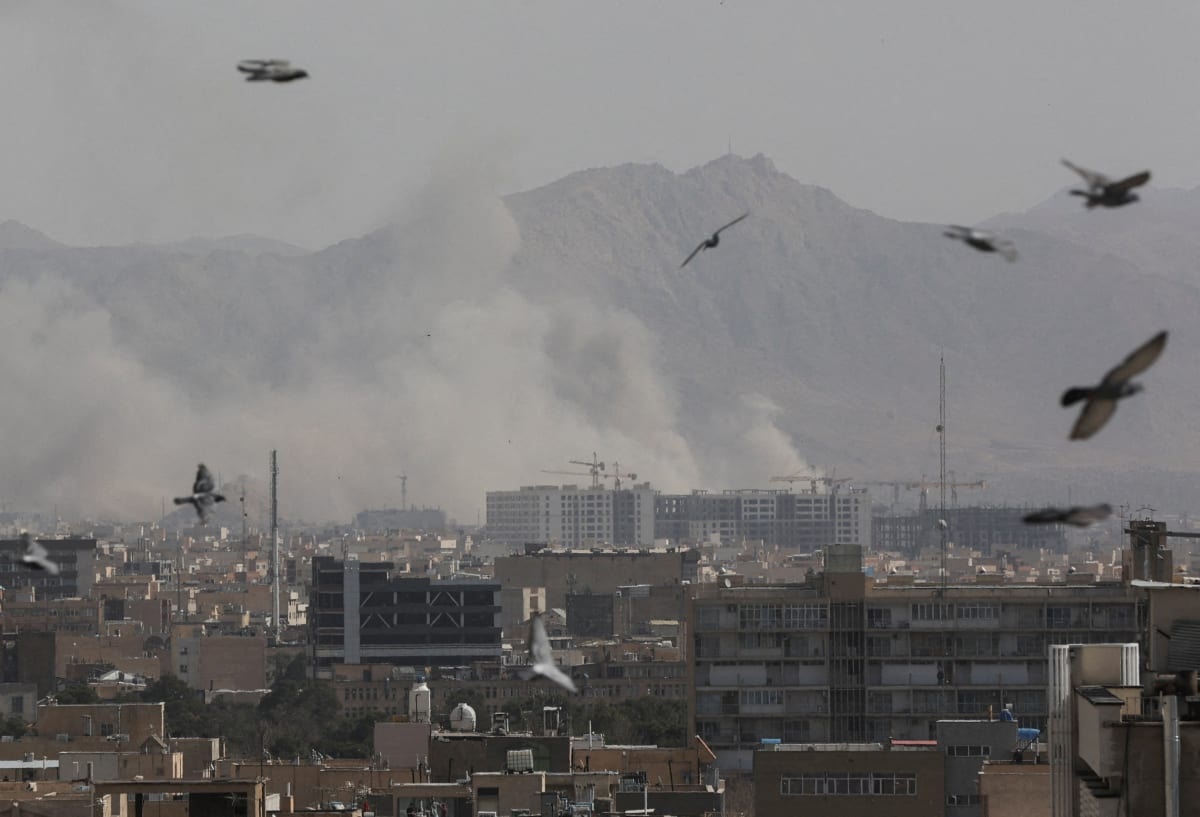
Iran’s Islamic Revolutionary Guard Corps escalated its rhetoric Tuesday by naming 18 major American technology and defense companies as “legitimate targets” for retaliation in the ongoing war with the U.S. and Israel.
The threat marks the latest attempt to broaden the conflict beyond traditional battlefields and energy infrastructure.
In a Telegram post on an IRGC-affiliated channel, the group warned that attacks on the listed firms would commence at 8 p.m. Tehran time Wednesday (12:30 p.m. EDT), urging employees to evacuate workplaces immediately “to protect their lives.” The message carried a blunt vow: “From now on, for every assassination, an American company will be destroyed.”
Register for Tekedia Mini-MBA edition 20 (June 8 – Sept 5, 2026).
Register for Tekedia AI in Business Masterclass.
Join Tekedia Capital Syndicate and co-invest in great global startups.
Register for Tekedia AI Lab.
The roster reads like a who’s-who of the global tech and finance elite: Nvidia, Apple, Microsoft, Google, Cisco, HP, Intel, Oracle, IBM, Dell, Palantir, JP Morgan, Tesla, GE, Boeing, and UAE-based AI developer G42, along with smaller defense-intelligence player Spire Solutions.
The threat underscores a dangerous new dimension given how the Iranian military has targeted the infrastructure of U.S. allies in the Gulf, including Qatar and the UAE.
The five-week-old conflict, which began with U.S.-Israeli strikes on February 28, is no longer confined to energy chokepoints like the Strait of Hormuz. It is now bleeding into the digital economy and commercial infrastructure that powers everything from AI training to cloud computing and global supply chains.

This is not entirely new ground for Tehran. Earlier this month, Iranian forces struck Amazon Web Services data centers in the region, triggering outages for apps and digital services across the UAE. The latest warning appears designed to raise the stakes, forcing Western companies with heavy regional footprints to divert resources, heighten security, and potentially rethink exposure in a part of the world that has become a magnet for hyperscale AI investment.
Cheap energy, abundant land, and supportive Gulf governments have drawn billions from Silicon Valley into the Middle East. Saudi Arabia, the UAE, and Qatar have positioned themselves as alternative hubs for data centers and AI infrastructure, offering power costs far below those in the U.S. or Europe.
Nvidia, Microsoft, Google, and others have poured money into local partnerships and facilities to serve both regional demand and global back-end computing needs. Disrupting that presence, even through credible threats, carries ripple effects far beyond the immediate theater.

Intel responded quickly, emphasizing that “the safety and wellbeing of our team is our number one priority.” The company said it was taking steps to protect workers and facilities while monitoring developments. Microsoft, Google, and JP Morgan declined to comment. The rest of the listed firms had not issued public statements by early Wednesday.
However, the broader backdrop remains grim. More than 3,000 drones and missiles have been launched at targets in the UAE, Saudi Arabia, Bahrain, and Kuwait since late February, according to the Center for Strategic and International Studies. Iranian casualties exceed 3,400, while the U.S. has lost 13 service members. President Donald Trump, speaking Tuesday, said he expected American forces to leave Iran “in two or three weeks” and is scheduled to address the nation on the war Wednesday night.
For the tech sector, the implications are expected to be far-reaching. Even if the threats amount to little more than psychological warfare, they are expected to undermine the Middle East’s emerging role as an AI and cloud hub. Insurance premiums for regional operations could rise, cybersecurity budgets will likely swell, and some firms may quietly accelerate contingency plans to shift workloads elsewhere.
The episode also underlines Iran’s evolving strategy to internationalize the pain. By targeting the commercial crown jewels of the U.S. economy, the very companies driving the AI revolution, Tehran aims to create pressure points that go well beyond oil prices and tanker traffic.
Energy markets have borne the brunt so far, but the IRGC’s move signals that other pillars of global commerce are now in play.
With threats still flying from both sides, the conflict is likely not coming to an end soon. Wednesday’s deadline and Trump’s evening address will offer the next test of just how far that escalation might go.