

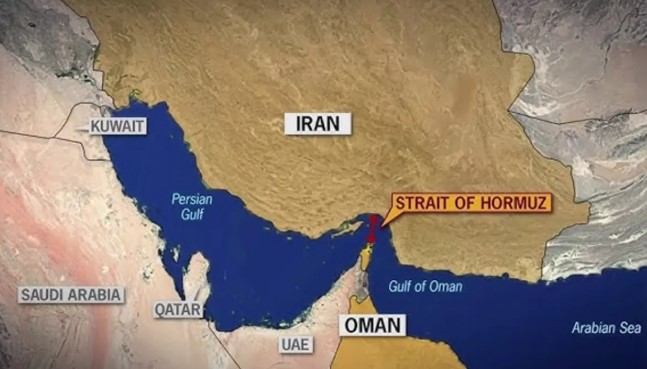
Tensions in the Middle East have escalated dramatically after Iran threatened to halt negotiations with the United States and its allies while also warning that it could completely block the Strait of Hormuz, one of the world’s most strategically important maritime chokepoints. The development has raised concerns across global financial markets, energy sectors, and diplomatic circles, as the waterway serves as a critical artery for international oil and natural gas shipments.
Reports indicate that Iranian officials have linked the potential suspension of talks to ongoing regional conflicts and what Tehran describes as unacceptable conditions being imposed during negotiations. The Strait of Hormuz is located between Iran and Oman and connects the Persian Gulf to the Gulf of Oman and the Arabian Sea. Roughly one-fifth of the world’s oil supply typically passes through this narrow waterway, making it one of the most important energy transit routes on the planet.
Any disruption to shipping traffic in the strait can have immediate consequences for global energy prices, supply chains, and inflation. Previous threats involving the strait have often caused volatility in oil markets, even when no actual blockade occurred. According to recent reports, Iranian state-affiliated media indicated that Tehran may stop indirect negotiations with Washington and move toward a complete closure of the Strait of Hormuz.
Iranian officials reportedly argue that continued military actions in the region and unmet political demands leave little room for meaningful dialogue. The threat has intensified fears that diplomatic efforts aimed at reducing regional hostilities could collapse entirely.
Register for the next Tekedia Mini-MBA.
Register for Tekedia AI in Business Masterclass.
Join Tekedia Capital Syndicate and co-invest in great global startups.
Markets reacted quickly to the news. Oil prices surged as traders priced in the possibility of supply disruptions from the Gulf region. Energy investors understand that even a temporary interruption of tanker traffic through Hormuz could remove millions of barrels of oil from global markets. Higher energy prices would likely ripple through transportation, manufacturing, and consumer goods industries, potentially reigniting inflationary pressures in major economies already struggling with economic uncertainty.
The geopolitical implications are equally significant. The United States has repeatedly stated that freedom of navigation through the Strait of Hormuz is a core strategic interest. In recent months, disputes over shipping access, maritime tolls, and military activity near the strait have already strained relations between Tehran and Washington. Diplomatic negotiations have been marked by disagreements over security arrangements, sanctions relief, and regional influence.
Recent clashes involving military assets near the strait have further complicated efforts to reach a lasting agreement. Despite the aggressive rhetoric, many analysts believe the threat may be intended as a negotiating tool designed to increase pressure on the United States and its partners. However, the risk of miscalculation remains high. History has shown that tensions in the Gulf can escalate rapidly, particularly when military forces from multiple nations operate in close proximity.
Even limited disruptions could trigger broader economic and security consequences. Iran’s threat to end negotiations and block the Strait of Hormuz highlights the fragile state of diplomacy in the Middle East.

As governments seek to prevent a wider conflict, the future of one of the world’s most important shipping lanes has become a central issue with implications far beyond the region. The coming weeks will likely determine whether diplomacy can prevail or whether global markets must prepare for a new period of uncertainty and heightened geopolitical risk.