

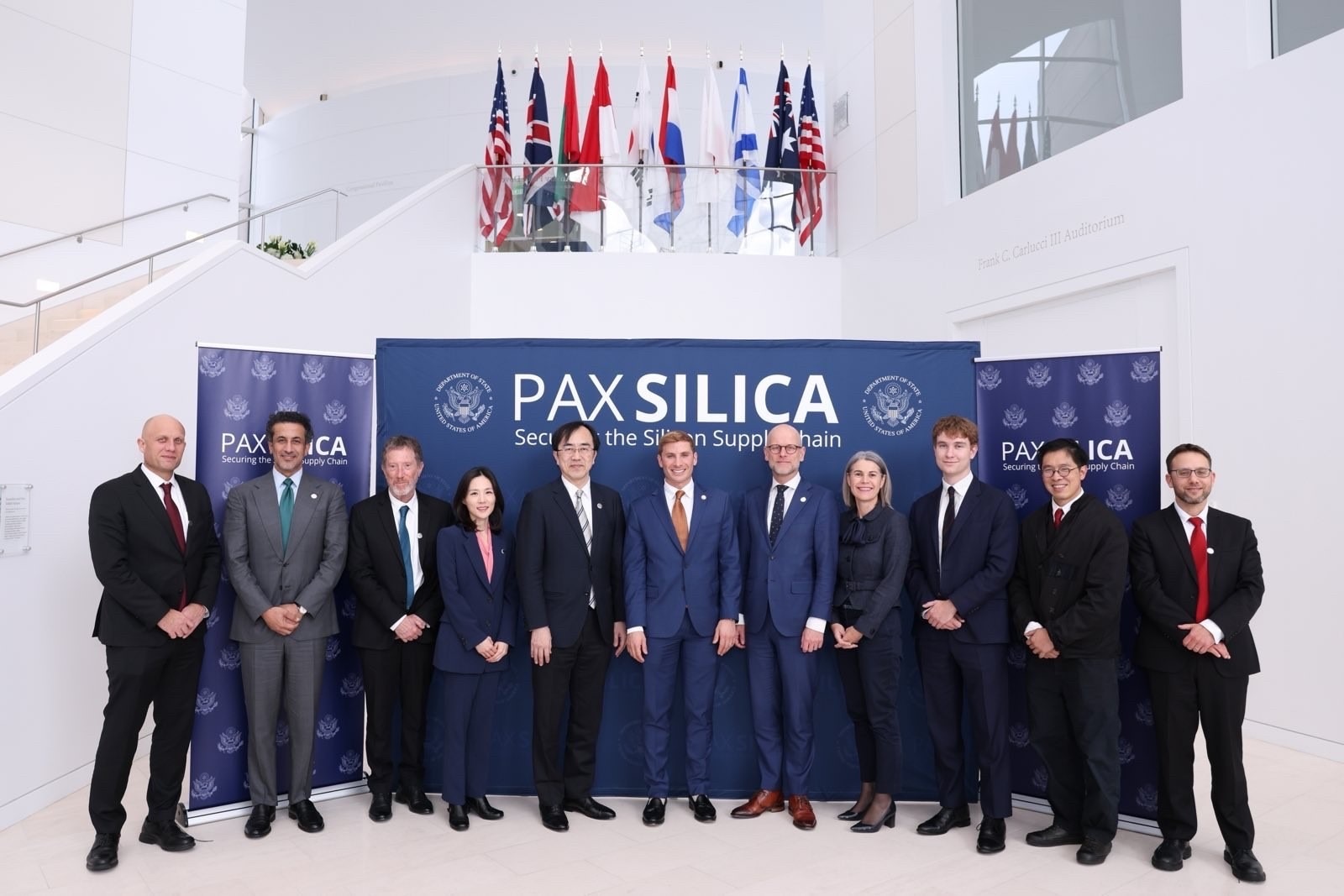
Italy is set to join the United States-led Pax Silica initiative on artificial intelligence supply chains following a diplomatic dispute between Prime Minister Giorgia Meloni and U.S. President Donald Trump, which temporarily delayed the country’s participation.
Italy’s Special Envoy for Innovation, Ambassador Armando Varricchio, said Foreign Minister Antonio Tajani and U.S. Secretary of State Marco Rubio will sign a memorandum of understanding “at the first available opportunity,” formally bringing Italy into the initiative.
“This provides a political basis that demonstrates the willingness to resume from where we had temporarily left off,” Varricchio told Corriere della Sera.
Register for the next Tekedia Mini-MBA.
Register for Tekedia AI in Business Masterclass.
Join Tekedia Capital Syndicate and co-invest in great global startups.
This means that both governments are seeking to draw a line under recent diplomatic tensions and reaffirm their commitment to long-term cooperation on emerging technologies.
The agreement had originally been scheduled for signing during a meeting in Miami earlier this week. However, Tajani cancelled the trip after relations between Meloni and Trump deteriorated following public disagreements over Italy’s position on the Iran conflict.
Trump had criticized Italy over what he described as insufficient support for the U.S. military campaign against Iran, triggering a rare public disagreement between the two leaders. While the episode briefly interrupted Italy’s participation in Pax Silica, it did not derail broader strategic cooperation between the two countries. The decision to move ahead with the agreement suggests both sides view artificial intelligence and technology security as priorities that transcend short-term political disagreements.

Pax Silica is a U.S. State Department initiative designed to build trusted AI supply chains among allied nations. Rather than focusing solely on artificial intelligence software, the framework covers the entire ecosystem needed to develop and deploy advanced AI systems, including semiconductor manufacturing, cloud computing infrastructure, critical minerals, secure energy supplies, advanced manufacturing, AI models, and research collaboration.
The initiative is a spinoff of Washington’s broader strategy of reducing dependence on concentrated global supply chains for technologies considered strategically important while strengthening cooperation with trusted partners. Momentum behind the alliance has accelerated in recent days. The European Commission formally joined the initiative on Thursday, while the Netherlands signed on earlier in the week.
During Thursday’s Washington summit, Varricchio participated as an observer and signed a joint declaration on AI opportunities alongside representatives from Britain, Germany, Japan, India, South Korea, and several other partner countries.

Although Italy has yet to complete the formal memorandum, its participation in the summit demonstrates that Rome is already aligning itself with the initiative’s broader objectives.
The expansion of Pax Silica comes as governments increasingly view artificial intelligence infrastructure through the lens of national security.
Modern AI development depends on access to high-performance chips, reliable electricity, advanced manufacturing capacity, rare earth elements, and critical minerals used in semiconductor production. Recent export restrictions imposed by both the United States and China have exposed vulnerabilities in global technology supply chains and accelerated efforts among Western allies to diversify sourcing and coordinate industrial policy.
The initiative is also expected to encourage greater collaboration on AI standards, investment, research, and supply-chain resilience, reducing dependence on countries viewed as strategic competitors.
This membership offers an opportunity to deepen Italy’s role in Europe’s rapidly expanding AI ecosystem while attracting investment into advanced manufacturing, digital infrastructure, and semiconductor-related industries. The country has been seeking to strengthen its technology sector as part of a wider strategy to improve industrial competitiveness and support innovation-driven economic growth.
The country’s participation is also expected to strengthen a coalition that already includes many of America’s closest security and economic partners. Bringing additional European countries into the framework enhances the U.S. effort to establish trusted supply chains for technologies that are expected to underpin future economic growth and military capabilities.
Artificial intelligence has become one of the defining areas of global strategic competition, with governments investing hundreds of billions of dollars in data centers, semiconductor manufacturing, cloud infrastructure, and AI research. Control over these ecosystems is increasingly viewed as critical to economic resilience and geopolitical influence.