

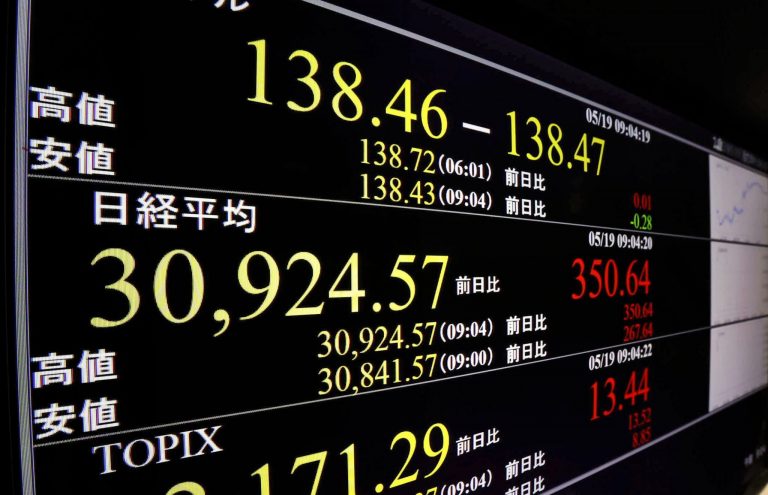
Japan’s Nikkei index has delivered one of the most impressive performances among major global benchmarks this year, climbing 37% and leaving U.S., European, and Chinese markets in its wake.
What makes this rally particularly noteworthy is not just its strength, but its broadening character — evolving from a narrow focus on a few headline AI names into a deeper, more resilient wave that is lifting an entire ecosystem of specialized manufacturers and infrastructure providers.
This is no longer solely the story of obvious winners riding the AI hype. Instead, Japan is benefiting from its long-standing industrial DNA: a deep bench of companies that make the essential, often invisible components and systems that allow data centers and advanced computing to function at scale. As the AI buildout moves from flashy front-end models to the gritty hardware backbone, Japan’s precision manufacturers are finding themselves in an enviable position.
Register for the next Tekedia Mini-MBA.
Register for Tekedia AI in Business Masterclass.
Join Tekedia Capital Syndicate and co-invest in great global startups.
The rally has unfolded in distinct phases. It began with familiar leaders such as SoftBank Group, Advantest, and Tokyo Electron — the gatekeepers of semiconductor production and testing equipment. A second wave pulled in suppliers of fiber-optic cables like Fujikura and Furukawa Electric, critical for high-speed data transmission. Now, a third and more diversified leg is gaining traction, spotlighting the companies that produce the parts powering everything from voltage regulation to energy storage in AI infrastructure.
Murata Manufacturing and Taiyo Yuden, two of the world’s leading makers of multi-layer ceramic capacitors (MLCCs) used to stabilize power in servers, have become standout performers. Murata’s shares have soared 268% year-to-date, while Taiyo Yuden has exploded 438%, second only to memory specialist Kioxia, which recently overtook Toyota to claim the title of Japan’s most valuable company.
Ibiden, a key Nvidia supplier, has jumped 292%, and Panasonic Holdings hit record highs after announcing plans to mass-produce battery cells for data centers at its Kansas facility in the United States.

“This is just the beginning of their rally. Investors will continue to hunt stocks that are related to AI data centers,” said Kazuaki Shimada, chief strategist at IwaiCosmo Securities.
This broadening participation is helping to distribute gains more widely across the index, reducing the risk of a narrow, top-heavy advance. Chip-related names account for about 25% of the Nikkei’s value, according to Takamasa Ikeda at GCI Asset Management. When broader AI ecosystem players such as Murata, Sony Group, and Kyocera are included, that weighting rises to around 35%.
While this concentration has fueled the rally, it also introduces vulnerability; a sharp correction in global semiconductor sentiment could weigh heavily on Japanese equities.

Why Japan Is Uniquely Positioned
Several structural factors are working in Japan’s favor. Years of corporate governance reforms have improved capital efficiency and shareholder returns, making Japanese companies more attractive to both domestic and foreign investors. The weak yen, while a challenge for consumers, has supported exporters by making their products more competitive abroad.
Perhaps most importantly, Japan’s deep expertise in advanced materials, precision engineering, and power management aligns perfectly with the technical demands of scaling AI infrastructure.
Unlike the U.S. market, where the AI narrative has been dominated by a handful of mega-cap platform companies, Japan’s rally is being carried by a wider cast of industrial specialists. This diversification could make the advance more sustainable, as it is tied less to speculative sentiment and more to tangible demand for physical components and systems.
Foreign investors, who had been underweight Japanese stocks for years, have been steadily increasing allocations, drawn by improving fundamentals and the country’s central role in the semiconductor supply chain. Domestic institutions and retail investors are also participating more actively, supported by structural economic reforms and a more constructive corporate outlook.
Risks Are On The Road Ahead
Nevertheless, the heavy weighting toward tech and AI-related stocks means the Nikkei is not immune to global shifts. The Philadelphia Semiconductor Index has recently traded more than 70% above its 200-day average, a level that has historically signaled overheating and potential corrections.
“It might be hard for the SOX index to maintain its current momentum in the mid-to-long term,” Ikeda said. “And if there’s a correction in the SOX, the same fate will be inevitable for the Nikkei.”
Geopolitical risks, particularly around U.S.-China tech tensions and potential supply chain disruptions, also loom large. Many of the components driving Japan’s rally depend on complex international networks that remain sensitive to trade policy changes.
Yet the underlying demand drivers appear robust. Global spending on AI infrastructure continues to accelerate, and Japanese firms occupy critical niches that are difficult to replicate quickly. The shift toward more specialized, high-value components plays directly to Japan’s traditional strengths in materials science and precision manufacturing.
Analysts expect the rally’s broadening trend to continue as investors rotate into second- and third-tier beneficiaries. The evolution from a concentrated AI bet to a broader industrial theme could help sustain momentum even if some headline tech names pause.
Japan’s resurgence challenges the long-held narrative of a stagnant economy. After years of deflationary pressures and corporate conservatism, the country is demonstrating that structural reforms, combined with global technological tailwinds, can unlock significant value. The Nikkei’s performance this year is more than a cyclical rebound. Analysts see it as a reflection of a deeper transformation in Japan’s corporate sector and its integration into the global AI supply chain.