

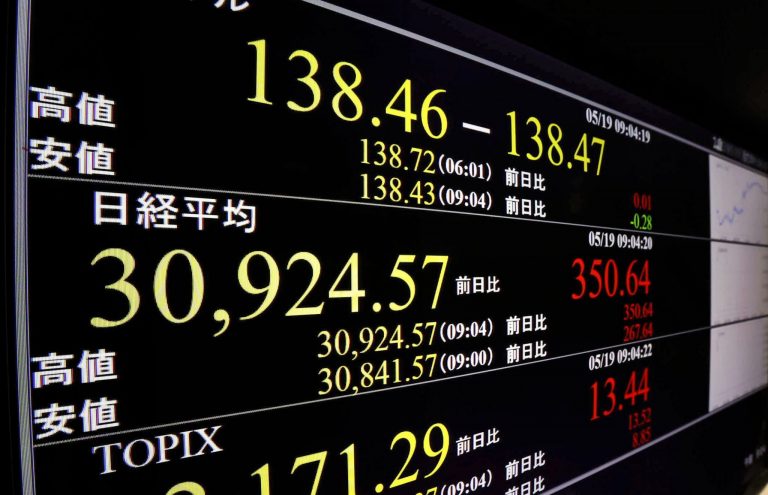
Japan’s Nikkei 225 Index broke through the 51,000 level for the first time in history on Wednesday, as investor enthusiasm surrounding artificial intelligence and semiconductor-related stocks fueled another wave of buying.
The tech-heavy benchmark closed up 2.2% at 51,307.65, marking an unprecedented high and underscoring how the global AI boom is reshaping investor sentiment in Tokyo’s stock market.
In contrast, the broader Topix Index slipped 0.2%, weighed down by a rebound in the yen, which dampened outlooks for exporters. The divergence between the two indexes represented the largest daily gap in returns since August 5, 2020, highlighting the concentration of the current rally around AI-linked shares.
Register for Tekedia Mini-MBA edition 20 (June 8 – Sept 5, 2026).
Register for Tekedia AI in Business Masterclass.
Join Tekedia Capital Syndicate and co-invest in great global startups.
Register for Tekedia AI Lab.
The Nikkei’s record high continues a blistering climb that began in mid-September. The index had surpassed 45,000 on September 16 and has since marched through several psychological thresholds with unprecedented speed. Analysts say the latest surge reflects investor confidence in Japan’s transformation into a more growth-oriented and inflationary economy, aided by ongoing corporate governance reforms and renewed policy focus under Prime Minister Sanae Takaichi.
Rakuten Securities’ chief strategist Masayuki Kubota said the rally is fast but justified, given the structural shifts underway.
“Although the upward pitch is a little too fast, I see it as a move that correctly assesses the value of Japanese shares,” Kubota noted.

He predicted that the Nikkei could climb to around 63,000 by 2030 if Japan maintains its reform momentum and sustains moderate inflation.
The latest rally was powered by AI-related optimism both in Japan and abroad. Shares of Advantest — a major supplier of semiconductor testing equipment to global tech giants — soared 22%, its biggest one-day gain on record. The company boosted its annual profit forecast by 25%, citing surging demand tied to the global AI chip race.
The gains in Tokyo mirrored Wall Street’s overnight rally, where all three major U.S. indexes closed at record highs on Tuesday following Nvidia’s announcement that it will build AI supercomputers for the U.S. Energy Department. Nvidia’s statement reinforced investor belief that the AI investment cycle remains strong, further energizing semiconductor and tech shares globally.

“Stocks such as Advantest and SoftBank Group are essentially driving the stock market,” said Wataru Akiyama, strategist at Nomura Securities. “It’s unclear how long this will last. Once the initial wave passes, the upward momentum may ease.”
SoftBank Group, one of Japan’s most prominent technology investors with extensive AI and chip exposure, climbed 3.9%, making it the second-biggest contributor to the Nikkei’s rise in index points. Semiconductor inspection systems maker Lasertec also advanced 7.7%, adding further momentum to the rally.
Despite the index’s record-setting performance, market breadth remained narrow — with only 43 advancers against 182 decliners on the Nikkei. Analysts say this imbalance shows that the rally is heavily concentrated in AI and semiconductor sectors, rather than a broad-based recovery across Japan’s equity market.
Still, the symbolic breach of the 51,000 mark denotes renewed global investor confidence in Japan’s stock market, which has benefited from capital inflows tied to AI optimism, weaker competition from China’s slowing economy, and corporate reforms that have improved shareholder returns.
The Nikkei’s historic run is seen as a demonstration of how deeply artificial intelligence has become intertwined with financial markets — propelling Japan’s benchmark to record highs not seen in its decades-long economic history. It is expected to go further up as AI-driven optimism continues to dominate market psychology.