

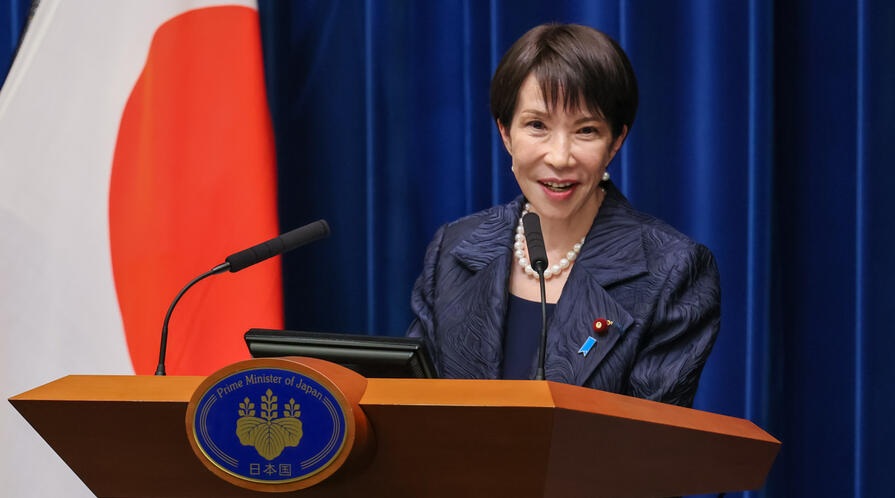
Japan’s Prime Minister Sanae Takaichi on Monday called a snap general election for February 8, seeking a fresh mandate for a sweeping agenda that combines higher public spending, targeted tax cuts, and a faster military build-up amid rising regional security tensions.
Takaichi said she would dissolve parliament on Friday, triggering a nationwide vote for all 465 seats in the powerful lower house. The election will be her first major political test since becoming Japan’s first female prime minister in October and is widely seen as an attempt to capitalize on strong early approval ratings before economic and fiscal risks deepen.
“I am staking my own political future as prime minister on this election,” Takaichi told reporters. “I want the public to judge directly whether they will entrust me with the management of the nation.”
Register for Tekedia Mini-MBA edition 20 (June 8 – Sept 5, 2026).
Register for Tekedia AI in Business Masterclass.
Join Tekedia Capital Syndicate and co-invest in great global startups.
Register for Tekedia AI Lab.
At the heart of her campaign is a pledge to suspend the 8% consumption tax on food for two years, a move aimed at easing pressure on households battered by rising prices. The government estimates the tax freeze would cut annual revenue by about 5 trillion yen ($32 billion), a fiscal cost that immediately rattled markets. Yields on Japan’s 10-year government bonds rose to a 27-year high earlier on Monday, underscoring investor concern about looser fiscal policy at a time when Japan already carries the highest public debt burden among advanced economies.
Takaichi argues the revenue loss would be offset over time by stronger economic activity. Her administration says the combination of tax relief and increased spending would stimulate consumption, create jobs, and ultimately broaden the tax base. Critics, however, warn that the policy risks adding to Japan’s already stretched public finances just as interest rates begin to normalize after decades of ultra-loose monetary policy.
The election comes against the backdrop of a cost-of-living squeeze that has emerged as the dominant voter concern. In a poll released last week by public broadcaster NHK, 45% of respondents cited rising prices as their top worry, well ahead of diplomacy and national security at 16%. That dynamic gives urgency to Takaichi’s tax pledge but also raises the political stakes if voters doubt the government’s ability to manage inflation and debt simultaneously.

Beyond domestic economics, the vote will also serve as a referendum on a profound shift in Japan’s security posture. Takaichi’s government plans to unveil a new national security strategy this year, following its decision to accelerate a military build-up that will raise defense spending to 2% of GDP. That level, which aligns Japan with NATO benchmarks, marks a historic departure from decades in which defense outlays were informally capped at around 1% of GDP.
While Takaichi has not committed to spending beyond the 2% threshold, pressures are mounting. Tensions with China over Taiwan and disputed islands in the East China Sea have intensified, and Washington has been urging allies to shoulder more of the regional security burden. Takaichi cited both military and economic coercion by Beijing as justification for her tougher stance.
“China has conducted military exercises around Taiwan, and economic coercion is increasingly being used through control of key supply-chain materials,” she said. “The international security environment is becoming more severe.”

Those concerns were reinforced last week when China banned exports to Japan’s military of items with both civilian and defense applications, including some critical minerals. The move has heightened fears in Tokyo about supply-chain vulnerability and has strengthened the political case for greater defense self-reliance.
Politically, calling an early election allows Takaichi to try to consolidate her authority within the ruling Liberal Democratic Party and stabilize a coalition that holds only a slim majority. The LDP and its ally Ishin currently control a combined 233 seats in the lower house, just above the threshold needed to govern. Takaichi said her immediate goal was to retain that majority.
Her main challenge will come from the newly formed Centrist Reform Alliance, which brings together the Constitutional Democratic Party of Japan and Komeito. Komeito’s decision to end its 26-year alliance with the LDP following Takaichi’s rise has reshaped the opposition landscape. Together, the parties in the new bloc hold 172 seats and are expected to campaign aggressively on cost-of-living issues.
The alliance has already floated an alternative proposal to permanently abolish the 8% sales tax on food, a policy that could resonate with voters but would carry even greater fiscal implications. The contest is therefore likely to hinge not just on whether voters want tax relief, but on which party they trust to manage the long-term consequences.
Analysts say the timing reflects Takaichi’s calculation that her political capital may be at its peak.
“Now may be the best chance she has at taking advantage of this extraordinary popularity,” said Jeffrey Hall, a lecturer in Japanese studies at Kanda University of International Studies.
However, he cautioned that a unified opposition and growing concern about public debt could make the outcome less predictable than headline polling suggests.
With markets already reacting nervously and voters focused on living costs, the February 8 election is shaping up as a pivotal moment. A strong result would give Takaichi a clear mandate to push through fiscal stimulus and a more assertive security strategy. A weaker showing, by contrast, could constrain her agenda and expose the limits of public support for Japan’s most significant policy shifts in decades.