

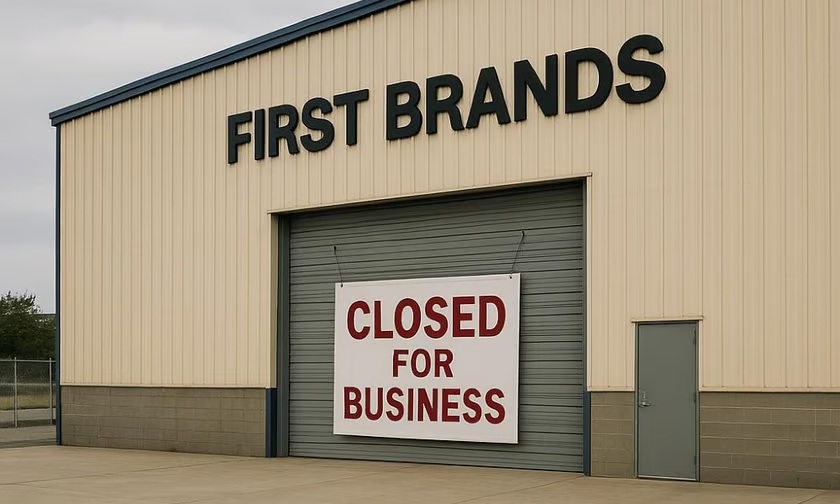
JPMorgan Chase CEO Jamie Dimon has warned that a wave of corporate bankruptcies emerging in the U.S. auto sector may be an early warning sign of broader credit excesses built up over the past decade.
Speaking after the collapse of two high-profile companies — auto parts maker First Brands and subprime car lender Tricolor Holdings — Dimon said the failures highlight how lenient lending practices since 2010 have left parts of the financial system exposed.
“We’ve had a credit bull market now for the better part of what, since 2010 or 2012? That’s like 14 years,” Dimon said during a call with CNBC on Tuesday. “These are early signs there might be some excess out there because of it. If we ever have a downturn, you’re going to see quite a bit more credit issues.”
Register for Tekedia Mini-MBA edition 20 (June 8 – Sept 5, 2026).
Register for Tekedia AI in Business Masterclass.
Join Tekedia Capital Syndicate and co-invest in great global startups.
Register for Tekedia AI Lab.
His comments came as JPMorgan, the largest U.S. bank by assets, reported another quarter of strong earnings driven by its institutional trading business. Yet, despite topping Wall Street expectations, the bank’s results were overshadowed by growing concern among analysts and investors over credit quality and the potential ripple effects of recent corporate failures.
The twin bankruptcies of First Brands and Tricolor have reignited debate about risk appetite in the leveraged finance and private credit markets, particularly in sectors like automotive lending that expanded aggressively during the years of ultralow interest rates. Both companies had taken on significant debt before defaulting amid rising borrowing costs and supply chain disruptions that have plagued the global auto industry since the pandemic.
Dimon didn’t mince words in describing the significance of the failures. “When you see one cockroach, there are probably more,” he told veteran banking analyst Mike Mayo on the bank’s earnings conference call. “Everyone should be forewarned on this one.”

The remark underscored his long-standing reputation for caution regarding excessive credit creation — a concern that has intensified as U.S. consumer and corporate borrowing costs climb under the Federal Reserve’s higher-for-longer interest rate stance.
JPMorgan’s Exposure and Losses
While JPMorgan managed to avoid direct losses from First Brands, it was exposed to Tricolor Holdings, which filed for bankruptcy amid allegations of accounting irregularities and fraudulent loan practices. Chief Financial Officer Jeremy Barnum said the bank took $170 million in charge-offs during the quarter linked to its Tricolor exposure. Charge-offs represent loans that the bank no longer expects to be repaid.
“It is not our finest moment,” Dimon admitted. “When something like that happens, you could assume that we scour every issue. You can never completely avoid these things, but the discipline is to look at it in cold light and go through every single little thing.”

Barnum added that the bank’s key credit metrics — including early-stage delinquencies — remain stable and, in some areas, better than expected. He emphasized that JPMorgan is closely monitoring the labor market, noting that any weakness there could eventually spill into consumer credit. So far, however, he said that deterioration has not materialized.
Ripple Effects Across Wall Street
The fallout from the two bankruptcies extends beyond JPMorgan. Several large financial institutions, including Jefferies, UBS, and Fifth Third Bank, have disclosed varying degrees of exposure to the failed companies.
Earlier this month, Jefferies revealed that funds it manages are owed $715 million by firms linked to First Brands’ inventory operations. UBS separately disclosed that its funds had approximately $500 million in exposure to similar entities. Meanwhile, regional lender Fifth Third Bank announced in September that it expects up to $200 million in impairments from alleged fraudulent activity at a borrower later identified as Tricolor Holdings, according to Bloomberg.
The combination of these losses has renewed concerns that many banks and private credit funds may have underestimated the risks tied to mid-market companies that thrived on cheap financing during the long post-2010 credit boom.
Tariffs and Supply Chain Strain Add Pressure
The situation has been further complicated by renewed trade frictions under President Donald Trump’s tariff escalation policies, which have increased costs across global supply chains. The automotive sector — dependent on complex international manufacturing networks — has been particularly affected. Parts shortages, shipping delays, and higher input costs have squeezed margins for both producers and lenders, many of whom relied on optimistic sales forecasts to justify high leverage.
The bankruptcy of First Brands, in particular, reflects how fragile these networks have become. The company, once a key supplier to several U.S. automakers, struggled with a combination of reduced demand, higher import costs, and tightening credit conditions. Analysts say that as tariffs push input prices higher, firms that were already operating on thin margins are likely to come under increasing strain.
Dimon’s warning carries added weight given JPMorgan’s central role in the global financial system and his reputation as one of Wall Street’s most experienced crisis-era executives. The bank chief has repeatedly cautioned against complacency amid strong profits and low default rates, arguing that the U.S. economy’s resilience has masked deeper structural risks.
The failures of First Brands and Tricolor, he suggested, are reminders that years of cheap money have allowed weaker companies to survive far longer than they might have otherwise. With interest rates now higher and refinancing more expensive, those vulnerabilities are starting to surface.