

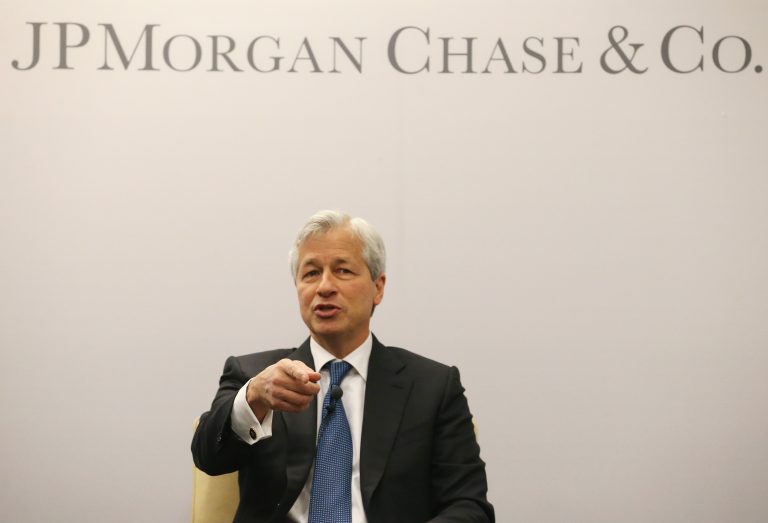
JPMorgan Chase has helped Syria secure its first letter of credit in more than a decade, enabling the country to complete a fuel supply agreement with Saudi Aramco and marking a step towards restoring its access to international banking services after years of financial isolation.
The US bank confirmed the Syrian letter of credit and provided a guarantee of its execution, according to Mohammad Qawja, executive director of financial affairs at the Syrian Petroleum Company (SPC), who spoke to Reuters. The arrangement supported a commercial agreement this month for petroleum products from Saudi Aramco.
Syria has already received 65,000 metric tons of diesel under the agreement, Qawja said. The country hopes future shipments will expand to include gasoline and, subsequently, light crude oil, potentially broadening the arrangement beyond its initial supply of refined fuel.
Register for the next Tekedia Mini-MBA.
Register for Tekedia AI in Business Masterclass.
Join Tekedia Capital Syndicate and co-invest in great global startups.
The transaction marks a practical test of Syria’s efforts to reconnect with international financial institutions following the removal of former President Bashar al-Assad nearly two years ago. The country’s new leadership has prioritized rebuilding external economic relationships, restoring trade links and securing essential supplies after years of isolation.
The Central Bank of Syria announced on October 11 that it had issued its first letter of credit in 14 years through a major US financial institution to support a deal with Aramco, without identifying the bank. Qawja subsequently confirmed JPMorgan’s role.
The development is significant because access to international banking services is essential for conducting cross-border trade, particularly in markets where counterparties require credible payment guarantees before shipping goods.

A letter of credit is a financial instrument through which a bank undertakes to pay a seller on behalf of a buyer, provided the agreed contractual and documentary conditions are met. It reduces the risk that a supplier will deliver goods without receiving payment and can help buyers establish the credibility needed to secure commercial transactions.
For Syria, obtaining such an arrangement through JPMorgan could help address one of the practical obstacles to importing fuel: the difficulty of securing payment mechanisms acceptable to international suppliers and financial institutions.
The role described by Qawja was to confirm the issued letter of credit and guarantee its execution. The available information does not establish that JPMorgan financed the entire fuel purchase or acted as the direct supplier. Rather, its involvement supported the payment framework underpinning the agreement with Aramco.

Qawja said the deal was particularly important given the sharp increase in global fuel prices and difficulties securing petroleum products and supply routes.
“Given the current circumstances in the region — such as the sharp global rise in fuel prices and the difficulties in securing supplies and supply lines for petroleum products and crude oil — this agreement offers, first, the securing of fuel supplies for the Syrian domestic market,” he said.
He added that the letter of credit provided greater flexibility in managing payment obligations.
That flexibility could help Syrian authorities organize imports and meet domestic fuel demand more reliably. Expanding future shipments to gasoline and light crude oil would also broaden the potential uses of the arrangement, although any expansion will depend on subsequent commercial agreements and the availability of supplies.
Fuel availability has wider economic implications because petroleum products support transport, electricity generation, industrial activity and the distribution of essential goods. Difficulties securing supplies can increase operating costs across the economy, while more reliable import arrangements can help reduce uncertainty for businesses and households.
However, a single letter of credit does not resolve all of Syria’s energy supply challenges.
Syria Seeks to Rebuild International Financial Relationships
The transaction comes as Syria attempts to restore economic and diplomatic ties following years of sanctions and isolation under Assad’s government.
The United States lifted sweeping sanctions on Syria last year and removed the country from its designation as a state sponsor of terrorism last August, according to the report. Those changes have helped create conditions for renewed commercial engagement, although access to international finance still depends on the requirements of individual institutions, counterparties and applicable regulations.
The return of international banking services is important because sanctions-related restrictions and compliance concerns can discourage banks from processing transactions involving a country, even where a particular commercial activity may be legally permissible. Financial institutions must assess their exposure to sanctions, counterparty risks, payment routes, and other regulatory obligations before supporting cross-border business.
Consequently, the willingness of a major US bank to participate in a transaction connected to Syrian fuel imports is notable. It suggests that a route exists for at least some commercial payments to be structured through international banking channels under the relevant conditions.
It does not, however, establish that Syria has regained unrestricted access to the global financial system. The transaction concerns a specific letter of credit supporting a particular fuel agreement, and the extent to which other banks will resume business with Syrian entities remains uncertain.
For Syria’s authorities, the challenge is to turn isolated transactions into dependable commercial relationships. International suppliers and banks are likely to consider not only the immediate terms of individual deals but also the reliability of payment arrangements, compliance risks, and the sustainability of future trade.
The agreement with Aramco offers an example of how banking services can help make physical trade possible. Yet rebuilding broader access will require more than the completion of one transaction.
Saudi Aramco’s involvement gives the agreement additional significance because it connects Syria’s fuel needs with one of the world’s major oil companies. The initial delivery of 65,000 metric tons of diesel provides a concrete outcome, while the prospect of gasoline and light crude oil shipments points to possible further cooperation.
The arrangement could help Syria diversify and stabilize the mechanisms through which it obtains petroleum products. But the announced delivery should not be interpreted as evidence that the country’s wider fuel shortages or supply constraints have been resolved.