

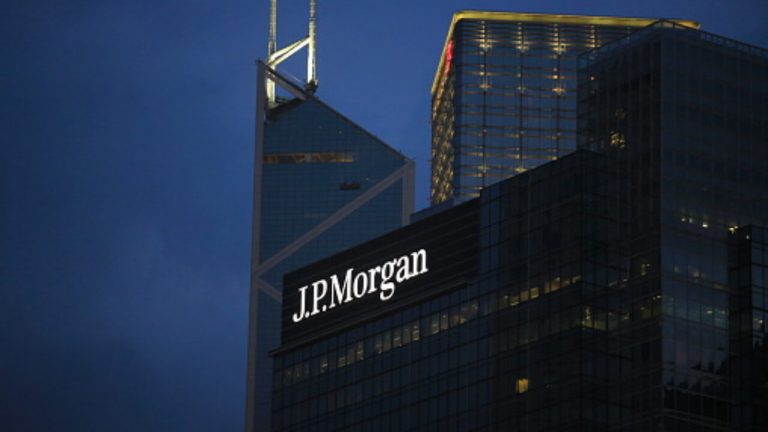
J.P. Morgan Asset Management officially launched its first tokenized money market fund on the public Ethereum blockchain. The fund, named My OnChain Net Yield Fund (MONY), is a private placement (506(c)) available only to qualified investors through the bank’s Morgan Money platform.
It was seeded with $100 million from JPMorgan itself and invests in short-term U.S. Treasury-backed instruments and repos, offering daily yields similar to traditional money market funds. Powered by JPMorgan’s Kinexys Digital Assets tokenization platform.
Investors subscribe/redeem using cash or USDC stablecoin and receive ERC-20 tokens representing shares directly in their wallets. Minimum investment: $1 million. Qualified investors: Individuals with ?$5M in assets or institutions with ?$25M.
This makes JPMorgan the largest global systemically important bank (GSIB) to issue a tokenized money market fund on a public blockchain, following peers like BlackRock (BUIDL fund) and Franklin Templeton.
Register for Tekedia Mini-MBA edition 20 (June 8 – Sept 5, 2026).
Register for Tekedia AI in Business Masterclass.
Join Tekedia Capital Syndicate and co-invest in great global startups.
Register for Tekedia AI Lab.
The launch reflects surging institutional demand for blockchain-enabled liquidity products, with faster settlement and on-chain interoperability.
Tokenized real-world assets (RWAs) represent traditional assets like bonds, treasuries, credit, real estate, and commodities brought on-chain as digital tokens. This enables fractional ownership, 24/7 liquidity, faster settlement, and DeFi integration while maintaining regulatory compliance.
2025 has been a breakout year for institutional adoption, driven by major players entering the space. The on-chain RWA market excluding stablecoins has exploded in 2025: Reached $30–36 billion by late 2025, up from ~$5–8 billion at the end of 2024.

Private credit dominates ($17–19 billion), followed by U.S. Treasuries ($7–8 billion) and institutional/money market funds. Holder base expanded significantly, with over 571,000 wallets across categories.
Projections vary widely: Some forecasts see $50–600 billion by end-2025, with long-term estimates of $10–30 trillion by 2030–2034. This growth reflects a shift from pilots to scaled operations, with slower but sustainable inflows in Q4 2025 focused on yield-bearing products.
U.S. Treasuries and Tokenized Money Market Funds — Safest and fastest-growing segment ~$7–8 billion on-chain. Offers ~4–5% yields with blockchain efficiency. Private Credit — Largest category (~$17–19 billion), appealing for higher yields (9–10%) in short-duration financing.
Commodities like gold via tokens like XAUm/PAXG— ~$3–4 billion, providing inflation hedges. Real Estate, Equities, and Others — Smaller but emerging ~$150–200 million for real estate, enabling fractional ownership.
Major traditional finance institutions are leading: BlackRock’s BUIDL is the largest tokenized fund ~$2.5–2.9 billion AUM, backed by U.S. Treasuries; expanded multi-chain like Ethereum, Solana, BNB Chain, etc. and accepted as collateral on Binance.

J.P. Morgan’s MONY
Newly launched on Ethereum seeded with $100 million. Franklin Templeton (BENJI/FOBXX), Ondo Finance (OUSG/USDY), Hashnote/Circle (USYC), Centrifuge, and Apollo. These funds target qualified institutional investors, often with high minimums, but provide daily yields and on-chain interoperability.
JPMorgan’s public Ethereum launch marks the largest GSIB entering public-blockchain RWAs. BlackRock BUIDL integrated with Binance for collateral and BNB Chain expansion.
Tokenized commodities/stocks hit all-time highs ~$3.7 billion for commodities. Regulatory progress: Clearer frameworks in U.S., Singapore, Hong Kong, and Europe boosting confidence.
Multi-chain adoption: Ethereum dominates, but Solana, Base, and others gaining for scalability. Institutional Demand — For efficient treasury management, collateral in DeFi/trading, and yield on idle capital. Reduced intermediaries, transparency via immutable ledgers, global access, and programmability.
Tokenized products serve as compliant on-ramps, with oracles via Chainlink ensuring real-world backing. Challenges remain, including liquidity in secondary markets, interoperability, and regulatory nuances.
But 2025 data shows RWAs maturing into a core financial infrastructure. With projections pointing to trillions long-term, tokenization is reshaping ownership and liquidity in global markets.