

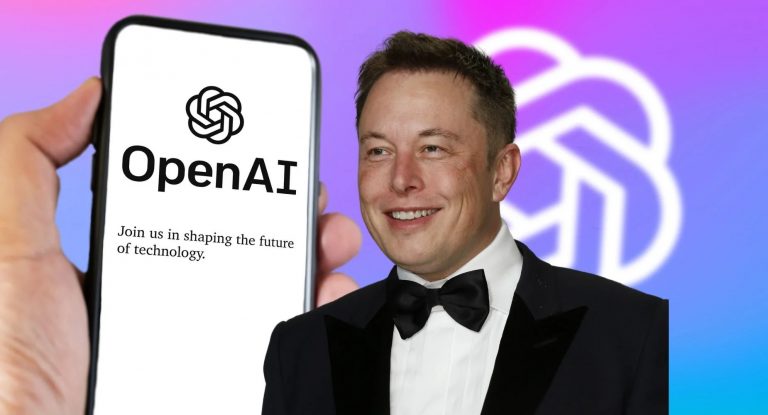
A U.S. judge on Wednesday set the stage for a jury trial in billionaire Elon Musk’s closely watched lawsuit accusing OpenAI of abandoning its founding mission, marking a significant escalation in a legal fight that cuts to the heart of the artificial intelligence industry’s rapid commercialization.
U.S. District Judge Yvonne Gonzalez Rogers, speaking at a hearing in Oakland, California, said there was “plenty of evidence” suggesting OpenAI’s leadership made assurances that the organization would remain a nonprofit focused on public benefit. She ruled that the disputes were sufficiently factual and contested to warrant a jury trial, rather than being resolved by the court at an early stage. The trial is scheduled for March, with the judge saying she would issue a written order addressing OpenAI’s bid to have the case dismissed.
The decision keeps alive Musk’s claims at a time when competition for dominance in generative AI is intensifying and scrutiny of how leading AI developers are structured, funded, and governed is growing. Musk, who co-founded OpenAI in 2015 but left in 2018, now runs xAI, whose chatbot Grok competes directly with OpenAI’s ChatGPT.
Register for Tekedia Mini-MBA edition 20 (June 8 – Sept 5, 2026).
Register for Tekedia AI in Business Masterclass.
Join Tekedia Capital Syndicate and co-invest in great global startups.
Register for Tekedia AI Lab.
At the center of the lawsuit is OpenAI’s evolution from a nonprofit research lab into a capped-profit entity that has entered into multibillion-dollar commercial partnerships, most notably with Microsoft. Musk argues that the shift violated explicit promises made when he provided early funding and support, while OpenAI says the restructuring was necessary to attract capital and pursue its mission at scale.
Musk is seeking unspecified monetary damages tied to what he describes as “ill-gotten gains.” He claims he contributed about $38 million, roughly 60% of OpenAI’s early funding, along with strategic guidance and credibility, on the understanding that the organization would remain a nonprofit dedicated to advancing artificial intelligence for the benefit of humanity.
The lawsuit accuses OpenAI co-founders Sam Altman and Greg Brockman of orchestrating a for-profit pivot designed to enrich themselves, culminating in major commercial deals with Microsoft and the company’s recent restructuring. OpenAI, Altman, and Brockman have denied the allegations, portraying Musk as a disgruntled rival attempting to hobble a leading competitor.

In a statement after the hearing, OpenAI said: “Mr Musk’s lawsuit continues to be baseless and a part of his ongoing pattern of harassment, and we look forward to demonstrating this at trial.”
Musk’s xAI did not immediately respond to a request for comment, but Steven Molo, a lead trial lawyer for Musk and xAI, said the team welcomed the opportunity to put evidence before a jury.
“We look forward to presenting all the evidence of the defendants’ wrongdoing to the jury,” he said.

Microsoft, a key OpenAI partner and co-defendant, also sought to have the claims against it dismissed. Its lawyer argued there was no evidence the company had “aided and abetted” any wrongdoing by OpenAI. Lawyers for OpenAI pressed the judge to rule against Musk, contending he had not provided a sufficient factual basis for claims including fraud and breach of contract.
OpenAI has also argued that Musk waited too long to bring the case. Gonzalez Rogers said the jury would be asked to consider whether the lawsuit was filed outside the statute of limitations, making timing itself a central issue at trial.
Beyond the courtroom, the dispute highlights a broader fault line in the AI sector. As generative AI systems become more powerful and commercially valuable, tensions are rising between ideals of open, public-benefit research and the financial realities of building and deploying cutting-edge models. Musk has positioned himself as a critic of what he sees as excessive concentration of AI power and profit, even as he builds his own rival platform.
The case poses reputational as well as legal risks for OpenAI, reopening questions about its original commitments at a moment when regulators, policymakers, and the public are increasingly focused on transparency and accountability in AI development. The jury trial offers a public forum for Musk to press claims that the organization he helped launch strayed from its original purpose.
With a March trial now on the calendar, the dispute is expected to be one of the most consequential in the AI industry, as it will have a significant impact on OpenAI’s future.