

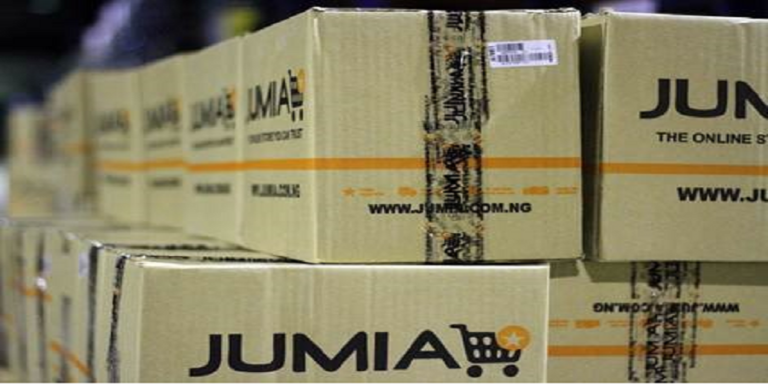
Jumia, one of Africa’s most prominent e-commerce businesses, has slashed its workforce to just over 2,000 employees, tied to the company’s push to integrate artificial intelligence (AI) across its operations.
The e-commerce platform noted that the total headcount has declined by 7% since December 31, 2024, with just over 2,010 employees on payroll as of September 30, 2025.
In its third quarter 2025 results, Jumia delivered 25% revenue growth and 21% GMV growth. Revenue for Q3 was $45.6 million compared to $36.4 million in the third quarter of 2024. GMV was $197.2 million compared to $162.9 million in the third quarter of 2024.
Register for Tekedia Mini-MBA edition 20 (June 8 – Sept 5, 2026).
Register for Tekedia AI in Business Masterclass.
Join Tekedia Capital Syndicate and co-invest in great global startups.
Register for Tekedia AI Lab.
Speaking on the Q3 result, Jumia’s CEO, Francis Dufay, noted that the result marked a significant growth for the company, expressing optimism for profitability in 2027.
In his words,
“This quarter marks a significant acceleration in customer demand and order growth, driven by strong execution across the markets and growing consumer trust in the Jumia brand. We believe Jumia has reached an inflection point as our compelling value proposition and improved operational discipline position us for sustainable, profitable growth.

“We continue to strengthen our cost structure and sharpen operational discipline, reinforcing our path toward profitability. Our focus remains on execution and customer engagement as we build a more efficient business. We believe that we are on track to reach breakeven on a loss before income tax basis in Q4 2026 and achieve full-year profitability in 2027, positioning Jumia for long-term growth and value creation”.
Like many companies, Jumia has recognized the benefits of integrating AI into its ecosystem to boost efficiency, increase automation, and explore new, smarter ways of working. The decision to leverage Artificial Intelligence (AI) across its operations marks a pivotal step in its long-term strategy to achieve profitability and operational efficiency. The company has emphasized that AI is no longer just a supporting tool but a central driver of transformation across multiple departments.
The company’s journey towards the integration of AI across its operations began in 2024, with an initial focus on fast adoption of plug-and-play AI tools. These allowed it to achieve quick wins, low-cost, high-ROI MVPs that optimized multiple departments by automating repetitive, time-consuming tasks, allowing humans to focus on creative and innovative needs, exploring new capabilities for systems, business, and processes.

Of course, the journey required more than just experimentation. Governance became a key pillar after the initial R&D phase. The company established policies for data, access, and responsible AI usage. The next phase was all about embedding AI directly into Jumia’s platforms. It moved from isolated tools to either automation scripts or native integrations across its business and operating lines, covering use cases in Engineering, Logistics, Marketing, Finance, Compliance, Commercial, HR, and more.
In its bid to achieve profitability, the e-commerce disclosed plans to leverage AI across key functions to enhance productivity and reduce operating expenses. It noted that AI-driven workflows, in customer service, marketing, and technology operations, are improving efficiency, streamlining processes, and supporting a leaner cost structure. According to the company, these initiatives are contributing to ongoing reductions in total operating expenses and improved scalability.
Looking ahead, Jumia’s continued investment in artificial intelligence is expected to redefine how the company operates, competes, and scales across Africa’s rapidly evolving digital economy. The integration of AI across its core functions positions the e-commerce giant to achieve not only profitability but also long-term sustainability.
Overall, Jumia’s AI-driven transformation suggests a promising future, one where Africa’s leading e-commerce player evolves into a technology-driven powerhouse capable of setting new benchmarks for efficiency, scalability, and profitability across the continent’s digital marketplace.