

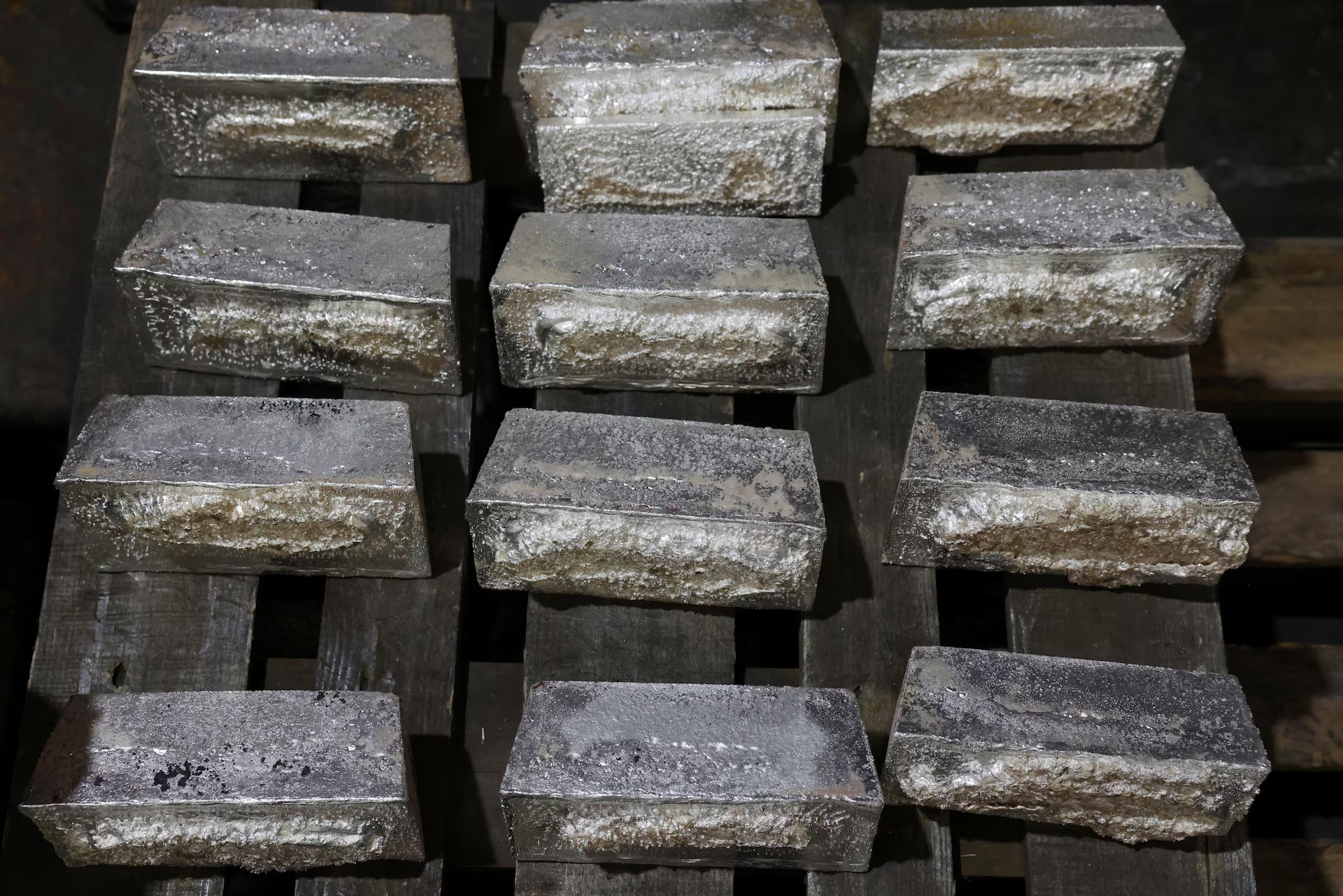
Silver has surpassed Nvidia to become the world’s second most valuable asset by total estimated market value, trailing only gold. This remarkable shift occurred amid a historic rally in silver prices, which surged over 150-170% year-to-date, pushing spot prices to record highs around $80–$84 per ounce.
The total value of all above-ground silver estimated at ~1.75 billion ounces mined historically reached approximately $4.65–$4.7 trillion, briefly exceeding Nvidia’s market capitalization of around $4.6 trillion. Gold remains firmly in first place with a valuation of ~$31–$32 trillion.
Silver’s rally was driven by strong industrial demand like solar panels, EVs, electronics, supply deficits, geopolitical tensions, safe-haven buying, and potential export restrictions from major producers like China.
Register for Tekedia Mini-MBA edition 20 (June 8 – Sept 5, 2026).
Register for Tekedia AI in Business Masterclass.
Join Tekedia Capital Syndicate and co-invest in great global startups.
Register for Tekedia AI Lab.
Nvidia, the AI chip leader, held the #2 spot among investable assets/companies for much of 2025 but was overtaken in this broader “asset” ranking that includes commodities. Note that commodity “market caps” are estimates based on current prices × historical mined supply adjusted for losses, while company values fluctuate with stock prices.
Silver’s lead was brief and volatile, with profit-taking causing pullbacks, but the crossover did happen. This highlights a rare rotation from tech/AI dominance back toward hard assets in 2025’s market environment.
Silver’s industrial demand remains a dominant force in the global market, accounting for approximately 55-60% of total silver consumption.
In 2024, industrial fabrication reached a record 680.5 million ounces (Moz), and forecasts for 2025 indicate it will stay near record levels around 680-700 Moz despite some thrifting efforts and economic headwinds. This resilience stems from silver’s unmatched electrical and thermal conductivity, making it irreplaceable in high-performance applications.

The primary drivers are tied to the global push for green energy, electrification, and digitalization. Unlike gold, silver’s demand is largely inelastic—industries continue buying even at higher prices because substitutes are limited or inferior.
The fastest-growing segment, consuming ~19-30% of industrial silver up from ~5% a decade ago. Silver paste is essential for conductive layers in photovoltaic cells, capturing and transporting electrons efficiently. Global solar installations are booming— China’s massive additions, EU’s 700 GW target by 2030.
Demand surged in recent years, with projections for continued growth despite efforts to reduce silver per panel (thrifting).
In 2024-2025, solar alone drove significant uptake, often cited as passing jewelry as the top single use.silverinstitute.org

Electric Vehicles (EVs) and Automotive Electrification
EVs use 25-50 grams of silver per vehicle vs. 15-28g in traditional cars, mainly in wiring, sensors, battery management, power electronics, and charging infrastructure. Rapid EV adoption especially in China and Europe is boosting demand at a ~3-4% CAGR through 2030.
By 2027-2031, EVs could dominate automotive silver use up to 59% of the sector. Silver is critical in printed circuit boards, connectors, switches, semiconductors, 5G infrastructure, and AI-related hardware (e.g., power-hungry data centers needing efficient conductivity).
AI and digitalization have exploded electricity/IT power needs, indirectly driving silver in grids and devices. This sector including consumer electronics has grown ~51% since 2016 and remains a steady, broad-based driver.
Other notable uses Ethylene Oxide (EO) production: Chemical catalysts for plastics and detergents. Antimicrobial properties in coatings and devices (stable demand). Upgrades for electrification and renewables.
These drivers contributed to persistent supply deficits, like 117-149 Moz in 2025, fueling the metal’s rally.
Long-term, silver’s role in the energy transition and tech revolution positions industrial demand as the core structural support for prices.