

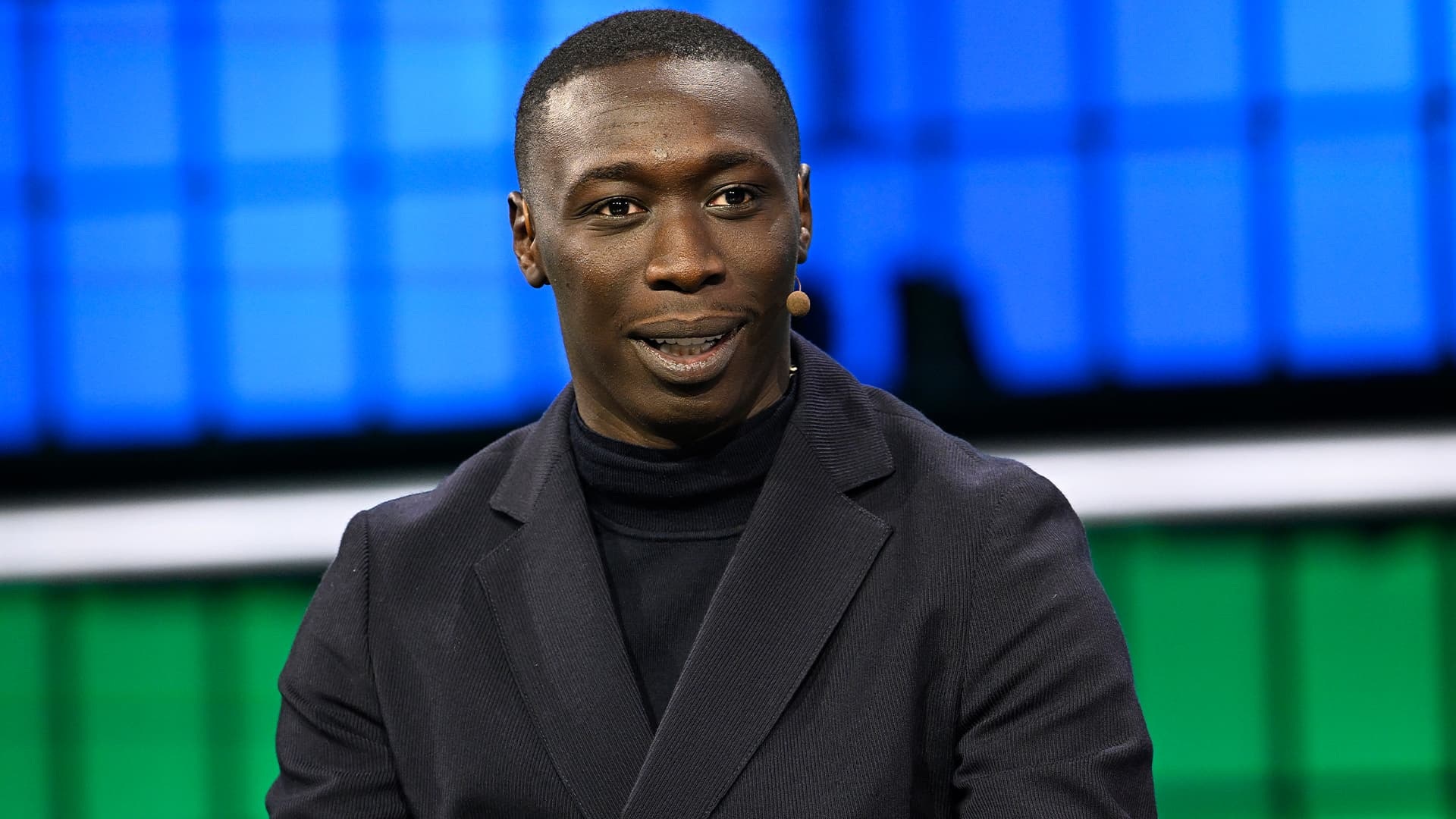
What was once celebrated as a landmark moment for the creator economy is now rapidly evolving into a cautionary tale about hype, thinly traded stocks, and the dangers of paper wealth.
The much-publicized $975 million all-stock transaction involving Khaby Lame and Rich Sparkle Holdings has hit a critical inflection point, with multiple major brokerages restricting trading in the stock and fresh questions emerging over whether the deal has, in fact, fully closed.
At first glance, the headline number suggested a near-billion-dollar payday for the world’s most-followed TikTok creator. But the structure of the transaction tells a much more complicated story.
Register for Tekedia Mini-MBA edition 20 (June 8 – Sept 5, 2026).
Register for Tekedia AI in Business Masterclass.
Join Tekedia Capital Syndicate and co-invest in great global startups.
Register for Tekedia AI Lab.
This was never a cash acquisition. Instead, Rich Sparkle agreed to issue 75 million new shares to acquire Step Distinctive Limited, the company tied to Lame’s commercial rights and intellectual property. The $975 million valuation was based entirely on the market price of those shares at the time of announcement.
That distinction has now come into play. Paper valuations built on micro-cap stock prices can unravel very quickly, and that is precisely what appears to be happening. After surging sharply in January as retail traders piled in, Rich Sparkle’s stock has now collapsed more than 90% from its peak, erasing much of the implied value behind the transaction.
The market’s reversal has been severe enough that several major brokerages have moved to either block or restrict access. According to recent reports, Interactive Brokers has marked the stock as non-tradable, while platforms including E*Trade, Merrill Lynch, Fidelity, Charles Schwab, and Vanguard have imposed various restrictions on online trading.

Business Insider quoted a spokesperson for Interactive Brokers as saying that the company “periodically reviews the securities it makes available for its clients to trade and restricts those it has determined are not appropriate to offer.”
That is highly unusual and sends a strong signal to the market. Brokerages typically take such steps when they believe a security poses heightened risks tied to liquidity, operational processing, extreme volatility, corporate uncertainty, or compliance concerns.
In this case, all of those risks appear to be present. However, the most troubling issue remains the absence of clear filings confirming the transaction’s completion.

While Rich Sparkle had previously described the acquisition as “completed,” later disclosures reportedly continued to describe the deal as conditional as of March 31, despite an earlier filing stating the transaction could become void if conditions were not met by February 28.
That contradiction goes directly to investor confidence. There is still no definitive evidence in public filings that the 75 million shares have actually been transferred, nor that Lame’s company has formally received the stock that underpins the entire valuation.
This is where the story becomes larger than a celebrity deal. It now touches on fundamental market-structure concerns. Rich Sparkle is a relatively small company, historically associated with financial printing and corporate services. The abrupt pivot into becoming a vehicle for a global creator brand has raised skepticism among analysts and market participants.
Some experts have been unusually blunt. A number of financial commentators and legal observers have described the structure as raising “red flags,” with comparisons being drawn to classic speculative micro-cap setups and possible stock-promotion dynamics.
Some brokers limit trading in low market-cap stocks because they may not stick around for long and can create logistical headaches for a firm’s back office if they disappear, said James Angel, a finance professor and FINRA program director at Georgetown University.
“Brokers feel they are doing their customers (as well as their back offices) a favor by not letting customers buy them,” Angel said.
The stock chart itself has intensified those concerns.
The pattern of a dramatic price spike following a high-profile announcement, followed by a steep collapse and restricted trading access, is precisely the kind of market behavior that often attracts scrutiny from traders and compliance desks.
Whether or not there is any formal regulatory issue, the perception damage is already significant, and the creator economy angle makes the story even more consequential.
For months, this transaction was seen as proof that digital creators could command public-market scale valuations comparable to venture-backed companies. It was supposed to mark a new phase where influence itself becomes a tradable asset. Instead, it is now exposing the structural fragility of that model.
Unlike businesses with stable recurring cash flows, creator-led companies are heavily concentrated around one personality, one audience, and one relevance cycle. That means if engagement declines, brand partnerships weaken, or audience migration accelerates, valuations can deteriorate rapidly.
Public markets tend to punish that uncertainty. In addition, there are also significant questions around the AI commercial strategy that underpinned Rich Sparkle’s projections. Part of the transaction thesis involved the creation of an AI digital twin of Khaby Lame, designed to handle brand campaigns, e-commerce selling, and multilingual content generation at scale. The company had projected that this model could generate $4 billion in annual product sales.
That forecast now appears increasingly difficult to defend. Even within China’s advanced live-commerce ecosystem, those revenue assumptions look exceptionally aggressive. The notion to convert a human creator into an endlessly scalable commercial infrastructure was strategically ambitious. But it also raises profound questions about licensing, control of likeness rights, and the long-term monetization of personal identity.
Meanwhile, Lame’s silence has only deepened uncertainty. Reports indicate he has removed Rich Sparkle’s ticker from his social profiles and has made no recent public mention of the transaction.
In markets, his silence itself becomes a signal. The immediate issue is whether the transaction is legally and financially complete, what the actual value of the stock consideration now is, and whether the entire structure can withstand scrutiny.