

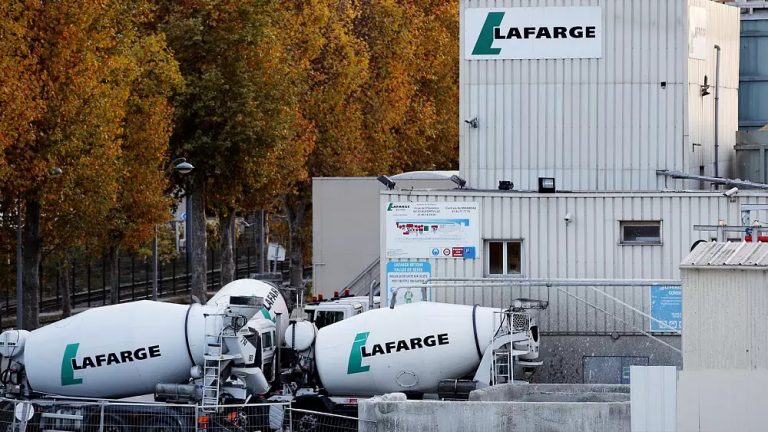
Lafarge Africa Plc has defied Nigeria’s economic turbulence with an extraordinary first-quarter performance, posting a 739.47% surge in pre-tax profit to N73.1 billion for the period ended March 31, 2025.
The cement manufacturer’s result stands out in a country grappling with high inflation, currency volatility, and a general slowdown in construction and infrastructure spending—conditions that would typically dampen earnings across the sector.
The surge mirrors the financial leap reported by BUA Cement Plc, which in the same quarter delivered a pre-tax profit of N99.7 billion, an increase of 368.58% year-on-year, fueled by record revenue and reduced foreign exchange losses. Taken together, these performances signal a cement industry that is thriving against the odds, managing to pull off record profits even as much of the Nigerian economy stumbles.
Register for Tekedia Mini-MBA edition 20 (June 8 – Sept 5, 2026).
Register for Tekedia AI in Business Masterclass.
Join Tekedia Capital Syndicate and co-invest in great global startups.
Register for Tekedia AI Lab.
Lafarge’s Q1 revenue rose to N248.3 billion, marking an 80.26% increase from N137.7 billion in the same quarter last year. Cement sales accounted for the lion’s share at N242.6 billion, while aggregates and concrete contributed N5.4 billion. Revenue from other products came in at N281 million.
Despite the broader slowdown in real estate and government infrastructure projects—a direct result of rising construction costs, declining public capital expenditure, and steep interest rates—the demand for cement appears largely inelastic. Industry watchers believe this stems from private self-build projects, growing urban sprawl, and a shift to alternative building systems that still rely heavily on cement.
The sustained demand is surprising, given that Nigeria’s economy has barely grown in real terms in recent quarters, with many state governments halting or delaying construction activity.

Margins remain strong despite cost pressures
Lafarge’s cost of sales increased by 73.82% to N125.3 billion, from N72.1 billion in Q1 2024. The increase was expected, given the rise in energy prices, costlier raw materials, and logistics disruptions. However, gross profit rose even faster, up 87.34% to N122.9 billion, thanks to better pricing strategies and possible improvements in production efficiency.
The company, like its peers, faced mounting operating costs. Selling and distribution expenses rose by 45.87% to N38.9 billion, driven by increased haulage rates and supply chain constraints. Administrative expenses also grew 56.21% to N12.9 billion.
However, these were not enough to stall momentum. Operating profit reached N71.6 billion, a significant 136.97% jump compared to N30.2 billion in the first quarter of 2024. This reflects strong operational leverage, and the ability to scale earnings faster than costs when revenue increases, an important advantage in a high-inflation economy.

Solid balance sheet and investor returns
On the balance sheet, Lafarge reported total assets of N914.7 billion. Retained earnings climbed to N364.2 billion, up 15.41% year-on-year. The company appears to have avoided the kind of foreign exchange losses that weighed on some industrial players last year. Unlike BUA, whose debt portfolio rose sharply in Q1, Lafarge has maintained a more cautious financing strategy, limiting its exposure to exchange rate fluctuations.
As of April 24, 2025, Lafarge’s share price was N79.20. In 2024, the stock returned 122%, placing it among the best-performing equities on the Nigerian Exchange. This performance may reflect investor confidence in the company’s ability to navigate persistent macroeconomic challenges.
A thriving sector in a faltering economy
The financial results of Lafarge and its competitors suggest that Nigeria’s cement sector is enjoying a rare boom, even as other sectors shrink or stagnate. This divergence highlights cement’s strategic importance in the economy and the ability of dominant players to pass on costs, optimize production, and capture market share.
Analysts say these firms are benefitting from a near-monopoly structure, improved pricing power, and investments in energy efficiency that have begun to pay off. Some also point to the dollarization of certain construction contracts, particularly in private sector-led real estate, as a buffer against naira volatility.
However, questions remain about how sustainable this momentum is. The construction sector’s long-term prospects are still threatened by public spending cuts, high borrowing costs, and potential saturation in urban housing markets. Moreover, any new FX policy shocks or regulatory changes could affect input costs and profit margins.