

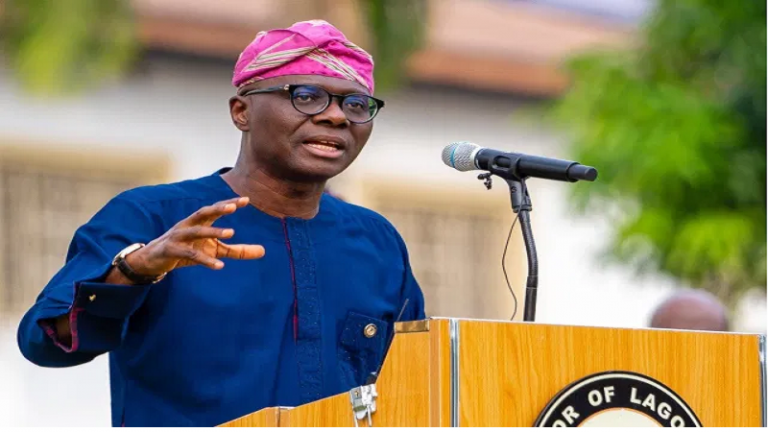
Lagos State pulled in more than $6 billion in direct foreign funding for tech startups between 2019 and 2024, Governor Babajide Sanwo-Olu said on Wednesday, underscoring the city’s growing status as Africa’s digital hub.
Speaking at the GITEX Nigeria 2025 conference in Lagos, Sanwo-Olu highlighted the state’s role as the “heart of Africa’s innovation ecosystem.” He noted that Lagos accounted for more than 70% of Nigeria’s total tech investment inflows during the five-year period, adding that most of the continent’s unicorns trace their roots to the city.
Describing Lagos as Africa’s “innovation nerve center,” Sanwo-Olu pointed to the rise of data centers, submarine cables, and expanded fibre connectivity as critical enablers of its digital growth.
Register for Tekedia Mini-MBA edition 20 (June 8 – Sept 5, 2026).
Register for Tekedia AI in Business Masterclass.
Join Tekedia Capital Syndicate and co-invest in great global startups.
Register for Tekedia AI Lab.
“This is the essence of Lagos. A place where diversity is not just demographic. But an engine of creativity and resilience. This diversity fuels a startup ecosystem that is now among the most vibrant in the world. Between 2019 and 2024, we’ll see over 6 billion in direct foreign tech startup funding,” Sanwo-Olu said.
The governor stressed that Lagos’ success has not been accidental but the result of deliberate government policies and investments in digital infrastructure. He pointed to initiatives such as the design and research fund, which provides startups with seed grants ranging from N50 million to N80 million, helping young entrepreneurs access early-stage capital that is often scarce in African markets.
He also showcased the state’s progress in digital governance, referencing the Lagos Digital Service Platform, which enables citizens to access services across healthcare, transport, and civic registration online.

The governor cited the Cowry Card, designed by young Lagosians, which now serves more than 6.5 million residents across rail, road, ferry, and taxi services. Similarly, the Blue Line rail system, which recently celebrated its second anniversary after transporting over 5 million passengers, has introduced a 50% fare reduction to mark the milestone — a move he said highlights how digital innovation extends beyond startups to improve mobility and quality of life for residents.
Sanwo-Olu added that Lagos’ diversity — where every Nigerian ethnic group is represented — remains the fuel behind its creative and resilient startup scene. He noted that international partners like Cisco, IBM, and MTN, working hand-in-hand with African startups, will be central to co-creating Africa’s digital future.
He reiterated Lagos’ ambition to build a data-driven, inclusive, and innovation-led government, investing in artificial intelligence, STEM education, green energy, and EduTech as strategic pillars to unlock opportunities for the next generation. Events like GITEX Nigeria 2025, he said, not only give young innovators a global platform but also reinforce Lagos’ standing as Africa’s economic and tech powerhouse.

A broader perspective
Sanwo-Olu’s remarks put Lagos firmly in line with Africa’s broader tech investment story. According to data from Partech Africa, funding for African startups peaked at over $5.4 billion in 2022, with Nigeria consistently ranking as the top destination for capital inflows. Within Nigeria, Lagos towers above other states, accounting for the overwhelming majority of deals.
Nairobi remains Africa’s second major tech magnet, with strengths in fintech, agritech and climate tech. Recent market tallies put Kenya’s 2024 fundraising at hundreds of millions (one recent industry snapshot showed Kenya raising about $638m in 2024 vs Nigeria’s $410m), reflecting substantive year-to-year shifts and Nairobi’s growing share in categories such as climate and AgriTech.
South Africa’s Cape Town punches above its weight thanks to universities, research centers and a strong engineering talent base that attracts both local and international investors. The Financial Times and ecosystem reports describe Cape Town’s “cluster effect” — a mix of technical talent, quality of life and specialized venture activity — that draws capital into deep-tech, healthtech and enterprise software. While Cape Town is a major hub in southern Africa, aggregate startup funding totals for South African cities have generally been smaller than Lagos’s headline foreign inflows during the 2019–24 window.
Analysts say the $6 billion milestone further highlights Lagos’ position alongside global emerging-market innovation hubs like Bangalore in India or São Paulo in Brazil, where government-backed infrastructure and demographic diversity have turned cities into magnets for venture capital.
But there are challenges ahead. Despite the funding surge, Nigerian startups still grapple with issues of foreign exchange volatility, regulatory uncertainty, and infrastructural deficits. Many investors argue that while Lagos has proven it can attract capital, ensuring policy stability, reliable power, and improved ease of doing business will determine whether it can sustain its lead.
For now, however, Sanwo-Olu’s Lagos appears to be cementing its place at the center of Africa’s tech transformation — a role he insists is only just beginning to unfold.