

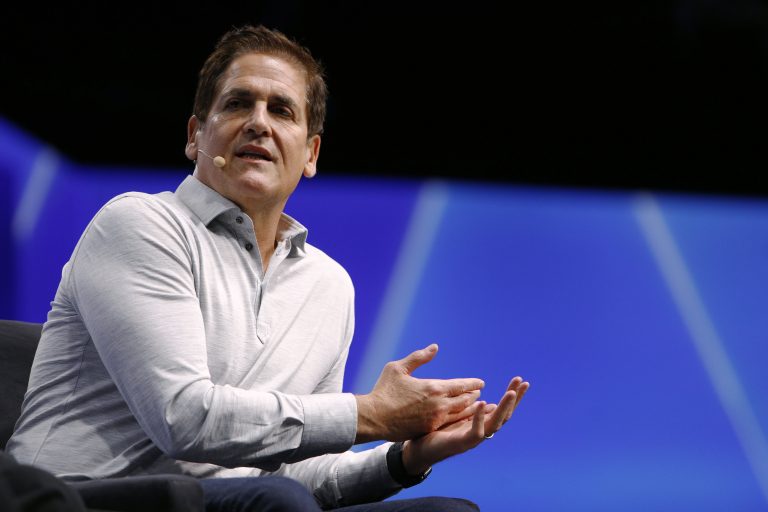
Billionaire investor Mark Cuban has declared that computer chips are poised to become the next major asset class, comparing their potential to the rise of cryptocurrency.
In a concise post on X, Cuban wrote, “Chips as an asset class will be the new crypto.”
His statement refers primarily to high-performance AI accelerators, especially advanced GPUs used for training and running large language models and other artificial intelligence systems.
Register for the next Tekedia Mini-MBA.
Register for Tekedia AI in Business Masterclass.
Join Tekedia Capital Syndicate and co-invest in great global startups.
As AI systems become more sophisticated, demand for specialized computing hardware has grown significantly, turning AI chips into one of the most important components of the global technology industry.
Companies are investing heavily in AI computing infrastructure. Chipmakers are developing increasingly powerful processors, while cloud providers are building massive data centers equipped with specialized AI accelerators.
Technology companies are also designing their own chips to reduce their dependence on third-party hardware and gain greater control over computing costs and performance.

The competition has expanded beyond data centers. AI chips are increasingly finding their way into smartphones, personal computers, automobiles, cameras and other edge devices.
These chips allow AI tasks to be processed locally rather than sending every request to a remote data center. This can improve response times, reduce reliance on internet connectivity, and potentially provide greater privacy
Cuban’s comparison with Crypto, draws on shared characteristics of scarcity and intense demand. Just as limited supply and growing interest fueled crypto markets in earlier years, advanced chips face constrained production capacity amid surging requirements from AI developers, cloud providers, and enterprises.

Hardware once treated mainly as depreciating equipment is increasingly viewed through the lens of rental value, utilization rates, and potential financial structures.
Market developments already reflect this shift. Nvidia recently reported data center revenue of $75.2 billion in a single quarter, a 92 percent increase year over year, driven largely by AI-related demand.
Financing deals for GPU infrastructure, such as large facilities secured by cloud providers specializing in AI compute, demonstrate lender confidence in sustained demand.
Exchanges are also moving toward standardization, with plans for futures contracts tied to GPU rental costs that would treat computing power more like a tradable commodity.
Cuban’s own relationship with crypto has evolved. He was once a notable skeptic of Bitcoin, later expressed greater interest in Ethereum’s smart-contract capabilities, and has more recently reduced Bitcoin holdings while focusing attention on broader technology trends.
His latest comment aligns with a wider conversation about where speculative and institutional capital may flow as AI infrastructure continues to scale. Whether chips ultimately attract the same intensity of retail and institutional interest once directed at crypto remains uncertain.
The prediction underscores a clear market reality: advanced computing hardware has become a critical bottleneck and a focal point for investment as artificial intelligence reshapes technology and capital allocation.
Outlook
Looking ahead, the AI chip market could become one of the most strategically important segments of the global technology economy.
As AI adoption expands across financial services, healthcare, manufacturing, autonomous systems, robotics and consumer technology, demand for high-performance computing is likely to remain strong.
The market could also evolve beyond simply buying and selling physical chips. As computing power becomes increasingly scarce and valuable, GPU rental, compute leasing, chip-backed financing and futures markets could become more prominent.
This would create financial instruments around computing capacity in much the same way traditional markets have developed around commodities and other productive assets.