

Meta Platforms’ acquisition of Manus for about $2 billion does more than add another artificial intelligence startup to Mark Zuckerberg’s expanding AI empire. It underscores a deeper shift now underway in Silicon Valley: after years of model demos, benchmarks, and eye-watering infrastructure spend, investors and regulators are zeroing in on which AI products actually make money — and where they come from.
Manus emerged into public view last spring with an unusually loud buzz for a relatively young startup. A demo video circulated widely among venture capitalists and engineers, showing AI agents performing end-to-end tasks that went beyond chat or simple retrieval. In the footage, Manus’ system screened job applicants, planned multi-leg vacations, and analyzed stock portfolios with minimal human guidance. The company said its technology outperformed OpenAI’s Deep Research, a claim that was not independently verified but nonetheless helped push Manus into elite AI conversations almost overnight.
Capital followed quickly. In April, Benchmark led a $75 million funding round that valued Manus at $500 million post-money, with Benchmark partner Chetan Puttagunta taking a board seat. Chinese media later reported that Manus had already secured backing from Tencent, ZhenFund, and HSG, formerly Sequoia China, through an earlier $10 million raise. That early mix of U.S. and Chinese capital would later become a sensitive issue.
Register for Tekedia Mini-MBA edition 20 (June 8 – Sept 5, 2026).
Register for Tekedia AI in Business Masterclass.
Join Tekedia Capital Syndicate and co-invest in great global startups.
Register for Tekedia AI Lab.
By mid-December, Manus disclosed figures that few AI startups at its stage can point to. The company said it had attracted millions of users and was generating more than $100 million in annual recurring revenue from subscriptions to its membership service. At a time when much of the AI sector remains heavily loss-making, those numbers stood out. According to The Wall Street Journal, Meta began acquisition talks around that period, agreeing to pay roughly $2 billion — the valuation Manus was reportedly targeting for its next funding round.
For Zuckerberg, the appeal is straightforward. Meta has tied its future growth narrative to artificial intelligence, yet investors have grown uneasy about the scale of spending required to compete with rivals such as Microsoft, Google, and Amazon. Meta plans to spend around $60 billion on AI infrastructure, part of a broader, industry-wide surge in debt-backed investment in data centers, chips, and energy capacity. Manus offers a counterpoint to those concerns: a consumer-facing AI product that is already producing significant revenue.
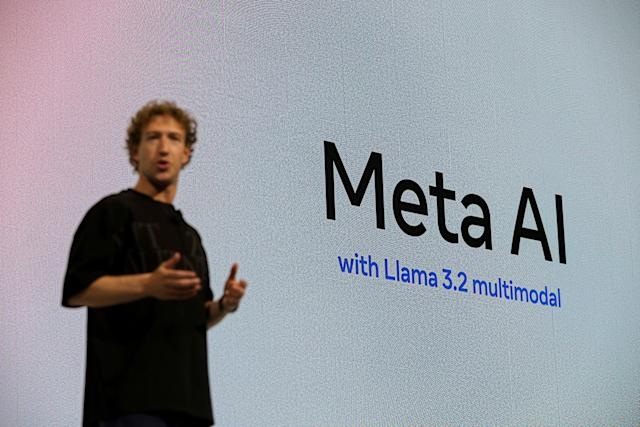
Meta said it will keep Manus operating independently while integrating its AI agents into Facebook, Instagram, and WhatsApp. Those platforms already host Meta AI, the company’s in-house chatbot, suggesting Manus’ technology may be used to power more autonomous, task-oriented features rather than simple conversational tools. If successful, that integration could help Meta demonstrate clearer returns on its AI spending by embedding monetizable services directly into its social platforms.

However, the deal also arrives with geopolitical baggage. Manus’ founders are Chinese nationals who launched its parent company, Butterfly Effect, in Beijing in 2022 before relocating to Singapore earlier this year. That background has already drawn scrutiny in Washington. Senator John Cornyn, a senior Republican on the Senate Intelligence Committee, criticized Benchmark’s investment in Manus in May, raising concerns about American capital supporting firms with Chinese origins.
Cornyn’s stance reflects a broader, bipartisan posture in Congress, where skepticism toward China’s role in advanced technologies has hardened. Lawmakers across party lines have increasingly called for tighter oversight of cross-border investments, especially in AI, semiconductors, and data-heavy platforms.
Meta has sought to pre-empt regulatory resistance. The company told Nikkei Asia that, after the acquisition, Manus will have no remaining Chinese ownership and will cease operations in China altogether.

“There will be no continuing Chinese ownership interests in Manus AI following the transaction, and Manus AI will discontinue its services and operations in China,” a Meta spokesperson said.
Whether those assurances will be enough remains an open question. U.S. regulators are paying closer attention not just to current ownership structures, but also to where technology was developed and how it might be repurposed. That scrutiny could shape how quickly Meta can close the deal and how Manus’ technology is deployed globally.
Beyond the politics, the acquisition highlights a turning point in the AI boom. The early phase was defined by spectacle — powerful demos, soaring valuations, and promises of transformation. Meta’s move suggests the next phase will be judged more harshly, with revenue, user adoption, and regulatory risk carrying far more weight.
In that environment, Manus is valuable not just for what its AI can do, but for what it represents, which is proof that, at least for some players, artificial intelligence is starting to pay its way.