

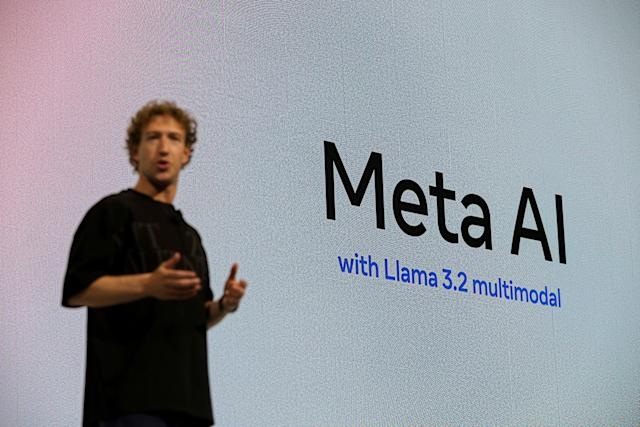
Meta has taken another significant step in the artificial intelligence race with reports that its latest AI model, code-named Watermelon, has reached performance levels comparable to GPT-5.5.
The development underscores the rapid pace of innovation in the AI industry, where leading technology companies are investing billions of dollars to build increasingly capable foundation models.
As competition intensifies, advancements like Watermelon are reshaping expectations for what AI systems can accomplish and how they will influence businesses, developers, and consumers worldwide.
The emergence of Watermelon reflects Meta’s determination to establish itself as one of the dominant players in generative AI. After releasing several iterations of its open-weight Llama models, the company has continued refining its research and infrastructure to produce more capable systems.
Register for the next Tekedia Mini-MBA.
Register for Tekedia AI in Business Masterclass.
Join Tekedia Capital Syndicate and co-invest in great global startups.
Reports suggesting that Watermelon has caught up to GPT-5.5 indicate that Meta has made substantial progress in areas such as reasoning, coding, language understanding, and multimodal capabilities.
While exact benchmark results have not been publicly detailed, the comparison highlights the narrowing performance gap among the industry’s leading AI developers. For Meta, achieving parity with GPT-5.5 is about more than technical prestige.
The company views advanced AI as a core component of its long-term strategy across products such as Facebook, Instagram, WhatsApp, and its growing suite of AI assistants.

More capable models can enhance content creation, customer support, software development, search, and personalized recommendations while opening new opportunities for enterprise services. By improving model quality, Meta also strengthens its ability to attract developers and businesses looking for powerful AI tools.
The broader AI landscape has become increasingly competitive over the past year. Companies including OpenAI, Anthropic, Google, xAI, and Meta are racing to build models that excel across a wide range of tasks while reducing costs and improving efficiency.
Success is no longer measured solely by benchmark scores. Organizations are also focused on inference speed, deployment costs, safety, context length, and the ability to integrate seamlessly into consumer and enterprise applications. Watermelon’s reported performance suggests Meta intends to compete aggressively across all of these dimensions.

The announcement also reflects the enormous investments being made in AI infrastructure. Training frontier models requires vast computational resources, specialized AI chips, and massive datasets.
Meta has committed billions of dollars to expanding its AI computing capacity, recognizing that hardware and software advancements must evolve together. As newer models become more efficient, they can deliver stronger performance while lowering operational costs, making advanced AI more accessible to developers and businesses.
Stronger competition among AI companies often leads to better products and faster innovation. As multiple organizations reach similar levels of model capability, customers may benefit from lower prices, expanded features, improved reliability, and more specialized AI solutions.
Developers could gain access to a wider variety of models tailored for coding, research, education, healthcare, finance, and creative work. Watermelon’s reported progress illustrates how quickly the frontier of artificial intelligence continues to advance.
As companies continue refining their models and investing heavily in AI research, the coming years are likely to bring even more capable systems that transform productivity, creativity, and digital experiences across virtually every sector of the global economy.