

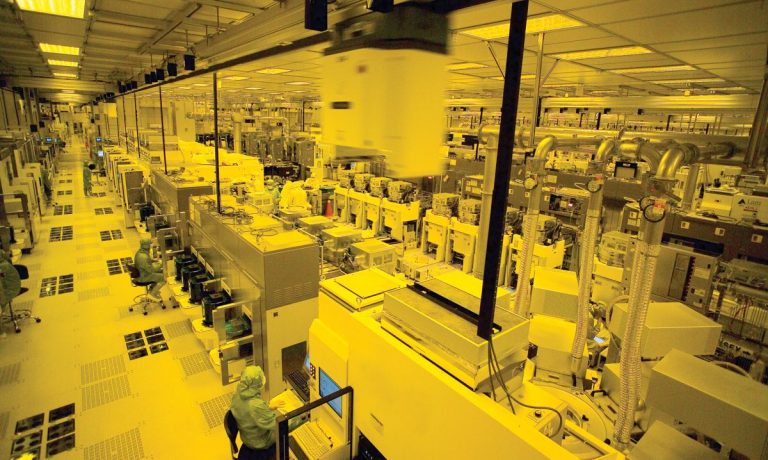
Micron Technology is preparing its largest commitment yet to Japan’s semiconductor revival, with plans to invest 1.5 trillion yen — roughly $9.6 billion — in a new high-bandwidth memory manufacturing plant in Hiroshima.
The figure, reported by the Nikkei and attributed to people familiar with the matter, marks one of the most aggressive expansions by a U.S. chipmaker in Japan in more than two decades.
Construction at Micron’s existing Hiroshima complex is scheduled to begin in May next year. The first shipments of advanced HBM chips are targeted for around 2028, positioning the facility to come online just as demand for AI-class memory is projected to deepen.
Register for Tekedia Mini-MBA edition 20 (June 8 – Sept 5, 2026).
Register for Tekedia AI in Business Masterclass.
Join Tekedia Capital Syndicate and co-invest in great global startups.
Register for Tekedia AI Lab.
Japan’s Ministry of Economy, Trade, and Industry is prepared to shoulder a sizable part of the burden. According to the Nikkei, the ministry will provide up to 500 billion yen in subsidies — a sign of how urgently Tokyo wants to restore its semiconductor footprint. Once a global leader in memory and logic, Japan has spent the past decade trying to claw back relevance after years of underinvestment and the rise of South Korea and Taiwan.
Tokyo’s approach has shifted dramatically. Instead of hoping domestic players can recover alone, the government has thrown open its doors to foreign heavyweights such as Micron and TSMC. That effort has also included funding a new advanced-logic project built on IBM technology, part of a push to rebuild every layer of the chip ecosystem — from research and manufacturing to packaging and supply-chain logistics.
The timing aligns with a surge in demand for high-bandwidth memory. HBM has become the essential component in artificial intelligence systems, enabling the rapid throughput required to train and deploy large models. As cloud giants race to expand data-center clusters built around GPUs, the global HBM market has tightened sharply. SK Hynix dominates the space, but Micron’s Hiroshima expansion is designed to close that gap and diversify its operations away from Taiwan.

Analysts say diversification is no longer a strategic luxury. It is a geopolitical necessity. Tensions around the Taiwan Strait have pushed chipmakers to spread their manufacturing footprints across multiple regions to guard against disruption. Japan’s subsidies, political stability, and long-standing base of semiconductor talent have made it an increasingly attractive alternative.
The Hiroshima project is also part of Japan’s broader attempt to anchor itself in the world’s AI supply chain. By drawing companies like Micron and TSMC into long-term projects, Tokyo aims to lock in domestic jobs, secure access to advanced components, and make Japan indispensable again to global chip production.
Micron’s new plant, expected to deliver HBM for AI data-centers, high-performance computing systems, and next-generation enterprise hardware, will enter service during a period when memory demand is forecast to rise consistently. AI training complexes are expanding rapidly, and HBM shortages have become a recurring bottleneck. Investors tracking Micron’s strategy see the Hiroshima buildout as a long-term play to capture the next wave of AI-driven hardware spending.

Japan, for its part, is racing to ensure that this investment cycle does not slip away as previous ones did. It lost ground in the 2000s when domestic chip companies struggled to scale against Korean rivals. The current era — dominated by AI, data-center growth, and strategic industrial policy — offers Japan a rare second chance. Micron’s 1.5-trillion-yen commitment signals that global chipmakers are taking that opportunity seriously.
By 2028, when Micron intends to start shipping HBM from Hiroshima, the global memory landscape will be more competitive, more politically charged, and more dependent on AI infrastructure. The company’s push into Japan, backed by one of the world’s most aggressive subsidy programs, puts it in a position to compete with SK Hynix and Samsung.