

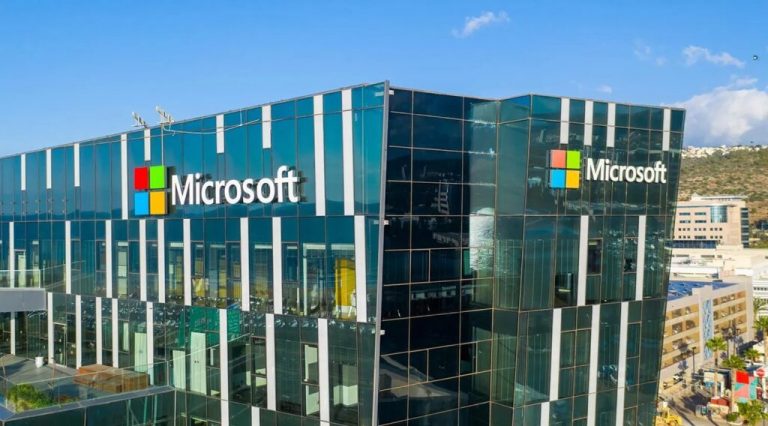
Microsoft said Thursday it will allocate $4 billion to construct a second data center in Wisconsin, expanding its U.S. footprint as demand for artificial intelligence infrastructure continues to accelerate.
The announcement comes just months after the company committed $3.3 billion to its first Wisconsin facility, located in Mount Pleasant, which is expected to go online in early 2026. Together, the two sites represent one of Microsoft’s largest single-state infrastructure projects, underscoring the intensifying race among global cloud providers to secure capacity for AI workloads.
The first Mount Pleasant data center will house hundreds of thousands of Nvidia Blackwell GB200 GPUs, Microsoft President and Vice Chair Brad Smith said at a town hall meeting. The chips, unveiled earlier this year, are designed to handle the most advanced AI training and inference workloads.
Register for Tekedia Mini-MBA edition 20 (June 8 – Sept 5, 2026).
Register for Tekedia AI in Business Masterclass.
Join Tekedia Capital Syndicate and co-invest in great global startups.
Register for Tekedia AI Lab.
“It will deliver 10x the performance of the world’s fastest supercomputer today, enabling AI training and inference workloads at a level never before seen,” Microsoft CEO Satya Nadella wrote in a post on X.
Smith, who spent part of his childhood in Mount Pleasant, said the company paused to carefully evaluate the second phase of construction before committing another $4 billion. The new facility will be of a similar scale to the first and is expected to go live in 2027 or later.
A Homegrown Power Play
Wisconsin’s Democratic Governor Tony Evers hailed the announcement, noting the state will now be home to the largest concentration of GPUs under one roof in the world. The project also repurposes land once slated for Foxconn’s manufacturing plant, which failed to materialize at the promised scale.

Water use has been a concern for locals, but Smith emphasized that the facility’s impact will be modest compared with Foxconn’s plans. The data center will require about 2.8 million gallons of water annually, while Foxconn had been permitted to consume over 7 million gallons per day.
Smith acknowledged that building such a vast computing infrastructure raises energy concerns. The two data centers together may require more than 900 megawatts of power. To mitigate the impact, Microsoft has pledged to match its fossil fuel use with carbon-free contributions to the grid.
“I just want you to know we are doing everything we can, and I believe we’re succeeding, in managing this issue well, so that you all don’t have to pay more for electricity because of our presence,” Smith told residents.

A 250-megawatt solar farm currently under construction about 150 miles northwest of the site will contribute renewable energy to the project.
Part of a Global Buildout
The Wisconsin announcement is the latest in a string of multibillion-dollar data center investments by Microsoft. Earlier this week, Smith said the company has earmarked $15.5 billion for infrastructure in the U.K. through 2028, as part of efforts to scale up AI capacity in Europe.
Separately, Amsterdam-based Nebius Group disclosed last week that Microsoft agreed to spend up to $19.4 billion over five years to rent AI data center capacity, highlighting the company’s reliance on both owned and leased infrastructure.
With more than 700 million users relying on OpenAI’s ChatGPT, which runs on Microsoft’s Azure cloud, and with enterprise software makers from Adobe to Salesforce rolling out AI enhancements, demand for GPUs and hyperscale infrastructure has reached unprecedented levels.
For Microsoft, the Wisconsin buildout represents more than just capacity. It signals the company’s ambition to dominate the global AI infrastructure market, placing it in direct competition with rivals Amazon Web Services and Google Cloud.
Smith suggested that Microsoft’s careful phasing reflects both market opportunity and community engagement.
“We did pause to think through exactly what we would build for phase two, how we would build it,” he said, adding that the company is balancing growth with sustainability.
If completed on schedule, the dual Wisconsin sites will cement the state as a central hub in the global AI arms race — a transformation few anticipated when Foxconn first broke ground in Mount Pleasant.