

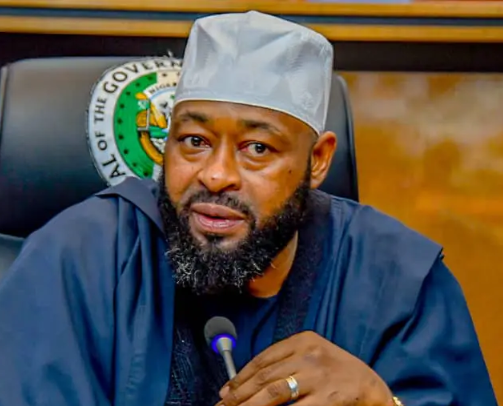
A statement by Niger State Governor Umar Bago claiming that he pays graduate assistants N500,000 on his farms and has built farm communities has stirred a wave of mixed reactions across social media, with Nigerians questioning the truth of his claim and the state’s economic priorities.
The governor said: “On my farms, I pay graduate assistant ?500,000, build farm communities in farm estates.” The comment, meant to highlight his investment in agriculture, quickly became a talking point among citizens who debated its authenticity, implications, and relevance to the current realities in Niger State and Nigeria at large.
For many users, the governor’s statement sounded unbelievable in a country where a large number of university graduates struggle to earn even half that amount in government or private jobs. Several commenters challenged him to back up his claim with evidence. “Let him show the payslips of those workers. Haba!” one user demanded. Another added, “Where is the produce of the farm from Niger State in the Nigerian market?” Their comments reflected deep public skepticism toward political figures and their pronouncements.
Register for Tekedia Mini-MBA edition 20 (June 8 – Sept 5, 2026).
Register for Tekedia AI in Business Masterclass.
Join Tekedia Capital Syndicate and co-invest in great global startups.
Register for Tekedia AI Lab.
Others used the opportunity to question the government’s broader handling of labour and education. “How much do you pay primary school teachers in your state, sir?” a commenter asked, suggesting that if such high wages were possible on his farms, the same attention should be given to public workers. Another user drew attention to the security challenges facing farmers: “People are ready to go to farm without anyone employing them, but the issue is insecurity. People are scared of being killed by bandits or terrorists. Solve this insecurity first.”
Several reactions were laced with sarcasm and disbelief. One commenter dismissed the governor’s words as “Talk talk with a pinch of fact,” while another wrote simply, “These people lie with ease… Baby tyrant.” Some went further, linking the statement to a wider problem of political dishonesty. “Nigerian politicians will never make heaven,” one wrote bluntly.
“On my farms, I pay graduate assistant 500,000 Naira, build farm communities in farm estates.”
Niger State Governor Umar Bago says Nigeria must move from salary-based payments to a wage system. pic.twitter.com/267C4IttVh
— News Central TV (@NewsCentralTV) October 17, 2025
Yet amid the chorus of doubt, a smaller but notable group of users expressed support for the idea of fair pay in agriculture. One commenter said, “I have always advocated for this! Hourly wages are the way to go, especially for the size of Nigeria’s population.” Another user praised the governor’s statement as forward-thinking, saying, “If what the Governor said is true, he needs to be applauded.” A few others interpreted his post as a call for wage reform, with one adding, “This is what I have been clamouring for. Salaries should be weekly or hourly like in developed countries.”

Some reactions also carried humour. A user from Minna joked, “Abeg make una help me find job for this farm, I dey Minna currently,” earning several laughing emojis from others who joined the thread. The playful tone reflected the frustration and resignation many Nigerians feel when hearing lofty political claims that seem detached from their daily struggles.
The online discussion revealed three broad patterns: widespread doubt about the governor’s claim, criticism linking the issue to larger governance problems such as low wages and insecurity, and a small cluster of supportive voices who saw value in higher pay for farm labour. The division illustrates the complex relationship between political communication and public trust in Nigeria, where citizens increasingly demand proof before accepting official statements.
Although the governor’s post aimed to promote his agricultural ventures as a model for rural development, it instead became a test of credibility. For many Nigerians, the issue was less about how much he pays farm workers and more about whether such claims reflect the actual situation in the state. The call for evidence shows a public eager to hold leaders accountable in a climate of economic hardship and rising unemployment.
