

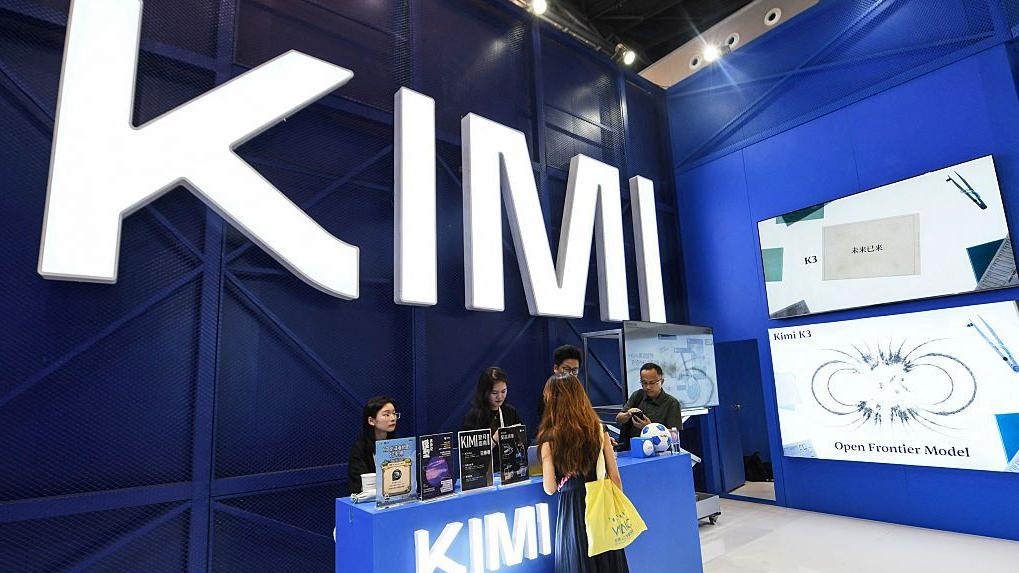
Chinese artificial intelligence startup Moonshot AI has temporarily suspended new subscriptions to its flagship Kimi K3 model after demand overwhelmed its computing infrastructure, highlighting one of the industry’s biggest challenges as developers race to build ever more powerful AI systems.
The capacity crunch comes at a pivotal moment for the company, which is seeking up to $2 billion in fresh funding and preparing for a potential Hong Kong initial public offering (IPO) that could value the startup at around $30 billion.
According to sources cited by Reuters, Moonshot is restructuring its corporate organization by unwinding its offshore holding structure ahead of the planned listing, while holding discussions with investment banks including Goldman Sachs and China International Capital Corp (CICC) about a Hong Kong IPO.
Register for the next Tekedia Mini-MBA.
Register for Tekedia AI in Business Masterclass.
Join Tekedia Capital Syndicate and co-invest in great global startups.
Although preparations are underway, the listing timetable remains flexible, underpinning uncertain market conditions and the company’s rapidly evolving capital needs.
Moonshot said demand for Kimi K3, unveiled on Friday as what it describes as the world’s largest open-weight AI model with 2.8 trillion parameters, has significantly exceeded expectations. The company said user requests during the first 48 hours after launch approached the limits of its existing computing clusters, creating what it described as “unprecedented compute challenges.”
As a result, Moonshot immediately suspended new consumer subscriptions while preserving service quality for existing paying customers. Current subscribers will continue to receive uninterrupted access, while new memberships will be reopened gradually as additional computing capacity becomes available.

The company also announced that future subscription offerings will be divided into separate plans, including one specifically designed for coding workloads, allowing computing resources to be allocated more efficiently according to different user requirements.
In a post on X, Moonshot acknowledged the unexpectedly strong response.
“Kimi K3 has received far more love than we expected, and our GPUs are feeling it,” the company said.

The episode has revealed a common problem facing AI developers: success itself is becoming expensive.
AI Demand Is Shifting From Training to Inference
While companies initially focused their spending on training frontier AI models, the rapid growth in commercial usage has shifted attention toward inference computing—the processing power required every time users interact with AI systems.
Models such as Kimi K3 are particularly compute-intensive because they specialize in coding, reasoning, and AI agent workflows. Unlike simple chatbot interactions, these tasks often involve multiple rounds of model execution, longer context windows and repeated reasoning steps, significantly increasing GPU usage for each user session.
Although Kimi K3 is released as an open-weight model, allowing developers to download and modify it, analysts note that very few organizations can realistically operate a 2.8 trillion-parameter model independently because of the enormous hardware requirements.
Consequently, most users continue relying on cloud-hosted services, placing substantial pressure on providers’ data center infrastructure.
The computing bottleneck comes as Moonshot aggressively expands its capital base.
Founded in 2023 by Yang Zhilin, a former Carnegie Mellon University doctoral researcher, Moonshot has rapidly emerged as one of China’s leading AI startups. According to fundraising materials reviewed by Reuters, the company raised more than $2 billion in May from investors including Meituan, China Mobile and CPE, bringing its cumulative fundraising to more than $5.5 billion.
It has since begun seeking an additional $2 billion, with investor interest reportedly valuing the company at approximately $30 billion. The funding is seen as an indication of growing investor confidence that China’s leading AI companies are narrowing the performance gap with major U.S. developers while benefiting from lower operating costs and increasingly competitive open-weight models.
Moonshot’s experience also highlights the industry’s most significant operational challenge. Chinese AI companies have accelerated model development over the past year, with firms including Moonshot, DeepSeek, MiniMax, Z.ai and Alibaba releasing increasingly capable systems at a rapid pace.
However, access to computing infrastructure has emerged as the principal bottleneck.
U.S. export restrictions on advanced Nvidia AI processors have limited Chinese companies’ access to the world’s most powerful GPUs, forcing them to maximize available domestic computing resources while increasingly relying on Chinese alternatives such as Huawei’s Ascend AI chips.
Several leading startups, including DeepSeek, have reportedly sought additional funding specifically to expand computing capacity rather than model development alone. The shortage suggests that competitive advantage in AI is increasingly determined not only by algorithm quality but also by ownership of large-scale computing infrastructure.
IPO Reflects Broader AI Investment Boom
Moonshot’s planned Hong Kong listing would add to a growing pipeline of Chinese AI companies seeking public market capital.
Unlike earlier generations of Chinese technology listings centered on internet platforms and e-commerce, the new wave is driven primarily by demand for funding expensive AI infrastructure, including GPU clusters, networking equipment and data centers.
Investors have shown increasing willingness to finance these capital-intensive businesses as frontier AI models become central to software development, enterprise automation and digital services.
Moonshot’s rapid fundraising mirrors similar investment activity across the sector, where companies are raising billions of dollars not simply to build more advanced models but also to finance the computing capacity needed to serve rapidly expanding user bases.
However, the company’s infrastructure challenges come amid an increasingly competitive Chinese AI industry. Only days before Moonshot launched Kimi K3, rival developers including Z.ai and MiniMax introduced new large language models aimed at closing the remaining performance gap with leading U.S. systems.
Meanwhile, Alibaba, which is also a strategic investor in Moonshot, announced on Sunday that its Qwen3.8-Max-Preview, a 2.4 trillion-parameter model, had become available on its AI platforms ahead of a planned open-weight release.