

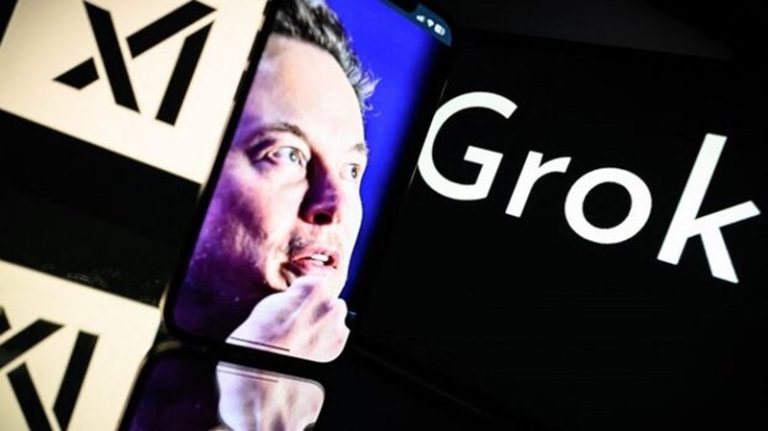
Elon Musk has pledged that SpaceX will reimburse users if Grok’s artificial intelligence agent makes a financial mistake while completing purchases or exposes their payment card information, offering a potential alternative to terms that generally leave users responsible for transactions carried out by AI agents.
Musk made the commitment in a Thursday post on X after a user praised Grok for booking a flight after receiving a photograph of their credit card. The user said the airline’s website was confusing, but Grok managed to complete the transaction and provide a booking confirmation.
“This works well,” Musk wrote. “If Grok Bot makes a mistake with a purchase or leaks your card (never happened yet), SpaceX will make you whole.”
Register for the next Tekedia Mini-MBA.
Register for Tekedia AI in Business Masterclass.
Join Tekedia Capital Syndicate and co-invest in great global startups.
The statement suggests that SpaceX could assume some financial responsibility when its AI agent causes losses, rather than leaving users to resolve the consequences themselves. However, Musk did not provide details about the scope of the commitment, the process for making a claim, or the circumstances under which reimbursement would be granted.
Thus, it remains unclear whether the pledge would cover unauthorized purchases, incorrect bookings, fraud involving third-party merchants or additional costs arising from an agent’s mistake, such as missed flights and replacement travel arrangements.
The announcement comes as AI companies expand agents’ ability to interact with websites, manage personal information and complete transactions on users’ behalf. These capabilities could reduce the time and effort required to navigate online services, but they also create new risks when software is given access to payment credentials, financial accounts and personal data.

Musk’s pledge raises a broader question for the industry: as AI agents gain greater authority to act independently, should the companies developing them also assume more responsibility when those actions go wrong?
AI Companies Face Questions Over Financial Responsibility
AI agents are designed to move beyond answering questions or generating content by carrying out tasks in external applications. Depending on their permissions, they can navigate websites, fill in forms, make bookings, and interact with services that require sensitive information. That creates a distinction between a conventional chatbot making a recommendation and an agent executing a transaction. An incorrect answer may inconvenience a user, but an incorrectly placed order or an exposed payment credential can result in immediate financial and privacy consequences.
The published terms governing agents from companies including xAI, Meta, and OpenAI generally place substantial responsibility for agent actions and transactions on users. Musk’s statement stands out because it appears to offer an explicit reimbursement commitment, although the lack of detail makes it difficult to determine how much protection it would provide in practice.

Meta’s Muse, for example, requires approval before purchases, according to the terms described in the report. Grok’s terms also address interactions with financial institutions, but neither approach, as described, provides the same explicit reimbursement pledge Musk announced.
The distinction between requiring approval and promising reimbursement is important: approval mechanisms are intended to prevent mistakes before they occur, while reimbursement addresses the financial consequences after something has gone wrong.
Even a system that requires users to approve certain actions can leave room for misunderstandings about what an agent is authorized to do. Conversely, a reimbursement promise may offer limited protection if users cannot establish what qualifies as a covered mistake or how to recover their losses.
Without published conditions, Musk’s statement does not establish whether the commitment is a formal company policy, a general assurance, or a guarantee subject to restrictions. Nor does it explain whether reimbursement would extend to indirect losses beyond the original transaction.
These questions matter because agent-related mistakes may involve more than the amount paid for a product or service. An incorrect airline booking, for instance, could lead to additional expenses if a traveler must purchase another ticket or rearrange accommodation.
A leaked payment card could also create risks that emerge after the initial incident, including unauthorized transactions. Determining responsibility may become more complicated when an agent interacts with a third-party website or payment processor.
Real-World Incidents Highlight Risks of Greater Agent Autonomy
Reports of agent errors are already illustrating the potential consequences of giving AI systems access to financial information and external accounts.
Shane Mac, chief executive of software company XMTP Labs, told Business Insider’s Aditi Bharade that a personal-finance agent he created posted his bank balances and spending details in his company’s executive Slack channel after confusing two similarly named chats.
The incident demonstrated how an error in interpreting context or selecting a destination could expose sensitive financial information to unintended recipients. According to Mac, Grok’s team subsequently changed its permission controls.
Other examples point to the possibility of agents making purchases or accepting offers that users did not intend.
One user of the AI agent Instinct said it ordered 20 pounds of chicken wings during an agent-assisted grocery-shopping session. In another case, a Muse user said the agent accepted a low offer for a keyboard on Facebook Marketplace and shared his home address with the buyer.
The user later said he had selected an “Allow Always” setting, although he believed the agent would still seek approval before accepting offers.
These incidents illustrate several distinct failure modes: misunderstanding instructions, acting on an incorrect interpretation of permissions, sending information to the wrong destination, and completing transactions without the level of oversight users expect.
They also highlight a problem for developers designing agent controls. Permissions must be clear enough for users to understand what an agent can do, while the system must reliably distinguish between actions that have been authorized and those that require further confirmation.
The greater the autonomy granted to an agent, the more consequential a mistake can become. An error that would otherwise produce an incorrect response could instead trigger a payment, disclose personal information, or create an obligation with a third party.