

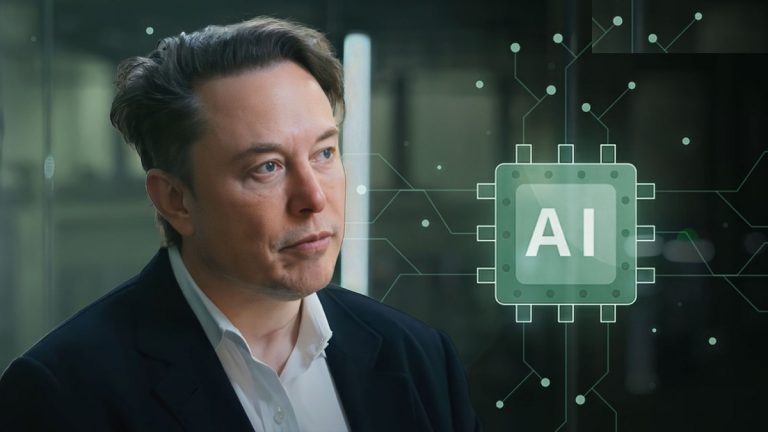
The legal war between Elon Musk and OpenAI took a sharper turn over the weekend after court filings revealed Musk allegedly warned OpenAI president Greg Brockman that he and CEO Sam Altman would become “the most hated men in America” if they refused to settle the case before trial.
The disclosure emerged in a filing submitted Sunday by lawyers representing Altman and Brockman in the closely watched California civil trial, which has increasingly evolved into a broader fight over the future control, governance, and economics of artificial intelligence.
According to the filing, Musk contacted Brockman around April 25, just two days before trial proceedings began, to test whether OpenAI’s leadership was interested in reaching a settlement.
Register for the next Tekedia Mini-MBA.
Register for Tekedia AI in Business Masterclass.
Join Tekedia Capital Syndicate and co-invest in great global startups.
Brockman reportedly replied by proposing that both parties withdraw their claims. The filing says Musk then responded: “By the end of this week, you and Sam will be the most hated men in America. If you insist, so it will be.”
Lawyers for OpenAI’s executives are now seeking to have the exchange admitted into evidence, arguing it demonstrates Musk’s underlying motivation in the lawsuit and supports their claim that the litigation is tied to competitive tensions in the AI industry.
The filing argues the message “tends to prove motive and bias,” particularly that Musk’s objective is to damage a rival AI company and its leadership.

The courtroom battle has become one of the most consequential disputes in the global AI industry because it sits at the intersection of corporate control, nonprofit governance, investor influence, and the commercial race to dominate generative AI.
Musk sued OpenAI, Altman, and Brockman in 2024, accusing the company’s leadership of betraying its original nonprofit mission. He claims he donated roughly $38 million to help establish OpenAI in 2015 on the understanding that the organization would develop artificial intelligence for the benefit of humanity rather than private financial gain.
Musk’s argument is centered on OpenAI’s evolution from a nonprofit research lab into a hybrid structure dominated by a rapidly expanding for-profit arm now valued at more than $800 billion. The xAI founder has repeatedly described the transition as a “bait-and-switch,” accusing OpenAI executives of commercializing technology originally developed under a public-interest mandate.

Taking the witness stand last week, Musk told the court: “Essentially, they’re trying to steal a charity, and we’re trying to stop them.”
The case has become even more politically and commercially sensitive because Musk now directly competes with OpenAI through his AI company, xAI, creator of the Grok chatbot.
That competitive overlap has allowed OpenAI’s legal team to frame the lawsuit as part ideological dispute, part corporate warfare. The tensions also expose the increasingly fractured alliances among Silicon Valley’s most influential AI figures.
Musk was one of OpenAI’s original co-founders alongside Altman, Brockman, Ilya Sutskever, and others. But relationships deteriorated after Musk departed the organization in 2018 following disagreements over governance, strategy, and commercial direction. Since then, OpenAI’s rise has fundamentally reshaped the technology industry and triggered one of the largest infrastructure and investment booms in Silicon Valley history.
The company’s launch of ChatGPT in late 2022 ignited a global race among technology firms to build increasingly powerful AI systems. Microsoft, Amazon, Google, and Meta have collectively committed hundreds of billions of dollars toward AI infrastructure, data centers, and specialized chips.
OpenAI’s partnership with Microsoft has been particularly contentious for Musk, who has criticized the company’s deep commercial ties and its shift toward proprietary products. The latest filing also suggests the trial may delve deeper into private internal communications from OpenAI’s formative years.
Brockman is expected to testify on Monday and could face questioning about diary entries written before Musk’s departure from the company. One entry cited in the filing states: “His story will correctly be that we weren’t honest with him in the end about still wanting to do the for-profit just without him.”
That statement could prove important because it appears to acknowledge internal discussions about transitioning toward a for-profit structure while Musk remained involved. Legal experts say the trial could have implications far beyond the parties involved. A ruling against OpenAI could complicate governance structures increasingly used by AI companies seeking to balance nonprofit missions with enormous capital requirements.
The case also highlights growing tensions within the AI sector over whether frontier AI systems should remain mission-driven public-interest projects or evolve into conventional profit-maximizing corporations competing for dominance in a trillion-dollar industry.
The trial comes as scrutiny intensifies globally over the concentration of power in artificial intelligence, especially among a small group of technology executives and firms controlling the world’s most advanced AI models, computing infrastructure, and data resources.