

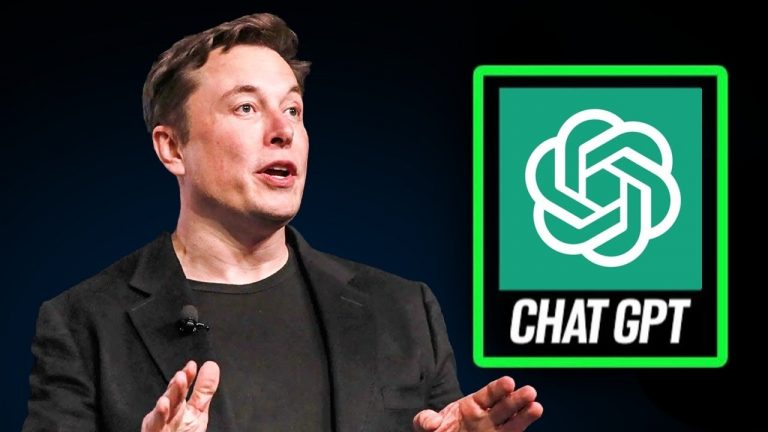
Elon Musk is seeking as much as $134 billion in damages from OpenAI and Microsoft, arguing that both companies benefited enormously from his early backing of the artificial intelligence startup and that those gains were improperly obtained after OpenAI abandoned its original mission.
The bid is fast becoming one of the most consequential legal battles in the global AI race, not only because of the staggering sums involved, but because of what it could mean for how artificial intelligence is funded, governed, and commercialized.
At its core, the lawsuit is an attempt by Musk to retroactively redefine his role in OpenAI’s origin story — from philanthropist and early supporter to aggrieved architect whose contributions, he argues, laid the groundwork for extraordinary private gains that he was unfairly cut out of.
Register for Tekedia Mini-MBA edition 20 (June 8 – Sept 5, 2026).
Register for Tekedia AI in Business Masterclass.
Join Tekedia Capital Syndicate and co-invest in great global startups.
Register for Tekedia AI Lab.
In the filing submitted on Friday, Musk contends that OpenAI’s transformation from a nonprofit research lab into a for-profit enterprise tightly aligned with Microsoft fundamentally altered the bargain under which he provided early funding, credibility, and strategic support. He argues that those changes enabled OpenAI to generate between $65.5 billion and $109.4 billion in value, while Microsoft extracted a further $13.3 billion to $25.1 billion through its exclusive cloud, licensing, and distribution arrangements.
The numbers themselves are striking, but so is the legal theory underpinning them. Musk is not claiming conventional investor damages. Instead, he is seeking “disgorgement” — the return of what he describes as “wrongful gains” — a remedy more commonly associated with fraud or breach of fiduciary duty than with disputes between founders and donors. His filing explicitly likens his role to that of an early startup investor who took existential risk and therefore deserves outsized returns once the venture succeeds.
OpenAI and Microsoft reject that framing outright. They argue that Musk was never promised equity-like returns, that OpenAI’s restructuring was necessary to raise capital at the scale required to compete in frontier AI, and that Musk’s claims amount to an unprecedented attempt to siphon value out of an organization he voluntarily left seven years ago.

The companies’ counter-filing attacks the credibility of Musk’s damages model, warning that it invites jurors to speculate about hypothetical alternate histories of OpenAI — scenarios in which Musk remained involved, the nonprofit model remained intact, and Microsoft’s role was either reduced or nonexistent. They argue that such speculation is not only unverifiable but fundamentally misleading.
Beyond the courtroom, the case exposes deeper fault lines in the AI ecosystem.
First is the unresolved tension between public-interest AI and commercial reality. OpenAI was founded on the idea that artificial general intelligence should benefit humanity broadly, not concentrate power or wealth. Musk’s lawsuit leans heavily on that original mission, portraying the Microsoft partnership and profit-seeking structure as a departure so severe that it invalidates earlier commitments. OpenAI counters that without commercialization, the organization would have been unable to fund the computing power, talent, and infrastructure needed to remain competitive.

Second is the question of control. Musk left OpenAI in 2018 after disagreements over leadership and direction. Since then, the company has become one of the most influential forces in technology, while Musk has launched xAI to compete directly with it. That competitive overlap looms over the case. OpenAI and Microsoft have already characterized Musk as a “donor-turned-competitor,” suggesting his legal action is as much about weakening a rival as it is about righting alleged wrongs.
Third is the precedent the case could set. If a jury accepts Musk’s argument, it could unsettle how nonprofits, research labs, and mission-driven organizations attract early funding. Future donors and founders may demand clearer exit rights, financial upside, or contractual safeguards, potentially accelerating the shift away from nonprofit structures in cutting-edge technology fields.
The stakes are heightened by the remedies Musk is seeking. In addition to massive financial damages, his filing leaves open the possibility of punitive penalties and injunctive relief. Even a narrowly tailored injunction could disrupt OpenAI’s governance or constrain aspects of its partnership with Microsoft — a relationship that underpins products across cloud computing, enterprise software, and consumer AI services.
The case carries reputational as well as financial risk for Microsoft. While the company insists it did not aid any breach of OpenAI’s mission, a prolonged trial will inevitably scrutinize how much influence it exerts over OpenAI’s strategy and whether its commercial interests shaped decisions that were once framed as altruistic.
The dispute is gradually evolving into a referendum on the economics of AI itself: who bears the early risks, who captures the rewards, and whether lofty founding ideals can survive once AI systems become engines of immense profit and power. Whatever the jury decides, the outcome is likely to ripple far beyond Musk, OpenAI, and Microsoft, shaping how the next generation of AI ventures are built, funded, and controlled.