

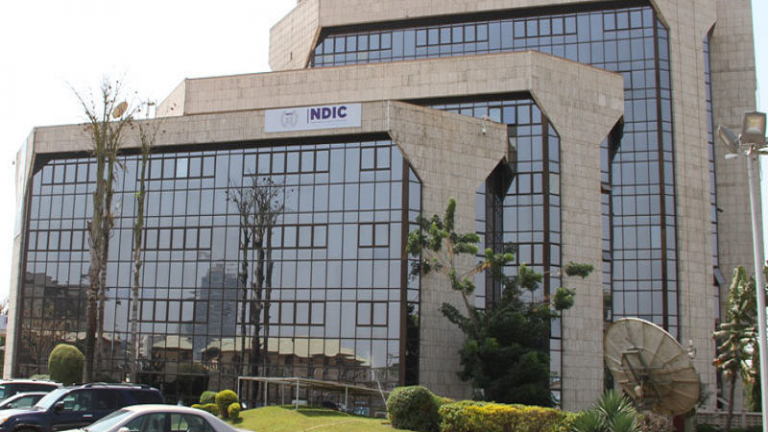
The Nigeria Deposit Insurance Corporation (NDIC) says it has significantly fortified its legal and regulatory framework to improve the liquidation of failed banks and ensure that individuals responsible for the collapse of financial institutions are held accountable.
In a statement issued on Sunday by its Head of Communication and Public Affairs, Hawwau Gambo, NDIC’s Managing Director, Mr. Thompson Sunday, said the enactment of the NDIC Act No. 30 of 2023 had strengthened the Corporation’s powers in bank resolution and liquidation, allowing it to move more swiftly and decisively in dealing with distressed institutions.
Sunday explained that the combined provisions of the new NDIC Act and the Banks and Other Financial Institutions Act (BOFIA) 2020 have enhanced the Corporation’s capacity to prosecute individuals found culpable in bank failures.
Register for Tekedia Mini-MBA edition 20 (June 8 – Sept 5, 2026).
Register for Tekedia AI in Business Masterclass.
Join Tekedia Capital Syndicate and co-invest in great global startups.
Register for Tekedia AI Lab.
“The NDIC is now better positioned to prosecute parties at fault in bank failures, unlike in the past when insufficient legal provisions allowed such individuals to evade accountability,” he said.
He commended the National Assembly for bridging the long-standing gaps in the legal framework that had constrained the Corporation’s effectiveness for decades, and also praised the judiciary for its improved understanding and adjudication of deposit insurance cases.
“Through more informed adjudication of failed bank cases, judgments are now bringing real relief to depositors,” Sunday added.

Citing the case of Heritage Bank Limited, whose license was revoked by the Central Bank of Nigeria (CBN) in June 2024, Sunday said the NDIC’s new powers allowed for a faster recovery and distribution process.
“The Corporation’s ability to realize sufficient assets to declare a first round of liquidation dividends to the uninsured depositors within one year of the revocation of its license is due to the positive impact of the new legal framework,” he stated.
The NDIC began payment of N46.6 billion as the first tranche of liquidation dividends to depositors of the defunct Heritage Bank in April 2025. The payment, which started on April 25, targeted customers with account balances exceeding the insured limit of N5 million. The Corporation said the funds were recovered from the sale of Heritage Bank’s assets and the repayment of outstanding loans, describing the move as a “major step” in fully reimbursing all affected depositors.

Sunday also disclosed that the Corporation has seen a rise in out-of-court settlements with individuals and institutions under investigation for their roles in failed banks.
“With stronger legal backing, individuals now approach the Corporation to settle out of court—not necessarily because the law has caught up with them, but because they can see that the noose is tightening around those responsible for bank failures,” he said.
The NDIC chief reiterated the Corporation’s determination to continue leveraging its enhanced legal powers to safeguard depositors’ funds and uphold the integrity of Nigeria’s financial system.
“The Corporation will continue to work with stakeholders to ensure the effective discharge of its mandate and promote financial system stability,” he said.
The NDIC Act No. 30 of 2023, signed into law last year, expanded the Corporation’s statutory powers to include broader authority in investigating failed bank directors, recovering assets, and instituting criminal proceedings against those whose actions led to insolvency. It also clarified the Corporation’s role in collaboration with the CBN and the Ministry of Finance in the early resolution of troubled banks.
Analysts have described the new legal framework as one of the most consequential reforms in Nigeria’s banking regulatory history, coming at a time when the financial system faces growing pressure from non-performing loans, weakened liquidity, and governance failures in several institutions.
The NDIC’s move to strengthen accountability in the sector, they say, signals a shift toward more stringent enforcement against reckless bank management and a firmer commitment to protecting depositors from systemic shocks.