

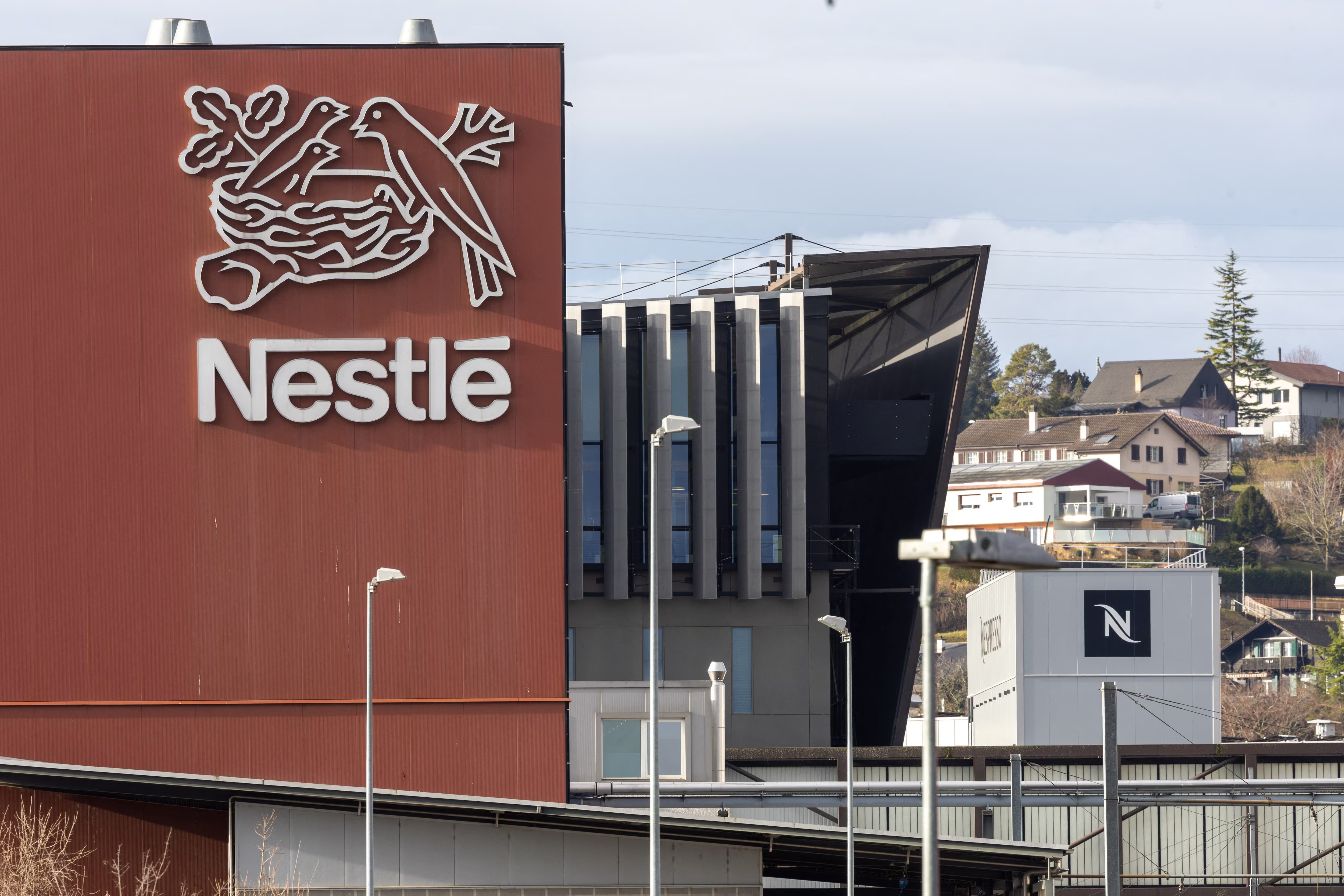
Nestlé Nigeria Plc has staged a sharp financial recovery in the 2025 financial year, returning to profitability after a bruising 2024 marked by heavy foreign exchange losses and negative equity.
In its audited results for the year ended December 31, 2025, filed with the Nigerian Exchange on Wednesday, February 25, 2026, the food and beverage giant reported a Profit Before Tax (PBT) of N166.8 billion, reversing the N221.5 billion loss recorded in 2024. Profit After Tax stood at N105 billion, compared to a N164.6 billion loss in the previous year.
The rebound signals a decisive break from the FX-induced volatility that weighed heavily on corporates following the naira’s sharp devaluation cycle in 2023 and early 2024. For Nestlé Nigeria, which relies significantly on imported raw materials and foreign currency obligations, exchange rate stability proved pivotal.
Register for Tekedia Mini-MBA edition 20 (June 8 – Sept 5, 2026).
Register for Tekedia AI in Business Masterclass.
Join Tekedia Capital Syndicate and co-invest in great global startups.
Register for Tekedia AI Lab.
Revenue growth strengthens core operations
Revenue climbed 26% year-on-year to N1.2 trillion from N958.8 billion in 2024, underpinned by price adjustments, improved product mix, and sustained demand in key categories. The food segment remained the primary revenue driver, contributing N784 billion, while beverages generated N424 billion.
Although the cost of sales rose to N771.88 billion from N652.46 billion, reflecting higher input and production costs, gross profit expanded significantly to N435.89 billion from N306.35 billion. This indicates that pricing actions and operational efficiencies more than offset cost pressures, lifting gross margin in the process.
Operating profit rose to N225.38 billion from N167.88 billion in 2024, suggesting improved cost discipline and stronger earnings from core activities. The company’s recovery is therefore not solely FX-driven; it reflects improved underlying business fundamentals.

The fourth quarter numbers reinforce this trajectory. PBT for Q4 2025 rose 15.1% to N38.9 billion from N33.9 billion in Q4 2024, while Profit After Tax nearly doubled to N32.5 billion from N19.7 billion. The steady quarterly performance indicates that profitability has stabilized rather than being driven by one-off gains.
Finance cost collapse drives bottom-line swing
The most dramatic shift came below the operating line.
Finance costs plunged to N100.96 billion in 2025 from N392.83 billion in 2024, underscoring the easing of foreign exchange losses and a reduction in debt-related pressures. In 2024, FX revaluation losses had severely distorted earnings across several multinationals operating in Nigeria. With the naira showing relative stability in 2025, those pressures moderated.

Finance income also surged to N42.43 billion from N3.37 billion, further boosting net profitability. The combined effect of lower finance costs and higher finance income created significant leverage on earnings, converting operating gains into bottom-line profitability.
Chief Executive Officer, Wassim Elhusseini, said in a statement accompanying the results: “Our 2025 results reflect the strong foundations of our return to profitability since the fourth quarter of 2024, with the resilience of our people and renewed operational efficiency, supported by the stability of the Naira against the Dollar.”
He added that negative retained earnings reduced by 53.6% from N243.2 billion in 2024 to N112.8 billion in 2025, noting: “As long as the business generates positive net profit, we will soon eliminate the negative retained earnings and resume dividend payments.”
The implication is significant for shareholders who have not received dividends during the period of accumulated losses. Continued profitability in 2026 could accelerate capital restoration and dividend reinstatement.
Balance sheet repair underway
Beyond income statement recovery, the balance sheet shows early signs of structural repair.
Total assets declined marginally by 1.5% to N846.16 billion from N858.70 billion, largely due to a sharp drop in prepayments, including advance payments to suppliers and deposits for imports. Prepayments fell to N53.8 billion from N149.46 billion, indicating improved working capital management and possibly reduced forward FX exposures.
More notably, total equity turned positive at N12.89 billion, reversing the negative equity position of N92.29 billion recorded in 2024. The improvement was driven by the substantial reduction in retained losses, which declined to N112.78 billion from N243.23 billion.
While equity remains thin relative to total assets, the shift from a deficit position materially strengthens the company’s solvency profile and reduces concerns around capital erosion. If profitability is sustained, retained losses could be fully eliminated within the medium term.
Market signals renewed confidence
Investors have responded swiftly to the turnaround narrative.
As of the close of trading on Thursday, the shares were priced at N3,100, marking a 44% gain in February alone and pushing the year-to-date return to 58.2%. The rally suggests that the market had priced in much of the 2024 distress and is now recalibrating expectations toward earnings normalization.
The sharp appreciation also reflects broader investor appetite for defensive consumer names with strong brand equity and pricing power in an inflationary environment. Nestlé Nigeria’s portfolio, which spans essential food and beverage categories, positions it to maintain volume resilience even amid consumer income pressures.
Analysts expect the sustainability of this recovery to rely on three key variables: exchange rate stability, input cost management, and consumer purchasing power.
Exchange rate volatility remains the single largest risk factor for import-dependent manufacturers. Any renewed depreciation cycle could reintroduce finance losses and compress margins. Conversely, continued naira stability would provide a more predictable planning environment.
On operations, the company will need to sustain efficiency gains and deepen local sourcing to mitigate exposure to global commodity price swings and FX risks. The 2025 performance suggests progress in this direction.
Finally, consumer demand remains fragile in a high-inflation environment. While revenue growth in 2025 was strong, part of that expansion likely reflects pricing adjustments. Volume momentum in 2026 will be a critical indicator of underlying demand strength.