

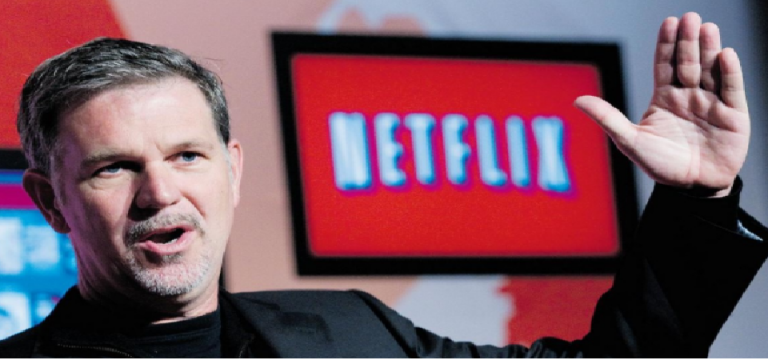
Netflix has agreed to buy Warner Bros Discovery’s television, film studios, and streaming division for $72 billion, a deal that would place one of Hollywood’s oldest entertainment empires under the control of a company that built its global dominance by disrupting the very idea of a traditional studio.
The agreement caps a fierce, weeks-long bidding war and marks a defining moment for Netflix, which spent more than a decade insisting it preferred building new franchises from scratch rather than acquiring legacy players. Now, the streaming giant is positioned to become a combined producer, distributor, and rights-holder on a scale the industry has never seen.
“This is a rare opportunity that’s going to help us achieve our mission to entertain the world and bring people together through great stories,” Netflix co-CEO Ted Sarandos said in a call with investors. “I understand that some of you are surprised… we have been known as builders, not buyers.”
Register for Tekedia Mini-MBA edition 20 (June 8 – Sept 5, 2026).
Register for Tekedia AI in Business Masterclass.
Join Tekedia Capital Syndicate and co-invest in great global startups.
Register for Tekedia AI Lab.
Warner Bros Discovery shareholders will receive $23.25 in cash and about $4.50 in Netflix stock per share, valuing the company at $27.75 per share — roughly $72 billion in equity and $82.7 billion including debt. It represents a premium of over 121% relative to Warner Bros Discovery’s closing price on September 10, prior to reports of a potential sale.
The deal is expected to close after Warner Bros Discovery completes the spinoff of its global networks unit — Discovery Global — which is scheduled for the third quarter of 2026. Netflix has offered a $5.8 billion breakup fee, while Warner Bros Discovery would pay $2.8 billion if the deal fails.
Netflix shares dipped around 0.2% after the announcement. Warner Bros Discovery stock rose 3.2% to $25.33. Paramount fell 6.1%.

A Bidding War Fueled by Politics and Power
Netflix beat two major competitors: Paramount, Skydance, and Comcast. Paramount had launched an aggressive series of unsolicited offers for the entire Warner Bros Discovery business, including cable networks that Warner plans to spin off. CNBC reported that Paramount’s final bid, submitted Thursday evening, was $30 per share in cash.
Comcast also submitted an offer for the film and streaming assets.
The involvement of Paramount Skydance’s chairman, David Ellison, added a sharp political layer. The New York Post reported that Ellison met with officials in the Trump administration and key lawmakers in Washington to present his case against Netflix acquiring Warner Bros Discovery. His father, Oracle co-founder Larry Ellison, is close to President Donald Trump, adding further intrigue to the competitive scramble.

Paramount also sent a letter to Warner Bros Discovery’s lawyers, warning that a sale to Netflix would likely “never close” because of regulatory scrutiny in the United States and overseas. The Wall Street Journal reported that Paramount’s legal team wrote that the acquisition “will entrench and extend Netflix’s global dominance in a manner not allowed by domestic or foreign competition laws.”
The acquisition hands Netflix an extraordinary library: Warner Bros’ century-long catalogue, HBO’s prestige slate, and DC’s universe of superheroes. It includes franchises such as Harry Potter, Game of Thrones, and DC icons like Superman and Batman.
Sarandos, who once said “the goal is to become HBO faster than HBO can become us,” now finds himself at the helm of HBO’s future.
The deal moves Netflix from disruptor to establishment player, placing it at the center of Hollywood’s historical lineage. Warner Bros, founded in 1923, shaped modern film and television through eras ranging from the Golden Age of cinema to the rise of cable and the birth of prestige series.
Now, after a decade of streaming turmoil, Netflix is stepping into the driver’s seat of a studio that helped define Hollywood itself.
Mounting Regulatory Pressure
Regulatory pushback is expected to be fierce.
“It will raise eyebrows and concerns,” said PP Foresight analyst Paolo Pescatore. “The combined dominant streaming player will be heavily scrutinized.”
Sen. Elizabeth Warren said the proposed merger “looks like an anti-monopoly nightmare,” warning it could lead to higher streaming prices and fewer consumer choices.
“A Netflix-Warner Bros would create one massive media giant with control of close to half of the streaming market,” Warren said. She added that the antitrust process under President Donald Trump has become “a cesspool of political favoritism and corruption” and called for strict enforcement by the Department of Justice.
A senior Trump administration official told CNBC that the White House views the deal with “heavy skepticism.” Trump himself has a long history of challenging large media mergers. Before taking office in 2017, he opposed AT&T’s purchase of Time Warner, calling it too much concentration of power. The Department of Justice attempted to block the deal in late 2017 and lost the case, allowing it to close in June 2018.
Trump also intervened in the U.S. Steel–Nippon Steel deal before the 2024 election, initially opposing it, then approving it after returning to the White House in 2025, following a national security agreement that granted the government a “golden share.”
That record sets the stage for an intense review of the Netflix-Warner Bros Discovery merger.
Resistance is already emerging from parts of Hollywood.
Tom Harrington, head of television at Enders Analysis, said, “There will be resistance from parts of Hollywood and various unions. HBO, the creative jewel, would be terribly exposed within Netflix.”
Cinema United, a global exhibition association, said the deal could pose an “unprecedented threat” to movie theaters worldwide.
Former WarnerMedia CEO Jason Kilar said he could not think of “a more effective way to reduce competition in Hollywood” than selling Warner Bros Discovery to Netflix.
Netflix has tried to ease those fears, telling Warner Bros Discovery that it would continue theatrical releases for the studio’s films. The company said the acquisition would expand job opportunities, boost production in the United States, and increase long-term investment in original programming.
Netflix co-CEO Greg Peters said the company could introduce HBO Max through bundles or other packaging options and pointed to Netflix’s history of elevating outside shows like Breaking Bad and Suits.
A Company Hunting for Its Next Growth Engine
The acquisition comes as Netflix faces questions about the pace of its expansion. After soaring more than 80% in 2024, its stock has risen only 16% this year. The company stopped reporting subscriber counts earlier in 2025, causing analysts to wonder about slowing growth.
Netflix has been counting on:
• The password-sharing crackdown that drove its 2024 revenue surge
• An ad-supported tier that is still not a major revenue driver
• A gaming business that has struggled with shifting strategy and leadership changes
Buying Warner Bros Discovery would instantly strengthen its gaming ambitions. Warner’s game division produced hits like Hogwarts Legacy, which has generated more than $1 billion.
Netflix estimates the deal could yield $2 billion to $3 billion in yearly cost savings by its third year.
The acquisition is a turning point for both companies and for the broader entertainment landscape.
Warner Bros Discovery has cycled through transformative mergers over the past two decades: Time Warner’s sale to AT&T, the subsequent WarnerMedia spinoff, and the merger with Discovery. Now, Netflix is poised to absorb its most valuable properties.
Netflix spent years reimagining Hollywood from the outside. Now it is attempting to shape the inside by taking over a studio that helped define American entertainment from the black-and-white era to prestige television to today’s global streaming battles.