

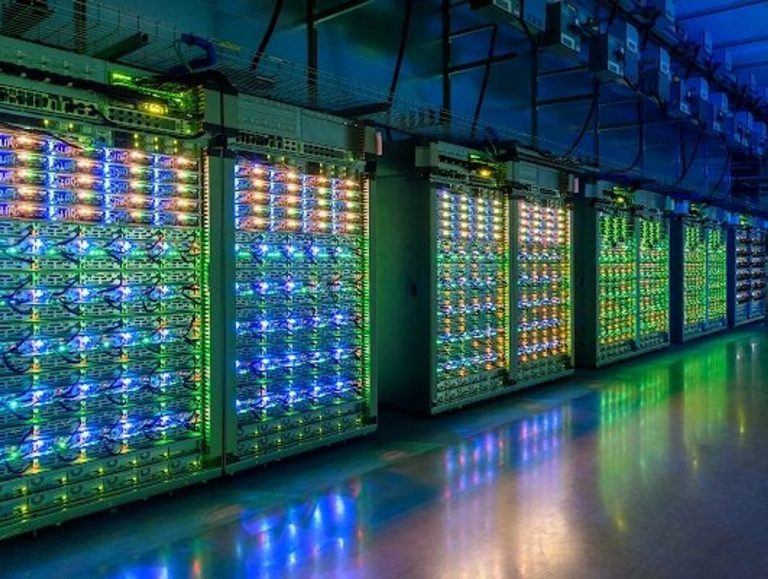
New York has become the first U.S. state to temporarily halt the construction of large new data centers, marking a significant shift in the debate over the infrastructure needed to support the artificial intelligence boom.
The one-year moratorium emerged from growing concerns that the rapid expansion of AI facilities is straining electricity grids, increasing utility bills, consuming vast amounts of water and sparking opposition from local communities.
The move also lends fresh credibility to Elon Musk’s long-term argument that the future of AI infrastructure cannot rely solely on land-based data centers. Musk has repeatedly outlined a vision in which computing capacity moves into space, powered by solar energy and supported by SpaceX’s satellite and launch capabilities. That concept has become an important part of the investment narrative surrounding the company’s expected initial public offering.
Register for the next Tekedia Mini-MBA.
Register for Tekedia AI in Business Masterclass.
Join Tekedia Capital Syndicate and co-invest in great global startups.
New York Governor Kathy Hochul announced on Tuesday that the state would suspend permits for new data centers consuming 50 megawatts or more of electricity for one year while regulators develop statewide environmental standards governing the facilities.
The moratorium positions New York at the forefront of an intensifying national debate over how to balance AI-driven economic growth with mounting pressure on electricity networks, water resources and local infrastructure. While technology companies continue racing to build data centers to support increasingly powerful AI models, lawmakers across dozens of U.S. states are considering restrictions aimed at limiting their impact on power grids, utility costs and surrounding communities.
“As data center development threatens to hike up utility bills, deplete our natural resources, and create uncertainty for New Yorkers, it’s my responsibility to take action and lead,” Hochul said.

She also announced plans to pursue legislation eliminating sales tax exemptions currently available to large data center projects.
Under the policy, New York’s Department of Environmental Conservation will stop issuing discretionary permits for qualifying projects unless applications have already been deemed complete.
State agencies have also been directed to prepare a Generic Environmental Impact Statement (GEIS), which will establish uniform environmental standards for future AI data centers and assess their cumulative impact on natural resources, electricity demand and surrounding communities. The construction freeze will remain in effect until those standards are finalized.

The decision underscores one of the biggest emerging challenges facing the AI industry. Large language models and AI agents require enormous computing clusters equipped with thousands of advanced graphics processors, dramatically increasing electricity consumption.
Utilities across the United States have warned that AI is creating the strongest surge in electricity demand in decades after years of relatively flat consumption. Grid operators are increasingly struggling to connect new data centers because transmission infrastructure and power generation are not expanding quickly enough.
According to the New York Independent System Operator, more than 12 gigawatts of large electricity-consuming projects, including AI data centers, were waiting to connect to the state’s power grid as of May. For comparison, that amount of demand is comparable to the generating capacity needed to power millions of homes.
The issue has also become increasingly political as residential electricity bills climb. New York already has the eighth-highest residential electricity prices in the United States, according to U.S. Energy Department data.
Public opposition has also intensified. A recent Reuters/Ipsos survey found that only about one-third of Americans support the current pace of data center construction, while most respondents said they would oppose building such facilities in their own communities.
New York’s legislature last month approved legislation intended to impose additional safeguards on data centers, although Governor Hochul has not yet signed the bill, saying further work with lawmakers is required because of its complexity.
Maine considered a similar moratorium earlier this year, but Governor Janet Mills vetoed the proposal, making New York the first state to implement a statewide pause.
A Broader Warning for Big Tech
The New York decision underpins a growing realization that AI infrastructure expansion is becoming constrained not by demand for computing power but by access to electricity, water and permitting.
Major technology companies, including Microsoft, Amazon, Alphabet, Meta, and OpenAI, have collectively committed hundreds of billions of dollars to AI infrastructure over the coming years. However, many projects increasingly face delays because utilities cannot provide sufficient electricity or because local governments are becoming more cautious about approving energy-intensive developments.
Industry analysts describe electricity as the next major bottleneck for AI, alongside shortages of advanced semiconductors and high-bandwidth memory chips. Recent reports have also shown that data centers could account for around 11% of total U.S. electricity demand by the end of the decade, nearly doubling their current share, forcing utilities to accelerate investments in generation capacity, transmission networks and energy storage.
Musk’s Space Data Center Vision Gains Credibility
The New York moratorium also strengthens one of Elon Musk’s more ambitious long-term ideas: moving portions of AI computing infrastructure beyond Earth’s increasingly constrained power grid.
Musk has argued that space-based computing powered by continuous solar energy could eventually overcome many of the physical limitations confronting terrestrial data centers, including electricity shortages, land constraints, permitting delays and environmental opposition.
The concept is closely linked to SpaceX’s long-term strategy. The company is already building the world’s largest satellite network through Starlink and developing Starship, the fully reusable launch system designed to dramatically reduce the cost of transporting heavy payloads into orbit.
Industry observers now see orbital data centers as a potential future business alongside satellite broadband and launch services. If launch costs continue falling, space-based computing facilities powered by uninterrupted solar energy could become commercially viable for some of the world’s largest AI workloads.
While the concept remains years away from commercial deployment, mounting regulatory restrictions on terrestrial data centers are making alternative infrastructure strategies appear increasingly credible.
The timing is notable because SpaceX has just recorded the largest IPO in history, with investors paying closer attention to long-term growth opportunities beyond launch services and satellite internet. A successful expansion into AI infrastructure would significantly broaden the company’s addressable market and strengthen its position within the global AI ecosystem.
Although space-based data centers face substantial engineering, cooling, and deployment challenges, the constraints emerging on Earth are making previously futuristic concepts receive more serious consideration.
What Happens Next?
The New York moratorium is likely to encourage similar policy debates elsewhere in the United States, particularly in states experiencing rapid data center expansion and rising electricity demand.
Rather than slowing AI development itself, the decision may accelerate investment in alternative power sources, nuclear energy, advanced cooling technologies, and distributed computing architectures. It could also encourage companies to diversify where they build computing infrastructure, including regions with abundant renewable energy or lower regulatory hurdles.