

U.S. President Donald Trump has halted the supply of lifesaving drugs and medical supplies targeting HIV, malaria, tuberculosis, and critical neonatal care to Nigeria and other African nations.
The decision, which affects countries reliant on U.S. assistance through the United States Agency for International Development (USAID), has sparked fears of a global health crisis.
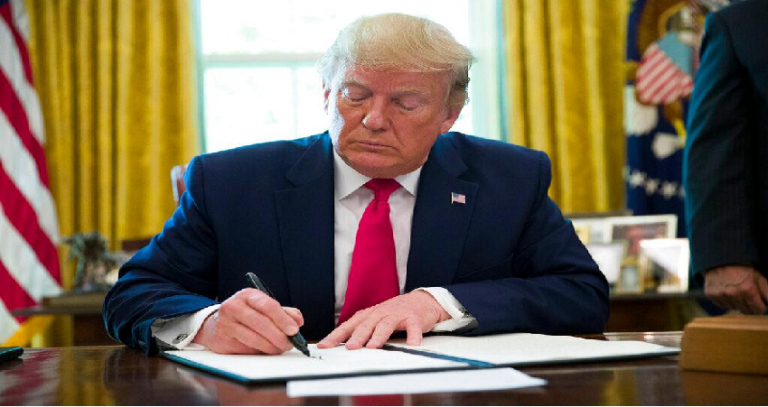
The freeze on U.S. aid follows an executive order signed by Trump on January 20, initiating a 90-day pause on foreign development aid to assess its efficiency and alignment with U.S. foreign policy. Notices were sent on Tuesday to USAID contractors and partners, instructing them to immediately cease operations. One such directive was received by Chemonics, a major USAID contractor responsible for delivering essential medicines globally.
Register for Tekedia Mini-MBA edition 20 (June 8 – Sept 5, 2026).
Register for Tekedia AI in Business Masterclass.
Join Tekedia Capital Syndicate and co-invest in great global startups.
Register for Tekedia AI Lab.
Atul Gawande, a former global health chief at USAID, did not mince words, calling the development “catastrophic.” He warned, “Donated drug supplies keeping 20 million people with HIV alive stop today.”
He elaborated on the consequences, stating that treatment interruptions would result in a resurgence of diseases, increased transmission rates, and drug resistance, potentially reversing decades of progress in the fight against HIV.
The freeze also impacts organizations providing critical support to 6.5 million orphans and vulnerable children living with HIV in 23 countries. USAID’s programs have been pivotal in delivering medicines and funding clinics, but the suspension now threatens to shutter these facilities.

In addition to halting lifesaving drug deliveries, the executive order has caused operational disruptions at USAID. Around 60 senior career officials were placed on leave earlier this week, leaving the agency grappling with leadership voids.
The United States, the world’s largest donor of humanitarian aid, contributes 42% of all assistance tracked by the United Nations. In fiscal year 2023, U.S. foreign assistance totaled $72 billion. Experts warn that the current suspension could undo decades of progress in global health and development, with dire consequences for millions.
Impact on Africa: Nigeria Faces Severe Consequences
The halt in USAID funding is expected to have its most devastating impact on African nations, particularly Nigeria, which bears the world’s second-highest burden of HIV cases. USAID’s programs in Nigeria have been critical in preventing new infections and providing care for those already living with the virus.

Dr. Chinonso Egemba, a public health advocate, explained the dire implications for Nigeria.
“Nigeria has the world’s second-highest number of people living with HIV. If you don’t treat HIV, almost everyone affected will develop AIDS. To treat HIV, they need ART drugs, and these drugs have become so effective that an HIV-positive person can no longer transmit the virus if the level of the virus is suppressed. These drugs are expensive, so a lot of the drugs available are donated to us,” he said.
Egemba warned that if Nigeria does not rise to the occasion, infections will increase.
“Currently, we record close to 200,000 infections every year. People will die from AIDS if drugs are not available. Our already burdened healthcare system will be strained further, which might make or break it,” he said.
He emphasized that the ripple effects extend beyond HIV. “Diseases like tuberculosis and malaria are also affected by the pause in funding. Now is the time to take our health system seriously. The second-best time was yesterday. Nigeria cannot continue to depend on donations for its healthcare,” he added.
The freeze has sparked fears among Nigerians, with many urging immediate action to mitigate the crisis.
“Now is the time to practice safe sex if you weren’t already,” said Inioluwa, a Nigerian. “There’s likely going to be an increase in the prevalence of HIV if people cannot pay for their drugs. The ripple effects cannot be overstated.”
Since the suspension also affects USAID’s efforts to combat tuberculosis and malaria and support maternal and neonatal health, clinics that depend on U.S. assistance for medicine deliveries and operational funding are at risk of closure, leaving vulnerable populations without access to essential care.
Healthcare experts warn that the halt could lead to a resurgence of tuberculosis, with treatment interruptions increasing the likelihood of drug-resistant strains. Malaria deaths may also spike as countries lose access to insecticide-treated nets and antimalarial drugs. Maternal and child health programs, which have helped reduce mortality rates, are also in jeopardy.
A Wake-Up Call
The crisis has reignited debates about Africa’s reliance on foreign aid for essential services. Investigative journalist David Hundeyin argued that Trump’s decision, while catastrophic in the short term, exposes the continent’s overdependence on external donors.
“For the record, Trump’s decision to halt all foreign aid, no matter how haphazardly enforced, is good for you as an African,” Hundeyin said.
He likened the dependency to drug addiction, with the U.S. government acting as a “dealer.”
“The fact that so many African healthcare programs are dependent on USAID funding in the first place is NOT down to American benevolence. It is, in fact, a deliberate U.S. foreign policy decision to make your essential systems dependent on the U.S. government, so that Washington DC gains functional control over the day-to-day running of your country,” he said.
Hundeyin pointed out the irony of African nations relying on foreign aid while maintaining political appointees who earn more than their American counterparts.
“Why does a philanthropic donor watch the people he is donating money to live more lavishly than him, and yet decide to keep giving them more money? He must either be the world’s greatest dumbass, or he has another reason for giving them that money,” he asked.
Against this backdrop, many have called for African leaders to reassess their priorities, allocate sufficient resources to healthcare, and reduce reliance on donor funding.