

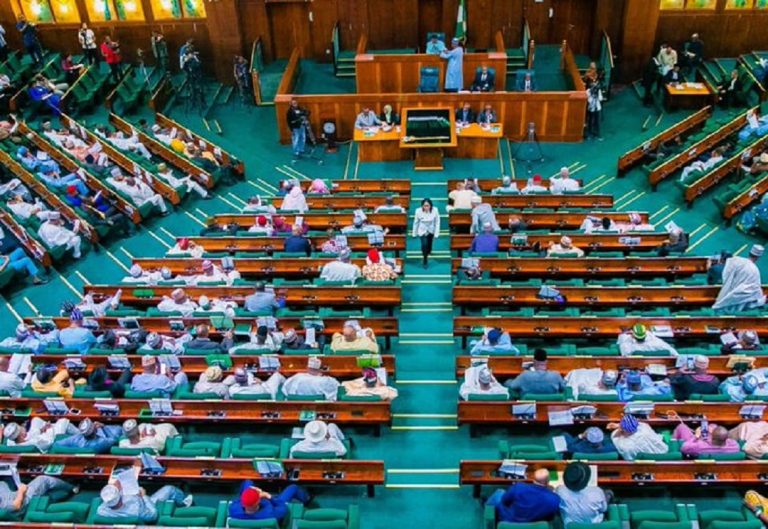
The Nigerian House of Representatives has directed the Nigerian Communications Commission (NCC) to mandate all internet service providers (ISPs) in the country to block access to pornographic websites, in what lawmakers say is a move to protect moral values.
The resolution was passed on Tuesday following a motion moved by Dalhatu Tafoki, a lawmaker from Katsina State, who argued that unrestricted access to pornography is eroding societal values, particularly among Nigerian youth. Tafoki cited concerns from psychologists and sociologists, warning that exposure to explicit content fuels adultery, prostitution, addiction, and moral decline.
During his presentation, Tafoki pointed to several countries in Asia, Africa, and the Middle East that have legislated against pornography, urging Nigeria to follow suit. He insisted that allowing continued access to such content would have dire consequences for the nation’s moral fabric.
Register for Tekedia Mini-MBA edition 20 (June 8 – Sept 5, 2026).
Register for Tekedia AI in Business Masterclass.
Join Tekedia Capital Syndicate and co-invest in great global startups.
Register for Tekedia AI Lab.
“Renowned psychologists and sociologists worldwide have issued strong warnings about the psychological, sociological, and mental consequences of consuming pornographic content,” Tafoki stated.
The motion was overwhelmingly supported, with many lawmakers stressing the need to protect Nigerian cultural and moral standards. In a voice vote conducted by House Speaker Tajudeen Abbas, the motion was adopted without opposition.
Critics Call It a Futile Exercise
Following the resolution, the House directed the NCC to ensure immediate compliance by internet service providers, warning that service providers who fail to comply should be sanctioned.

However, the move has sparked a wave of criticism from Nigerians, many of whom see it as yet another misplaced priority by the lawmakers. The criticism stems from many fronts. Many believe that at a time when Nigeria is facing severe economic hardship, worsening insecurity, and a failing power sector, the House is focusing on censoring the internet instead of addressing urgent national issues.
“Priorities in shambles. With all the pressing issues in Nigeria—economic crisis, insecurity, power shortages—this is what the House of Reps is focusing on? They should better channel this energy to another thing fruitful,” Akinkunmi Saheed said on X.
Social media reactions have been largely dismissive of the directive, with many pointing out that it will likely be a futile exercise. They argue that pornography addicts will easily bypass such restrictions using Virtual Private Networks (VPNs), which allow users to mask their location and access blocked content.

Concerns Over Internet Censorship and Government Overreach
Beyond the practicality of the ban, there are concerns that this move could set a dangerous precedent for government control over the internet. Some digital rights activists warn that if the NCC enforces restrictions on pornography, the next step could be broader censorship of content deemed “undesirable” by the government.
In recent years, Nigerian authorities have attempted to clamp down on online freedom, including previous efforts to regulate social media and monitor digital communications. Under the past administration headed by Muhammadu Buhari, social media platform X, then known as Twitter, was banned for about six months for angering the government. Many believe that the development has set a precedent that will occasionally come into play, attempting to squeeze the Nigerian civic space.
Against this backdrop, while lawmakers argue that banning pornography will help restore moral values, many Nigerians remain unconvinced, seeing it as another symbolic move with little real impact. They note that issues like inflation, unemployment, and the rising cost of living remain unaddressed by the same lawmakers who are eager to regulate what people watch in private.
“At least since they can’t provide jobs, stable electricity, single digit inflation, protection of lives and properties, food for Nigerian, housing and fix out of school children. They should be able to do something! Good job to them,” a social media user wrote.