

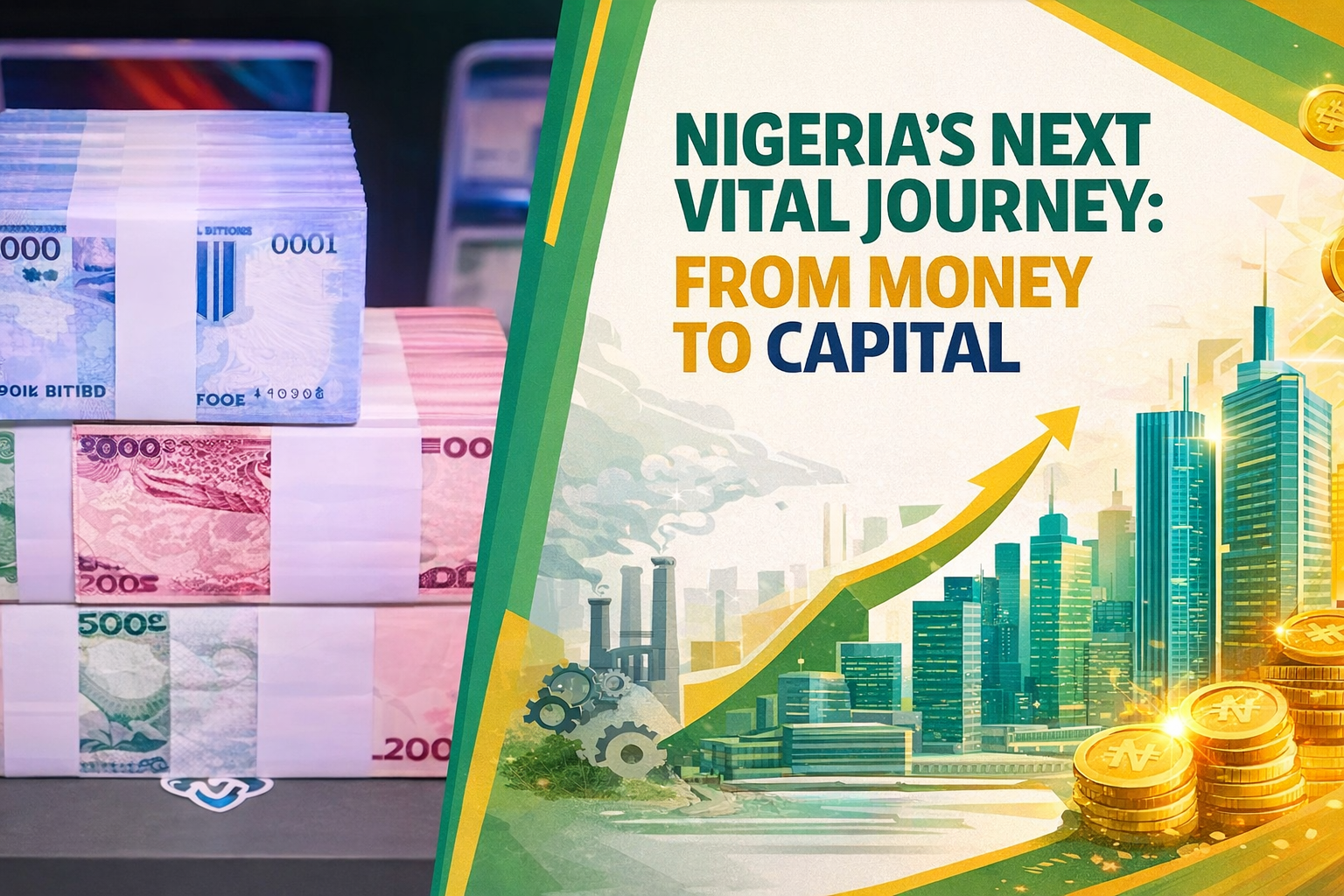
Nigeria is operating far below its productive potential. If the country were anywhere near optimal efficiency, its GDP should be closer to $3 trillion, not the roughly $400 billion we see today. That gap tells a simple story: Nigeria requires at least a 7× economic expansion to approach equilibrium.
Yet, nearly 90% of existing companies are structurally incapable of delivering that kind of scalable growth even. Yes, even with effort and goodwill, many are anchored to outdated assumptions, weak foundations, and legacy business models that cannot be redesigned for exponential leverage.
Only new species of companies, built on fresh business models, enabled by smarter policies, and energized by modern technology, can unlock that growth. That reality explains why insurance penetration remains below 2%, why electricity companies deliver more darkness than light, why access to clean potable water is still elusive, and why we deploy nearly 65% of our workforce yet still struggle with hunger and low productivity. You can add many more items to that list.
Register for Tekedia Mini-MBA edition 20 (June 8 – Sept 5, 2026).
Register for Tekedia AI in Business Masterclass.
Join Tekedia Capital Syndicate and co-invest in great global startups.
Register for Tekedia AI Lab.
It is tempting to blame customers, but history teaches us otherwise. Recall the 1990s, when new-generation banks emerged and convinced Nigerians, many for the first time, that banking services could be trusted and valuable. That same level of redesign is now required in insurance, power, water, education, healthcare, and beyond. The companies capable of driving those transformations are still too few.
I noted recently that South Africa runs a national budget about $100 billion larger than Nigeria’s, despite having less than 30% of Nigeria’s population. That is not magic; it is the outcome of productivity, structure, and effective enterprises. Their stock market is worth at least $1 trillion more than Nigeria’s. That is not luck; it is a translation of an economy from money to capital. Nigeria needs that to happen; move from money and capitalize the economy!
Get it: Money is a subset of capital, and nations which allow money to dominate their thinking inevitably underperform. In Nigeria, we are excessively focused on money. But until Nigerian policymakers reorient our priorities toward capital formation and evolution, our economic struggles will persist, because without capital, money only scales poverty!

---
Connect via my
LinkedIn |
Facebook |
X |
TikTok |
Instagram |
YouTube
We have a hangover that we do not even know how to come out of. The thinking is still dominated by how to generate more revenues for the government, with the delusion that it will in turn lead to better lives for the people. But this thinking is faulty, because government does not solve problems, rather it creates them. To grow and develop, it’s the people that will be empowered first, while government takes a cut from their riches, not from their poverty. But because the people are not empowered, the immoral government is bent on taking from their poverty.
You cannot make the government whole first and then hope to make the people whole later, it will not work, and has never worked. When you send a poverty-stricken minds to serve in government, the first thing they do is to steal and amass much money as they can, they cannot be thinking development because their own minds weren’t developed. We keep asking people to give what they don’t have, that’s why our disappointment is permanent. The people first, then the government later; anything else is guaranteed failure. Now you know why we keep failing.