

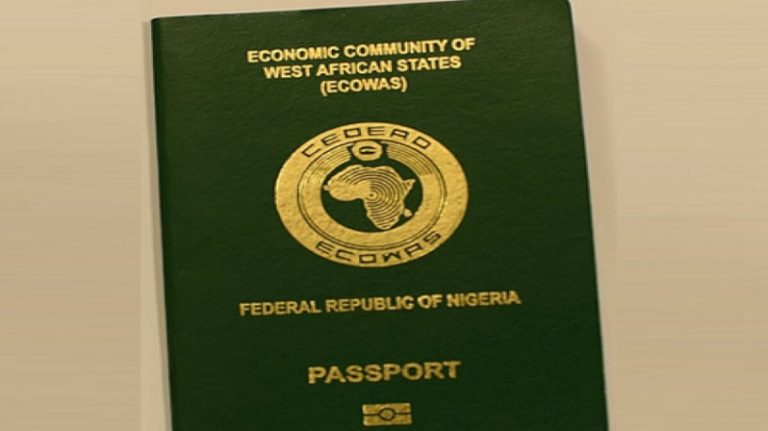
Nigeria has formally launched the ECOWAS National Biometric Identity Card (ENBIC), a regional digital identity designed to streamline travel within West Africa, reinforce border management systems, and support broader economic cooperation.
The inauguration took place on Friday in Abuja under the theme, “ENBIC: Enhancing Regional Integration and Security.”
The Minister of Interior, Dr Olubunmi Tunji-Ojo, said the rollout aligns with President Bola Tinubu’s push for a modern, technology-backed identity framework that supports safer borders and easier movement across the sub-region. He presented the card as a project long overdue.
Register for Tekedia Mini-MBA edition 20 (June 8 – Sept 5, 2026).
Register for Tekedia AI in Business Masterclass.
Join Tekedia Capital Syndicate and co-invest in great global startups.
Register for Tekedia AI Lab.
“The card provides the foundation for more efficient identification across borders, a crucial component in combating insecurity,” he said, noting that although the initiative first began more than eleven years ago, it is only under the current administration that its nationwide implementation has taken shape.
Nigeria becomes the seventh ECOWAS country to fully deploy the document, joining Senegal, Guinea-Bissau, Ghana, Benin, The Gambia, and Sierra Leone.
What Nigeria is introducing replaces the handwritten ECOWAS Travel Certificate, which many officials had long considered outdated. ENBIC carries an electronic chip that stores biometric and biographical data such as photographs, fingerprints, and birth information, enabling secure identity verification at border points. The card doubles as a regional ID, a travel document, and a residence permit for citizens of the fifteen-member bloc.

The concept was adopted by ECOWAS leaders in 2014 after several years of discussion about introducing a harmonized travel and identity regime. Senegal became the first to issue the biometric card on 4 October 2016. By mid-2023, only six member states had fully deployed it, a pace experts attributed to funding challenges and uneven digital capacity across the region. Nigeria’s entry is now considered one of the most significant boosts to the project’s viability, partly due to the country’s population and volume of intra-regional travel.
Tunji-Ojo said the new card supports orderly movement and helps reduce irregular travel, which has long complicated security operations in the region. He argued that the measure also supports economic activity, especially for traders and cross-border workers who depend on easy mobility to sustain their businesses. He added that the next step would be integrating the biometric system into the Public Key Directory of the International Civil Aviation Organization (ICAO), allowing seamless verification across recognized border control systems.
“The ENBIC will support intelligence gathering and provide security agencies with reliable data needed to protect citizens,” he said.

He also noted that the new identity card reduces the strain on Nigeria’s international passport system since citizens travelling only within ECOWAS will no longer need a passport. Immigration officers have repeatedly said that heavy domestic demand for passports is partly driven by regional travel, particularly among traders who move through routes such as Seme, Jibia, and Mfum.
Tunji-Ojo added that the government is already studying the creation of a regional migration database in partnership with ECOWAS states. The proposed system takes inspiration from the Schengen Information System, which allows European states to share real-time data on travelers and flagged individuals. Nigerian officials say such a platform would help West African states coordinate responses to cross-border threats more efficiently.
Nigeria Immigration Service Comptroller-General, Kemi Nandap, described the rollout as a milestone for regional cooperation.
“The new travel document features a secure biometric system aimed at facilitating legal movement, promoting tourism, trade, and investment, while strengthening border management,” she said.
She noted that the card promises easier border processing, safer travel, and deeper economic ties within the region. Nandap also acknowledged the role of ECOWAS Ambassadors and development partners such as the UN-IOM, EU, ICMPD, GIZ, and UNIDO, along with support from Nigerian security agencies and the media.
A key part of the wider strategy
The launch of ENBIC is also tied to a broader national goal: positioning Nigeria to benefit more effectively from the African Continental Free Trade Area. AfCFTA is the continent-wide single market agreement that came into force in 2019 and began trading operations in 2021. Nigeria signed the deal in 2019 after months of internal consultations driven by concerns from manufacturers and labor groups. Since then, policymakers have consistently framed regional and continental integration as central to Nigeria’s long-term economic diversification goals.
Tinubu’s administration has been leaning toward improving mobility, identity management, and border procedures, which are essential for Nigeria to compete in a continent-wide marketplace where the free movement of goods, services, and eventually people is expected to drive new investments. Officials involved in the launch believe the new biometric identity card supports that direction by easing movement for traders, transport operators, small businesses, and service professionals—groups widely seen as the backbone of AfCFTA’s early-stage gains.
Analysts have also noted that Nigeria’s ability to attract investors under AfCFTA depends partly on predictable movement systems. Immigration officials believe ENBIC reduces friction at borders, shortens clearance times, and strengthens law-enforcement capabilities. These improvements are believed to form part of the foundation needed to accelerate trade under AfCFTA’s rules that eliminate tariffs on most goods over time and encourage cross-border supply chains.
With the rollout now underway, immigration authorities say public sensitization will be key. Officials expect a surge in enrolment once Nigerians understand how and where the card can be obtained. They also expect the card to encourage more predictable and structured movement across West Africa, aligning both with ECOWAS’ long-standing free-movement regime and Nigeria’s continental ambitions under AfCFTA.