

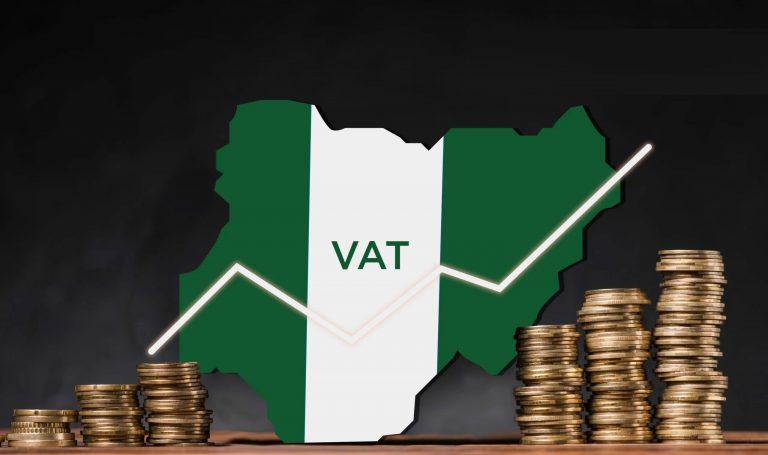
Nigeria’s Value Added Tax (VAT) revenue reached an all-time high of N1.95 trillion in the fourth quarter of 2024, as the country’s tax system continues to evolve under sweeping fiscal reforms and inflationary pressure.
This marked a 9.23 percent increase from the N1.78 trillion recorded in the third quarter of 2024, according to the National Bureau of Statistics’ report titled “Sectorial Distribution of Value Added Tax (Q4 2024).” The figures reflect improved tax compliance, expansion of the VAT net, and the unavoidable influence of rising prices across goods and services.
Domestic VAT payments accounted for N917.40 billion, foreign non-import VAT contributed N554.68 billion, and import VAT brought in N474.75 billion. While local business activity remains a major contributor, the country is also capturing significant VAT revenue from imports and foreign services, a trend analysts say mirrors Nigeria’s increasingly globalized digital economy.
Register for Tekedia Mini-MBA edition 20 (June 8 – Sept 5, 2026).
Register for Tekedia AI in Business Masterclass.
Join Tekedia Capital Syndicate and co-invest in great global startups.
Register for Tekedia AI Lab.
The manufacturing sector again topped the chart, contributing 25.89 percent of the total VAT revenue, a strong signal of its dominance in the formal economy. It was followed by the information and communication sector with 16.18 percent, while mining and quarrying added 15.52 percent. On the other end of the scale, activities of households as employers, extraterritorial organizations and bodies, and water supply, sewerage, and waste management collectively contributed only marginal portions of the total VAT pool.
In terms of quarterly growth, extraterritorial organizations and bodies recorded a sharp increase of 180.05 percent, followed by agriculture, forestry, and fishing, which rose by 70.83 percent. Human health and social work activities increased by 46.13 percent. However, some sectors declined in VAT remittance. Household-related activities dropped by 28.97 percent, while information and communication contracted by 23 percent.
On a year-on-year basis, VAT revenue grew by 62.19 percent compared to the fourth quarter of 2023. This significant leap suggests a combination of inflation, an expanded tax base, and growing efficiency in tax enforcement.

The revenue surge follows major tax reforms signed into law by President Bola Tinubu in June 2025. These included the Nigeria Tax Bill, Nigeria Tax Administration Bill, Nigeria Revenue Service (Establishment) Bill, and the Joint Revenue Board (Establishment) Bill. Passed after months of consultations and legislative debates, these laws aimed to harmonize tax collection across federal, state, and local governments, strengthen tax institutions, and improve compliance.
While officials have praised the reforms as necessary for Nigeria’s fiscal health, critics have raised concerns about the burden they place on businesses and consumers already struggling with inflation and dwindling purchasing power.
Government officials argue that the record-breaking VAT is evidence that reforms are working. Enforcement has intensified, digital tools have been deployed to detect evasion, and import monitoring has become more rigorous. Still, economic analysts warn that the uptick in tax collection is being driven partly by higher prices of goods and services, which means citizens are bearing the brunt of the revenue hike.

Nigeria’s tax-to-GDP ratio remains among the lowest globally. Despite the improved numbers, the revenue still falls short of what is needed to address the country’s massive infrastructure deficit, rising debt burden, and growing demand for social spending. The challenge, experts say, lies not only in raising revenue but in ensuring that taxes collected are effectively and transparently used.
While the government eyes additional streams such as property tax, digital service tax, and levies on luxury goods to expand its revenue base, questions linger on whether higher taxes in a fragile economy will lead to long-term growth or simply fuel more evasion and discontent.