

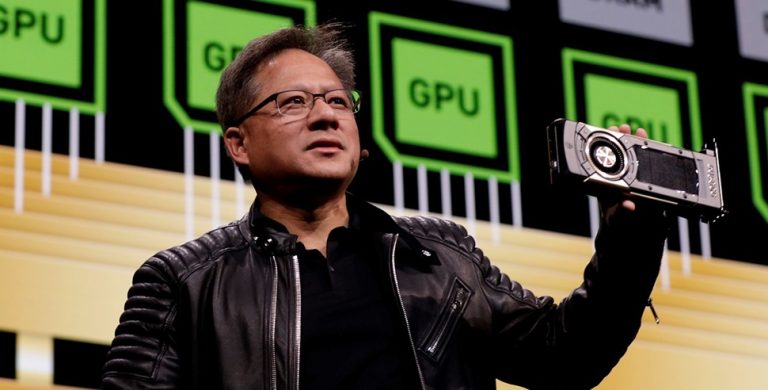
Nvidia’s board has ruled out bringing back co-founder Jensen Huang as chief executive, signaling a decisive break from three decades of founder-led management as the world’s most valuable chipmaker faces questions about its leadership, investment commitments and future strategy.
Board Chairman Harvey Jones opened the company’s earnings call on Tuesday by telling investors that Nvidia would not rehire Huang and would not take questions about his departure. The announcement came as the company reported strong financial results and issued a fourth-quarter revenue forecast above Wall Street expectations.
Jones said Nvidia had appointed executive search firm Heidrick & Struggles to identify a permanent chief executive. The board wants to complete the process quickly but will not rush the appointment at the expense of finding the right candidate.
Register for the next Tekedia Mini-MBA.
Register for Tekedia AI in Business Masterclass.
Join Tekedia Capital Syndicate and co-invest in great global startups.
“We want to install the CEO, the permanent CEO, as quickly as possible, but we won’t expedite the CEO before finding exactly the right person,” Jones said.
He was joined on the call by interim CEO Colette Kress, who also serves as chief financial officer, and Ian Buck, Nvidia’s vice-president of hyperscale and high-performance computing. The participation of senior executives from finance and engineering was intended to demonstrate that the company has leadership capacity beyond its departing founder.
“Having the combination of Kress, Jones and Buck on the line was a smart move because it guaranteed that they were prepared to deal with financial, technical and high-level strategic questions,” said Bob O’Donnell, chief analyst at TECHnalysis Research.

He added that the arrangement also showed investors a wider range of voices within Nvidia.
Nvidia shares rose 4% in extended trading after the company forecast fourth-quarter revenue of $130 billion, plus or minus 3%. That exceeded the average analyst estimate of $125.25 billion, according to LSEG data. The forecast assumes no data center chip sales to China.
The strong outlook offered some reassurance about demand for Nvidia’s processors, but the company’s market value remains under pressure. Its valuation stood at approximately $3.8 trillion, around $2 trillion below its early October peak.

Kress defended the management team’s ability to maintain operations following Huang’s resignation last Thursday. She said Nvidia’s leadership had remained effective during the transition and that the company had continued working with key suppliers and partners.
“Our leadership has stood up so strongly over the last week,” she said. “We’ve got this.”
She also said senior executives at Taiwan Semiconductor Manufacturing Company, which manufactures Nvidia’s chips, were present at the company’s offices and fully engaged in supporting its operations.
In prepared remarks, Kress described the initial response to Nvidia’s latest flagship artificial intelligence chip, Vera Rubin, as explosive. The comments were intended to reassure investors that product development and customer demand remain strong despite the leadership change.
Nvidia’s adjusted gross margin forecast for the fourth quarter stands at 71% to 72%, compared with analysts’ estimate of 71.7%.
Anshel Sag, principal analyst at Moor Insights & Strategy, described the outlook as positive, although less ambitious than forecasts in previous quarters. He said Huang’s departure was unlikely to affect the company’s near-term performance because its executive team had spent years executing the founder’s strategy.
The earnings call also provided support for companies that supply specialized cloud computing capacity. Shares of CoreWeave, Nebius, IREN and Applied Digital extended gains after Kress told analysts that Nvidia had made no changes to its commitments to neocloud providers, although those investments remain subject to conditions.
The commitments are important because Nvidia’s investment relationships extend beyond chip sales to include cloud providers, suppliers and artificial intelligence start-ups. Investors are now seeking clarity on how the company will manage those relationships without Huang, who played a central role in shaping its commercial partnerships and technology roadmap.
Rick Meckler, a partner at Cherry Lane Investments, said the earnings results would reassure some investors but warned that the leadership uncertainty remained a significant consideration.
“It’s no surprise that they’re doing very well, and there’ll be people who will breathe a sigh of relief about it,” he said. “But the story here is very complicated, and it’s hard not to factor that in as an additional risk for people buying stock.”
Huang Retains a Potential Route to Influence Through The Board
Although Nvidia has ruled out rehiring Huang as CEO, the former chief executive retains a potential route to influence the company’s future through its board nomination process.
Company proxy and corporate filings show that Huang qualifies to nominate two directors ahead of Nvidia’s annual shareholder meeting and vote, typically held in June.
Under the company’s rules, a shareholder or group of shareholders holding more than 3% of voting power for at least three years can nominate directors for inclusion in the company’s proxy materials. Huang and entities associated with him have held more than that threshold for over three years, according to LSEG data. He currently owns approximately 3.5% of Nvidia.
The provision would allow Huang to nominate candidates who qualify as independent directors. Their names could appear on the company’s proxy ballot, giving shareholders the opportunity to vote on their appointments.
However, the nomination right does not guarantee that his preferred candidates would join the board. Shareholders must approve the nominees, and Nvidia can exclude candidates who violate its bylaws or corporate charter.
The possibility of board nominations adds another dimension to Nvidia’s succession process. While Jones and the board are searching for a permanent CEO, Huang could retain a formal channel through which to influence board composition and, indirectly, decisions about executive leadership and corporate oversight.
His departure followed revelations of extramarital affairs involving Chinese businesswoman Alice Huang and two Nvidia employees. US intelligence agencies are investigating the extent of Alice Huang’s alleged links to China’s Ministry of State Security and whether she passed information to Beijing. China has rejected allegations of an espionage operation targeting Jensen Huang.
The Wall Street Journal also reported on Tuesday that the US Securities and Exchange Commission was investigating Nvidia following Huang’s resignation. The SEC declined to comment.
The allegations and reported regulatory inquiry add uncertainty to a transition that already marks the end of three decades of founder-led control over Nvidia’s chip development, customer relationships and engagement with Washington.