

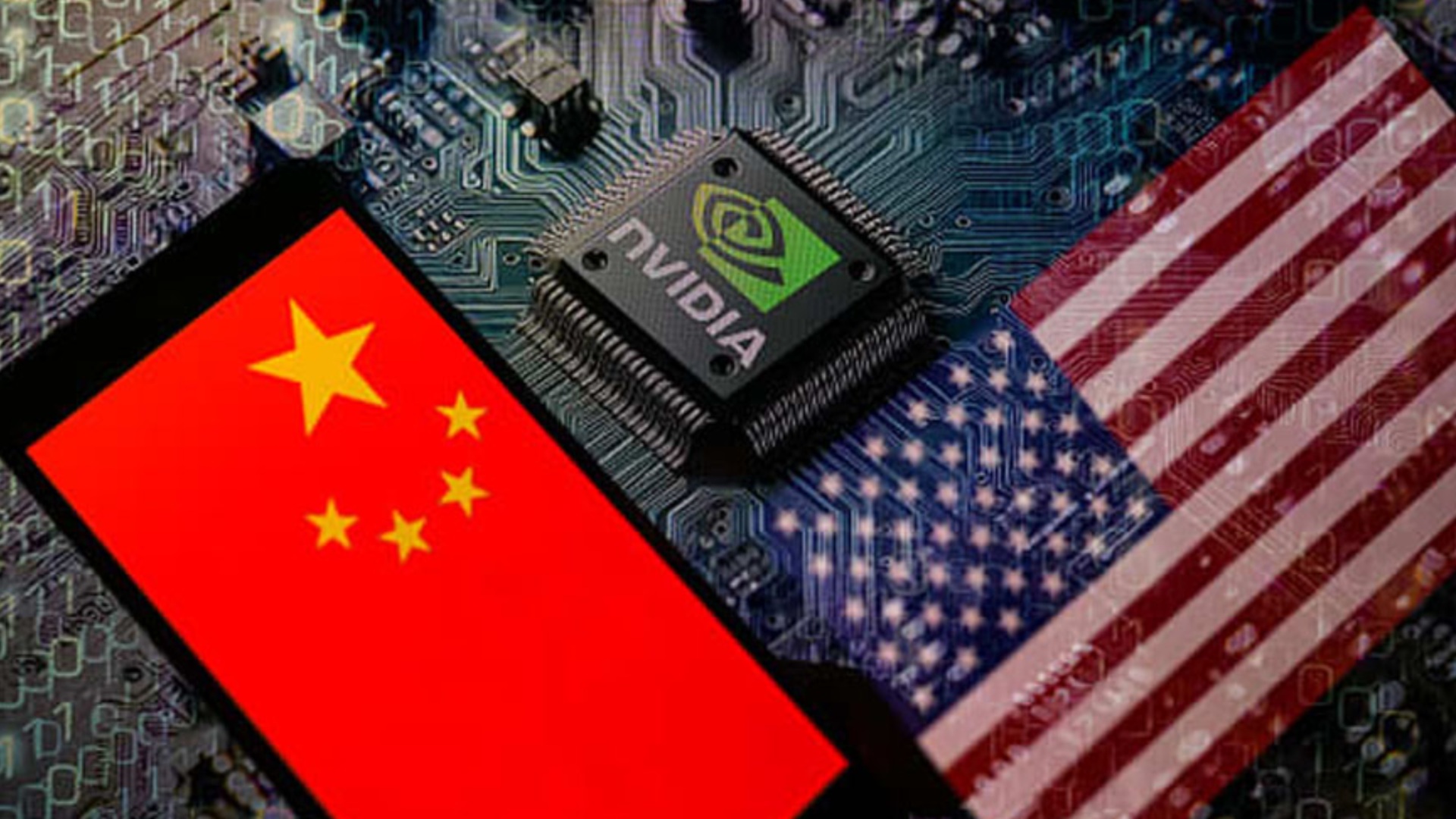
Nvidia has yet to generate any revenue from its recently approved H200 AI chip sales to China, despite the U.S. government easing some export restrictions late last year.
Chief Financial Officer Colette M. Kress disclosed this during the company’s earnings call on Wednesday.
“While small amounts of H200 products for China-based customers were approved by the US government, we have yet to generate any revenue,” Kress said, according to a FactSet transcript. “We do not know whether any imports will be allowed into China.”
Register for Tekedia Mini-MBA edition 20 (June 8 – Sept 5, 2026).
Register for Tekedia AI in Business Masterclass.
Join Tekedia Capital Syndicate and co-invest in great global startups.
Register for Tekedia AI Lab.
China once accounted for at least one-fifth of Nvidia’s data center revenue before escalating U.S. export controls forced the company to develop lower-capability chips like the H20 for the Chinese market.
New rules in April 2025 further restricted even those sales. In December 2025, President Donald Trump authorized shipments of the more advanced H200, contingent on the U.S. receiving a 25% cut of sales — a condition Nvidia lobbied heavily for, with CEO Jensen Huang making multiple trips to Washington and Beijing.
Despite the clearance, sales have stalled amid reports of intense security scrutiny in both countries. Chinese regulators have been cautious about approving imports of U.S. high-end chips, while U.S. officials continue to monitor end-use to prevent military applications. Nvidia’s inability to convert approvals into revenue highlights the persistent challenges of operating in a geopolitically fragmented AI market.

Rising Chinese Competition as Long-Term Threat
Kress also issued a stark warning about domestic Chinese rivals, noting that recent IPOs have bolstered their capabilities and funding.
“Our competitors in China, bolstered by recent IPOs, are making progress and have the potential to disrupt the structure of the global AI industry over the long-term,” she said.
She urged the U.S. to encourage widespread adoption of American technology, including by developers and businesses in China: “We believe the best outcome for the U.S. is for every developer and business, including those in China, to use American technology.”

A wave of Chinese AI chipmakers and large language model developers have gone public in Hong Kong and mainland China in recent months — including MiniMax, Moore Threads, Biren Technology, and others. Initial post-IPO surges reflected investor optimism that these firms could offer viable alternatives to U.S. technology amid export restrictions.
While not all stocks have sustained gains, the funding and momentum have accelerated domestic innovation. OpenAI CEO Sam Altman, in a February 19 interview with CNBC, described Chinese tech progress across the entire stack as “remarkable,” noting that Chinese companies are “near the frontier in some areas.”
TS Lombard chief China economist Rory Green warned on CNBC’s “Squawk Box Europe” earlier this month: “You could see easily a world where maybe most of the world’s population is running on a Chinese tech stack in five to 10 years’ time,” citing China’s advantages in cost, scale, and domestic market size. Chinese models and hardware are typically far cheaper than U.S. equivalents, offering compelling value in price-sensitive emerging markets and even some enterprise segments. This cost advantage becomes increasingly important as AI inference and training workloads scale, where token consumption drives expenses.
Nvidia’s China challenges stem from a multi-year escalation of U.S. export controls that have progressively restricted access to advanced GPUs critical for training and running large models. The H200 clearance — while a partial relief — came with strict end-use monitoring and the 25% revenue-share condition, limiting commercial viability.
The company’s warning about Chinese competition echoes concerns from other U.S. tech leaders. The combination of restricted U.S. exports and rapid Chinese innovation has created a bifurcated global AI landscape: U.S. leadership in frontier capabilities, but growing Chinese dominance in cost-efficient, domestically optimized solutions.
Nvidia’s inability to monetize H200 approvals highlights the practical limits of partial export relief. Chinese customers — including ByteDance, Alibaba, Tencent, and DeepSeek — have received conditional licenses, but security reviews and regulatory caution have delayed meaningful shipments and revenue recognition.
Broader Implications for Nvidia and the AI Ecosystem
Nvidia remains the dominant supplier of AI accelerators globally, with its data center business driving the majority of revenue. However, China’s exclusion from the most advanced chips has created a parallel ecosystem of domestic alternatives — from Huawei’s Ascend series to startups like Biren and Moore Threads — that are gaining traction in cost-sensitive markets. The company’s push for broader adoption of U.S. technology reflects a strategic imperative: maximizing global market share while navigating export controls.
If Chinese rivals continue closing the capability gap at lower prices, Nvidia could face long-term margin pressure and market share erosion outside the U.S. and allied markets. Investor sentiment remains mixed. Nvidia shares have been volatile in recent months amid AI disruption fears, U.S.-China tensions, and questions about the sustainability of hyperscaler spending. The China revenue stall adds to the challenge, though strong global demand for Blackwell and upcoming Rubin architectures provides a buffer.
In the coming months, if H200 shipments materialize and generate revenue, Nvidia is expected to partially offset China losses. If delays persist and Chinese alternatives gain further ground, the company’s long-term dominance in the world’s second-largest economy could come under increasing pressure.