

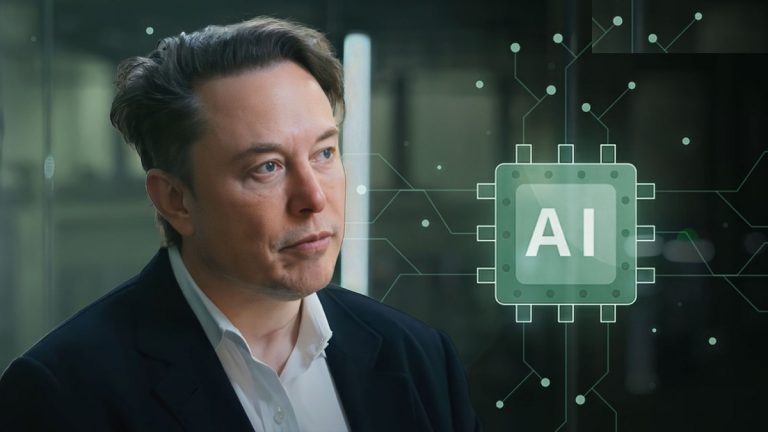
Tesla and SpaceX CEO Elon Musk have earned praise from one of the tech industry’s finest, Jensen Huang, Nvidia’s CEO. Huang, speaking on the “BG2” podcast, likened Musk’s mind to one of Nvidia’s most powerful chips.
He said, according to BI, the way the world’s richest man processes information makes him capable of accomplishing “unique” feats — a comparison that underscores Musk’s outsize role in the global race to build next-generation artificial intelligence infrastructure.
Musk is currently juggling at least five companies, spanning everything from Tesla’s self-driving cars to robotics projects to xAI’s conversational AI companions. Among his most ambitious undertakings is Colossus II, a Tennessee-based supercomputer Musk has described as “the world’s first gigawatt AI training cluster.”
Register for Tekedia Mini-MBA edition 20 (June 8 – Sept 5, 2026).
Register for Tekedia AI in Business Masterclass.
Join Tekedia Capital Syndicate and co-invest in great global startups.
Register for Tekedia AI Lab.
Huang explained that AI supercomputers are among the most difficult projects humanity has ever attempted.
“These AI supercomputers are complicated things,” he said. “The technology is complicated. Procuring it is complicated because of financing issues. Securing the land power and shell, powering it is complicated.”
Calling the effort “unquestionably the most complex systems problem humanity has ever endeavored,” Huang suggested Musk has a distinct advantage: “All of these systems are interoperating and the interdependencies reside in one head, including the financing.”

The podcast hosts compared Musk to a “big GPT” or a supercomputer, to which Huang replied, “He’s the ultimate GPU.” Huang also praised Musk’s urgency and determination. “He has a real desire to build it, and so when will comes together with skill, unbelievable things can happen. Quite unique.”
Building Colossus II
Musk is already moving fast, as documents reviewed by Business Insider show that at least $400 million has been spent on Colossus II, which is under construction outside Memphis, Tennessee. The system will run on 200,000 Nvidia GPUs, with plans to eventually scale up to 1 million GPUs.
That scale makes Colossus II one of the boldest attempts to build infrastructure capable of supporting frontier AI systems. Huang said he “would not be surprised if he gets to a gigawatt before anybody else does.”

It is happening as Nvidia is simultaneously investing $100 billion into OpenAI to support AI data center buildouts. OpenAI, led by Musk’s longtime rival Sam Altman, is also part of the U.S. government-backed Stargate project. Musk’s xAI, by contrast, is going its own way with Colossus II — yet both ventures highlight how dependent the AI industry is on Nvidia’s chips.
The Competitive Lens
Huang’s praise for Musk is not only admiration but also acknowledgment of Nvidia’s stake in the outcome. Musk’s companies, from Tesla to xAI, are major Nvidia customers. Nvidia’s dominance in AI hardware has made its GPUs indispensable to anyone attempting to compete at scale, from Big Tech incumbents like Meta and Google to challengers like Musk’s xAI.
While OpenAI, backed by Microsoft, and Meta, through partnerships with CoreWeave, are locking in long-term infrastructure deals, Musk is attempting to build independent capacity at unprecedented scale. If successful, Colossus II could make xAI less reliant on the same circular financing structures critics say are fueling an AI bubble.
For now, Musk is again positioning himself at the center of the most consequential technology race of the decade. Huang said building a gigawatt-scale AI cluster is a challenge of financing, engineering, and sheer willpower. And in his view, Musk may be the only one who has all three under one roof — or, as Huang put it, “in one head.”
However, the praise stands in sharp contrast to Musk’s own tone when it comes to his peers in Silicon Valley. Musk has frequently taken aim at other tech leaders, often questioning their strategies in blunt terms. In 2023, for instance, he dismissed Apple’s use of OpenAI for powering Siri as “a security violation,” publicly warning iPhone users that they were effectively “handing their data over to a black box.” He has also repeatedly clashed with Mark Zuckerberg, most famously calling Meta’s approach to AI “closed” and “untrustworthy.” On Wednesday, Musk urged his followers to cancel their Netflix subscriptions, prompting a decline in the streaming platform’s shares.
That, many believe, makes Huang’s admiration noteworthy. While Musk is often the first to challenge or ridicule competitors’ business moves, here he is being celebrated as uniquely equipped to solve what Huang calls the “most complex systems problem” ever attempted.