

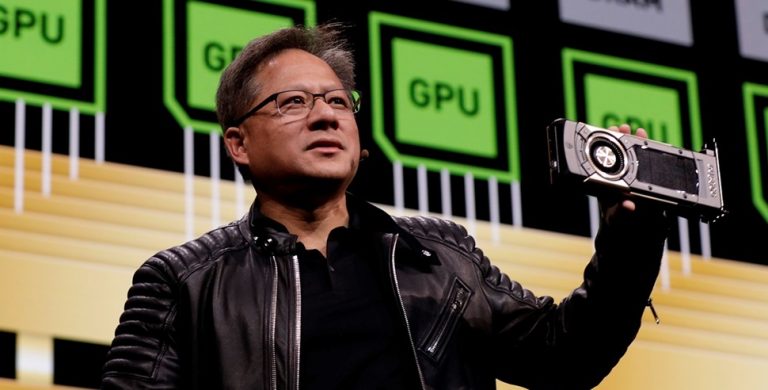
Jensen Huang says parents should stop fixating on which university subjects will remain “safe” from artificial intelligence, arguing that the AI era is more likely to increase the value of human creativity, judgment and communication skills than eliminate them.
Speaking to Singapore’s Channel NewsAsia on Monday, the Nvidia chief executive said the rapid spread of AI across industries would not make traditional fields of study irrelevant, pushing back against growing fears that students must abandon the humanities and creative disciplines to survive in an automated economy.
“I think that it won’t matter,” Huang said when asked what children should study in the AI era. “All the things that used to matter are still things that are going to matter in the future.”
Register for the next Tekedia Mini-MBA.
Register for Tekedia AI in Business Masterclass.
Join Tekedia Capital Syndicate and co-invest in great global startups.
His remarks come as governments, universities and families worldwide struggle to adapt education systems to the rise of generative AI tools capable of writing code, producing essays, generating images, and automating administrative tasks.
The emergence of systems such as ChatGPT, Claude, and Gemini has triggered intense debate about whether students should prioritize technical disciplines like computer science and engineering over subjects seen as more vulnerable to automation.
Huang rejected the idea that young people should simply chase “AI-proof” careers. Instead, he argued students should focus on learning how to use AI to deepen expertise and improve their work, regardless of discipline.

“Whatever you decide is your passion, the only one thing that you have to do is to make sure that you ask yourself: How can AI help elevate my learning, my craft, my purpose?” he said.
The Nvidia chief pointed specifically to journalism, storytelling, design, and the arts as examples of areas where human qualities are likely to remain valuable even as AI systems become more sophisticated.
He said the best interviewers and communicators succeed not merely because they are technically prepared, but because they can react in real time, listen carefully, and engage dynamically with people.

“The ability to tell a story for an audience will remain just as important in the future as it is today,” Huang said.
The comments are notable given Nvidia’s central role in the global AI boom. The company’s graphics processors power many of the world’s leading AI systems and data centers, placing Huang at the center of the technological transformation reshaping industries and labor markets. Yet even as Nvidia benefits from surging AI demand, Huang has consistently framed AI as a productivity-enhancing technology rather than a wholesale replacement for human workers.
He described jobs as collections of tasks, some of which will inevitably be automated.
“A job is like a basket of tasks,” Huang said. “Many of those tasks will be automated. And my sense is that as a result of automation, we can focus on the harder parts of our work.”
That view aligns with the thoughts of technology executives and economists who now argue AI may augment many professions before fully replacing them. Rather than eliminating entire occupations immediately, AI is expected to absorb repetitive and administrative work while increasing demand for higher-level reasoning, creativity, interpersonal communication, and oversight.
Huang also addressed fears that heavy dependence on AI could reduce critical thinking or make people intellectually passive. Drawing comparisons with earlier technological revolutions such as personal computers, smartphones, and the internet, he argued that previous innovations ultimately expanded human ambition and productivity rather than diminishing them.
“Do we find ourselves busier or less busy?” Huang said. “I think the answer is we found ourselves busier.”
His comments come amid growing public anxiety about AI’s effect on education and employment. A number of business leaders and researchers have warned that generative AI could sharply disrupt entry-level white-collar work, particularly in fields involving writing, coding, research, and analysis. At the same time, companies across finance, consulting, media, and technology are increasingly integrating AI into workflows, prompting concerns that workers may struggle to adapt quickly enough.
Huang suggested that uniquely human characteristics may actually become more prized in a world saturated with machine-generated content.
Referencing the Japanese philosophy of “wabi-sabi,” which emphasizes the beauty of imperfection and authenticity, he argued that human originality and emotional connection could become more valuable as AI-generated outputs become widespread.
The emphasis on creativity, communication, and adaptability echoes similar arguments recently made by other prominent business figures. Entrepreneur Scott Galloway has argued that storytelling and relationship-building will become increasingly important in the AI economy, while futurist Peter Diamandis recently said curiosity and adaptability would be among the most valuable skills for younger generations.
For educators and policymakers, Huang’s remarks lend credence to a growing view that the challenge may not simply be teaching technical AI skills, but ensuring students can combine technological fluency with human judgment, creativity, and emotional intelligence. That balance could become increasingly important as AI systems take over more routine cognitive work while leaving people to handle ambiguity, leadership, ethics, and interpersonal engagement.