

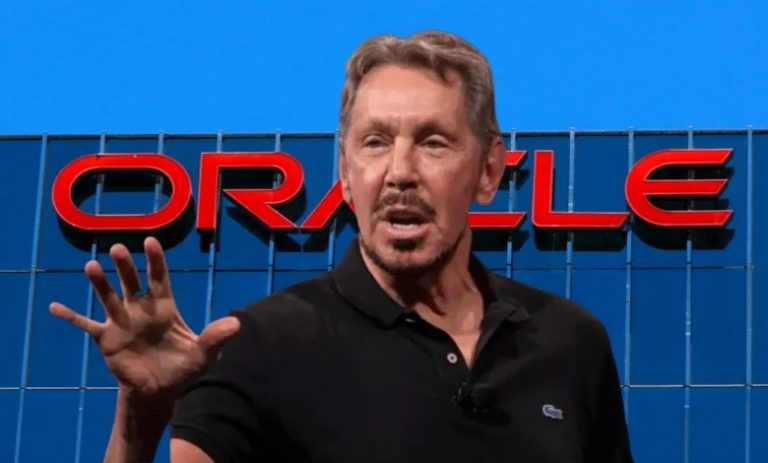
Oracle’s decision to protect itself against potential delays at a massive AI data center campus in New Mexico is exposing a growing fault line in the artificial intelligence infrastructure boom: demand for computing capacity remains strong, but financing the physical infrastructure required to meet that demand is becoming considerably more complicated.
Oracle issued a force majeure notice related to Project Jupiter, a data center campus being developed by Blue Owl’s STACK Infrastructure to support OpenAI. The move does not mean Oracle is abandoning the project. Blue Owl said Oracle, STACK and the company remain committed to Jupiter and that the notice does not change the financial commitments to the multiyear development.
But the legal protection has nevertheless unsettled bankers and investors, people familiar with financing discussions told Reuters, because it provides a real-world example of what can happen when an AI infrastructure project encounters delays after billions of dollars have already been committed.
Register for the next Tekedia Mini-MBA.
Register for Tekedia AI in Business Masterclass.
Join Tekedia Capital Syndicate and co-invest in great global startups.
The issue has generated huge interest because the data center industry has become one of the biggest beneficiaries of the AI investment boom. Developers are racing to build facilities capable of housing power-intensive AI computing systems, while technology companies are signing enormous capacity agreements to secure future access.
The financial structure behind those projects, however, depends on facilities being completed on schedule.
“The financing side of the AI buildout is starting to ask much harder questions than the demand side,” said Sean McDevitt, a partner at management consulting firm Arthur D. Little. “The underlying demand still appears very strong, but investors and lenders are increasingly focused on how risk is allocated.”

Power Is Becoming The Bottleneck
Project Jupiter illustrates one of the most difficult constraints facing the AI data center industry: access to electricity.
Oracle invoked force majeure because of delays in securing power for the New Mexico site, according to a person familiar with the matter. The project was expected to come online in 2028, but the person said completion is being pushed back by about a year.
The campus is designed to support enormous computing capacity. A delay therefore has consequences beyond construction schedules. It potentially postpones when Oracle can begin using the infrastructure to support its AI business and when the project’s investors can move from construction-stage returns to the higher returns expected once the facility becomes operational.

Blue Owl has about $3 billion of equity invested in the project, according to the person familiar with the terms. The investor earns a lower return during construction, with returns expected to increase once the facility is completed.
A delay therefore shifts the financial timetable for both the customer and the infrastructure investor.
The notice provides Oracle with contractual protection if circumstances outside its control prevent the project from meeting its agreed schedule. For lenders and investors, however, it raises a broader question: how should financial risk be divided when an AI data center is delayed by issues involving power, permits, construction or local opposition?
Those questions are increasingly being asked as projects become larger and contracts become more complex.
“These contracts are so rapidly evolving. If you look at a data center contract from January this year and a contract today, it’s massively different,” said Rajat Rana, a New York-based partner at law firm Quinn Emanuel.
The changes are occurring because developers, technology companies, lenders and investors are attempting to determine who bears the risk when projects fail to meet aggressive construction schedules.
The Financing Model is Under Pressure
The concerns extend beyond Jupiter. AI-related capital expenditure by the six largest US technology companies is projected to reach around $1 trillion in 2027, according to Moody’s. That represents an extraordinary financing requirement for an industry that is simultaneously dealing with higher interest rates and increasingly expensive construction.
The challenge is not necessarily a shortage of demand for AI computing. The problem is turning that demand into financeable infrastructure projects with predictable construction schedules, reliable power supplies, and contractual protections acceptable to creditors.
Rising Treasury yields have made borrowing more expensive across the economy. Investors therefore have greater alternatives to financing highly leveraged infrastructure projects, while banks are becoming more selective about how much exposure they want to take to individual data center developers and AI customers.
The Jupiter situation is consequently being viewed as a case study. Investors and lenders are examining what happens when a project backed by a major technology company runs into an unexpected delay, and contractual protections are activated.
The concern is growing because the AI infrastructure boom has encouraged developers to build facilities at unprecedented scale, sometimes before all the supporting infrastructure is fully secured.
Power has become one of the industry’s most significant constraints. AI data centers can require electricity on a scale comparable to major industrial facilities, and securing generation, transmission capacity, and regulatory approvals can take years.
A delay in any one component can therefore disrupt the economics of the entire project.
The impact is already visible in other transactions.
SB Energy, which is developing an Ohio campus intended to serve OpenAI, has also become part of financing discussions being watched by investors. The company decided this week to delay its IPO.
Blue Owl itself previously encountered difficulties syndicating financing for a $4 billion data center project in Lancaster, Pennsylvania, anchored by CoreWeave.
These developments do not establish that AI infrastructure demand is weakening. Rather, they show that the market is becoming more selective about how that demand is financed.
Community Opposition Adds Another Risk
The financing challenge is also increasingly connected to politics and local opposition. Data Center Watch estimates that at least 45 projects worth $68 billion faced opposition from community groups during the second quarter of 2026. That followed disruption involving 75 projects worth about $130 billion during the first quarter.
The objections vary by location, but concerns surrounding electricity consumption, water use, environmental effects, noise, and the impact of large industrial facilities have become significant obstacles to development.
Project Jupiter has itself faced opposition from residents and environmental groups in New Mexico.
Other major developments have encountered similar resistance. Meta’s data center project in El Paso, Texas, and Related Digital’s planned $16 billion Oracle-focused campus in Saline Township, Michigan, have faced opposition from residents.
In July, Blackstone’s QTS terminated its planned Digital Gateway data center project in Virginia and withdrew associated filings following years of planning and regulatory review.
For investors, these disputes introduce a risk that is difficult to capture simply by looking at projected AI demand. A technology company can sign a long-term capacity agreement, but that does not guarantee that the physical facility will be completed on time. Power connections, permits, environmental approvals, local politics, and construction schedules can all interfere with the timetable.
That has resulted in a mismatch between the speed at which AI companies want computing capacity and the much slower process required to build the infrastructure.
Oracle’s Growing Capital Burden
Oracle has committed enormous sums to expanding its cloud infrastructure as it attempts to capitalize on demand from AI companies. The company is increasingly relying on debt and other forms of financing to fund data center construction. Its ability to generate future revenue from AI depends not only on signing customers but also on delivering enough physical capacity to those customers.
Project Jupiter is one of the facilities expected to contribute to that expansion. Any delay therefore potentially affects the timing of revenue generation, even if the underlying customer demand remains intact. That is why investors reacted negatively when news of the force majeure notice emerged. Oracle shares fell 3.5% on Thursday, while Blue Owl fell 3.6%.
The market reaction was not necessarily a judgment that Jupiter would be cancelled. Instead, it is believed to be a sign of investor sensitivity to execution risk at a company whose AI infrastructure strategy requires exceptionally large amounts of capital.
Oracle can have strong customer demand and still face financial pressure if infrastructure cannot be brought online quickly enough. The economics of the AI boom ultimately depend on converting customer commitments into operational computing capacity.
A New Phase for The AI Infrastructure Boom
The Jupiter episode marks a potentially important transition in the AI infrastructure market. The first phase was dominated by the question of whether AI demand would justify enormous investments in chips, data centers, and power. That question increasingly appears to be giving way to a more complicated one: who should bear the risks associated with building all that capacity?
Developers want protection against unexpected costs and delays. Technology companies want guaranteed capacity without assuming every construction risk. Banks want predictable cash flows and adequate security. Infrastructure investors want returns that compensate them for committing billions of dollars years before facilities begin operating.
Those interests do not always align.
The result is a rapidly evolving contractual and financing market in which force majeure clauses, completion guarantees, power commitments, customer obligations, and construction milestones are receiving much greater scrutiny.