
DD
MM
YYYY

PAGES

DD
MM
YYYY

spot_img

PAGES

Home Blog Page 10

Ethereum Developers Propose Post-Quantum Deposit Contract, as NFT Market Sees Revival

0

Ethereum developers are exploring a major change to the network’s staking infrastructure as they consider a post-quantum deposit contract designed to protect validators against the potential threat posed by increasingly powerful quantum computers.

The proposal highlights a growing concern across the blockchain industry: cryptographic systems that are secure today may not remain secure indefinitely as quantum computing advances.

Ethereum relies heavily on cryptography to secure transactions, validator operations and ownership of digital assets.

Although practical quantum computers capable of breaking Ethereum’s current cryptographic protections do not yet exist, developers are increasingly considering how the network can prepare before such technology becomes a realistic threat.

The proposed deposit contract represents one part of that longer-term effort. A post-quantum approach aims to replace or supplement cryptographic mechanisms that could eventually become vulnerable to quantum attacks.

Traditional public-key cryptography depends on mathematical problems that are extremely difficult for conventional computers to solve. Quantum computers, however, could use algorithms such as Shor’s algorithm to solve some of these problems far more efficiently.

This creates a theoretical risk for blockchains whose security depends on those assumptions. Ethereum’s staking system makes the issue particularly important. Validators deposit ETH into the network and use cryptographic keys to participate in consensus.

If an attacker were eventually able to derive private keys from public information, they could potentially compromise validator identities or interfere with assets protected by vulnerable cryptography.

A transition toward quantum-resistant cryptography could therefore become an important part of Ethereum’s long-term security strategy.

The proposed deposit contract should not necessarily be interpreted as evidence that Ethereum faces an immediate quantum emergency. Instead, it reflects the principle that blockchain infrastructure needs to be designed years ahead of emerging technological threats.

Major protocol upgrades require extensive testing, coordination and community agreement, meaning developers cannot realistically wait until quantum computers become capable of attacking existing systems before beginning preparations.

Post-quantum cryptography introduces challenges. Quantum-resistant algorithms can require larger keys, signatures or additional computational resources than existing cryptographic systems.

Integrating those technologies into Ethereum therefore requires careful consideration of performance, validator requirements and compatibility. Developers must balance stronger future security against the practical demands of running a decentralized network.

The proposal could contribute to a broader discussion about Ethereum’s ability to evolve its security architecture. Unlike traditional financial infrastructure, blockchain networks cannot simply replace every cryptographic component overnight.

Ethereum has billions of dollars in economic value secured by its protocols, while thousands of independent participants operate infrastructure around the world.

Any cryptographic transition must therefore minimize disruption while maintaining confidence in the network.

The quantum threat is still largely a future scenario, but preparation is becoming increasingly relevant. Governments, financial institutions and technology companies are already investigating post-quantum standards because sensitive information can remain valuable for decades.

Blockchain networks face a similar challenge, particularly because assets recorded on public ledgers can remain exposed indefinitely. Ethereum developers’ proposal therefore represents more than a technical adjustment to its staking mechanism.

It signals a broader recognition that the security model of a blockchain must evolve alongside advances in computing technology. By investigating post-quantum deposit infrastructure now, Ethereum can give developers and validators more time to test alternatives and establish a potential migration path.

If implemented successfully, the initiative could strengthen Ethereum’s resilience against a threat that remains theoretical today but could become significant in the future.

For a network designed to operate for decades, preparing for quantum computing before it becomes an emergency may ultimately prove to be one of the most important aspects of long-term protocol security.

HyperEVM Revenue, Memecoin Momentum and the NFT Market Revival

The crypto market is once again showing signs of renewed speculative activity, with developments across decentralized finance, memecoins and non-fungible tokens highlighting the breadth of the current digital-asset revival.

HyperEVM has recorded all-time-high revenue as memecoin trading volumes increase, while several emerging NFT collections are attracting significant attention and capital.

These developments suggest that traders are becoming increasingly willing to move beyond major cryptocurrencies and take on greater risk in search of outsized returns.

HyperEVM’s latest revenue milestone is particularly notable because network activity provides an important measure of demand for blockchain infrastructure. As more users trade tokens and interact with decentralized applications, transaction activity generates fees and revenue for the ecosystem.

The increase in memecoin trading volume indicates that speculative trading is playing an important role in this growth. Memecoins can produce rapid shifts in liquidity and attention, making them a major source of activity during periods when risk appetite returns to the crypto market.

The renewed memecoin momentum is also visible through CASHCAT, which has surged beyond a $200 million market capitalization as Robinhood-related meme assets continue to attract traders.

PONS has similarly reached a new all-time high, adding to evidence that speculative capital is spreading across a wider range of tokens. Such moves demonstrate how quickly narratives can gain traction in crypto markets.

Once traders identify a popular theme, liquidity can move rapidly into related assets, producing sharp price increases in a relatively short period. The NFT market is experiencing its own resurgence.

FWAir PFPs have launched with the collection maintaining a floor price around 3 ETH, a level that reflects substantial market interest.

PFP collections have historically depended heavily on community strength, cultural relevance and speculation, and the ability of a new collection to establish a meaningful floor shortly after launch suggests that collectors are once again willing to allocate capital to digital collectibles.

Meanwhile, NAIVE has released its NFT mint information ahead of Thursday’s scheduled mint. The release of mint details gives prospective buyers time to evaluate the collection, understand its mechanics and prepare for the launch.

As NFT activity increases, these pre-mint stages can become important periods for price discovery because community engagement and anticipation often influence secondary-market performance after a collection goes live.

The broader significance of these developments lies in their diversity. The current crypto resurgence is not being driven solely by Bitcoin or Ethereum. Instead, activity is appearing across blockchain infrastructure, memecoins and NFTs.

HyperEVM’s revenue growth points to increasing network usage, while CASHCAT and PONS demonstrate renewed appetite for speculative tokens. FWAir and NAIVE show that digital collectibles are also benefiting from improving market sentiment.

However, the rapid growth of these markets comes with considerable risk. Memecoins can experience extreme volatility, while NFT floor prices can fall quickly when liquidity disappears. Strong initial demand does not necessarily guarantee long-term value.

The latest activity provides an important snapshot of crypto’s risk cycle. When traders become confident, capital often moves progressively further along the risk curve.

HyperEVM’s record revenue, rising memecoin volumes and renewed NFT enthusiasm therefore point to a market increasingly characterized by speculation, experimentation and rapidly changing narratives.
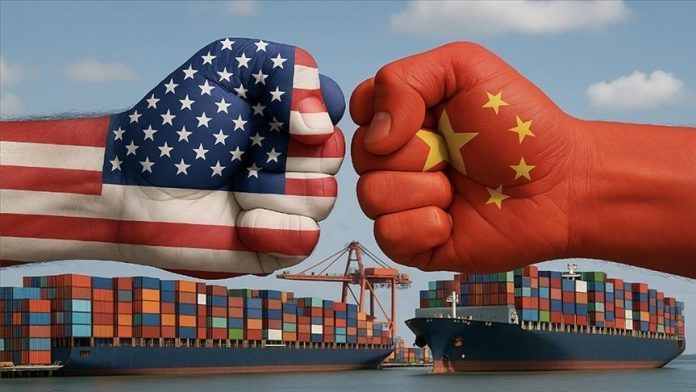

China Could Retaliate Against US Over Iran Sanctions

0

Tensions between the United States and China are entering another potentially dangerous phase as Washington expands economic pressure on Iran and threatens countries that continue trading with Tehran.

Beijing has strongly rejected the latest U.S. sanctions campaign, warning that it will take necessary measures to defend its interests if American restrictions begin to seriously affect Chinese businesses. The confrontation could transform the Iran sanctions dispute into a broader U.S.-China economic conflict.

The immediate dispute centers on Iran’s oil trade. China remains Iran’s largest customer and accounts for a substantial majority of Iranian oil exports.

Independent Chinese refineries, commonly known as teapots, have continued purchasing Iranian crude, often through complicated trading and payment arrangements designed to reduce exposure to U.S. financial restrictions.

Washington has increasingly focused on these networks as it attempts to deprive Tehran of the revenues needed to sustain its economy and military capabilities. The U.S. Treasury recently announced a new round of sanctions targeting dozens of individuals, companies and vessels connected to Iran.

Some Chinese and Hong Kong-based entities have already appeared in American sanctions actions, although Washington has so far avoided directly targeting major Chinese financial institutions. That restraint reflects the potentially enormous consequences of escalating against China’s banking system and broader economy.

Beijing’s response has been deliberately forceful. Chinese officials argue that unilateral sanctions lack legitimacy and have called for negotiations rather than economic coercion. China’s Foreign Ministry has also warned that Beijing will take necessary measures to safeguard its legitimate rights and interests.

While this language does not necessarily signal an immediate retaliation, it establishes a clear warning that China may respond if Washington pushes further. One possible area of retaliation is trade. China has previously demonstrated its ability to restrict access to strategically important commodities.

Particularly critical minerals that are essential to advanced manufacturing, electronics, batteries and defense industries. Beijing could also intensify enforcement against American companies operating in China or introduce regulatory measures that increase costs for U.S. businesses.

Financial retaliation could be even more significant. If Washington were to sanction major Chinese banks involved in Iranian trade, Beijing could accelerate efforts to expand yuan-based international transactions and alternative payment systems.

Such a response would not immediately displace the dollar, but it could contribute to the gradual fragmentation of the global financial system. Energy markets would also face increased uncertainty. Any disruption to Iranian oil flows could tighten global supply, particularly if tensions affect shipping through the Strait of Hormuz.

Higher oil prices could then feed into inflation, transportation costs and monetary policy decisions worldwide. The timing makes the dispute particularly sensitive. Washington and Beijing are already managing disagreements over trade, technology and strategic competition.

A major confrontation over Iran could make diplomatic engagement more difficult, especially with a U.S.-China summit approaching. China has strong incentives to avoid an uncontrolled escalation, but it also has strong reasons to resist Washington’s attempt to determine which countries can trade with Iran.

The coming weeks will therefore test whether both powers can separate the Iran crisis from their broader rivalry. If Washington expands sanctions toward China’s major banks or strategic industries, Beijing’s warning could become action, creating a confrontation whose economic consequences extend far beyond Iran.

Bulls Crush Bears: Bitcoin Surges to $81K Amid Short Squeeze

0

Bitcoin has surged to $81,000 as a powerful wave of buying pressure triggers a broad short squeeze across the cryptocurrency market, forcing bearish traders to close positions and accelerating the rally.

The upward price movement triggered a rapid liquidation of roughly $225 million in short positions across the crypto market in just ten minutes, as the sharp move marks a decisive shift in market momentum.

With Bitcoin breaking through key resistance levels and reigniting bullish sentiment after months of heightened volatility, the move marked one of the sharpest intraday advances of the year, pushing the largest cryptocurrency above the psychologically important $80,000 level for the first time since mid-May.

Bitcoin price briefly peaked near $81,255 reclaiming its top spot as the best-performing asset over the past decade, narrowly edging out Nvidia.

According to Trading View, Bitcoin’s Sharpe Ratio stood at 7 as of this writing, indicating that investment in the stock was generating positive returns above the risk-free rate.

In Nvidia’s case, the ratio was -1.20, suggesting that the expected return was lower than that of a risk-free investment.

Earlier in August the asset had traded near the low $60,000s, making the rebound one of the strongest weekly performances in recent years.

The sudden spike forced leveraged short sellers to cover their positions, creating a classic short-squeeze dynamic.

Data from derivatives trackers showed hundreds of millions of dollars in forced liquidations concentrated in a narrow window, amplifying the upward pressure as exchanges automatically bought Bitcoin to close out under-margined bets.

In the broader 24-hour period surrounding the breakout, short liquidations accounted for the large majority of futures activity. Several catalysts aligned to fuel the rally.

Spot Bitcoin exchange-traded funds recorded strong weekly inflows approaching $1.9 billion in the prior week, reflecting continued institutional demand.

At the same time, reports of expanded U.S. Treasury bond buyback plans helped push yields lower and encouraged a rotation into risk assets, including cryptocurrencies. The combination of fresh capital and the mechanical buying from liquidations created a powerful feedback loop.

Traders and analysts noted that open interest in Bitcoin futures had already been declining in the days leading up to the move, leaving a smaller pool of leveraged positions vulnerable to a sudden price jump.

Funding rates remained relatively contained, suggesting the advance was driven more by spot demand and forced covering than by aggressive new long leverage.

However, market watchers viewed the current rally as a catch-up trade rather than the start of a new bull cycle.

“While it’s too early to call this a full-blown bull market, the move above $80,000 and the ETF inflows look like a catch-up trade since bitcoin has been lagging other risk assets for a while now,” said Min Jung, associate researcher at Presto Research.

Crypto analyst Michael Van Poppe highlights a key Bitcoin support zone near the recent low as a potential wick sweep area before upward continuation on the daily chart.

If the level holds, he expects a push toward $82,700 that could spark the next altcoin rally; a breakdown would open downside targets at $77,100 and $76,400. His analysis reflects short-term technical setup for BTC amid broader market recovery expectations.

Several other analysts maintained a cautious tone, citing tight liquidity, sticky inflation, and geopolitical uncertainty as key risks that continue to weigh on the market.

“I’d presume a bull market only after we sustain $100,000 for a month and the Fed signals rate cuts, which are still uncertain,” said Jeff Mei, COO of BTSE.

While the breakout reclaimed key technical levels, including the 200-day moving average, the market remains volatile. Bitcoin has repeatedly tested and retreated from the $80,000–$82,000 zone in previous cycles, and sustaining the higher range will depend on whether ETF inflows continue and whether additional short positions are squeezed higher.

For now, the rapid liquidation cascade has delivered a clear reminder of how quickly leveraged bets against Bitcoin can reverse when momentum shifts.

Outlook

Looking ahead, Bitcoin’s ability to sustain the breakout above $80,000 will likely determine whether the current rally develops into a broader recovery or fades into another short-lived momentum move.

However, Bitcoin could face renewed selling pressure if it fails to maintain the $80,000–$81,000 range. A pullback toward $77,100 and $76,400 would remain possible, particularly if ETF inflows weaken, liquidity conditions deteriorate, or macroeconomic uncertainty increases.

The next phase of the rally is therefore likely to depend less on short liquidations and more on sustained spot demand.

Strategy Books Roughly $4 Billion Unrealized Profit on Bitcoin as Price Surges

0

Michael Saylor’s Strategy has swung into a substantial unrealized profit on its Bitcoin holdings, now sitting on approximately $4 billion in paper gains after a sharp rally in the cryptocurrency.

The upward price movement, has lifted the value of Strategy’s massive Bitcoin treasury above its aggregate acquisition cost, underscoring the growing impact of Bitcoin’s price performance on the company’s balance sheet.

Strategy, the largest corporate Bitcoin holder, owns 840,447 BTC purchased at an average cost of about $75,385 per coin.

Just a week earlier the same position carried unrealized losses near $9.5 billion. Bitcoin’s climb from the low $60,000s to levels above $80,000 in recent days pushed the firm’s average acquisition price into the green and produced the rapid reversal.

Every $1,000 move in Bitcoin’s price now shifts Strategy’s paper profit or loss by roughly $840 million, underscoring how tightly the company’s balance sheet tracks the asset.

Strategy’s total cost basis across the holdings stands near $63.4 billion. The firm has financed much of its accumulation through convertible debt, preferred stock, and equity offerings while maintaining a long-standing commitment to treating Bitcoin as its primary treasury reserve.

In recent months it has adjusted that approach by selling limited amounts of Bitcoin at times to support liquidity needs, preferred dividends, and share repurchases, while also building sizable U.S. dollar cash reserves.

Despite those sales, the overall Bitcoin stack remains the largest held by any public company and represents roughly 4 percent of Bitcoin’s total eventual supply.

Executive Chairman Michael Saylor has long argued that Bitcoin serves as a superior long-term store of value compared with cash or traditional assets.

The latest mark-to-market swing illustrates both the upside potential and the volatility inherent in that strategy. Shares of Strategy have historically moved in close correlation with Bitcoin prices, and the return to unrealized profitability arrives after a period of deep underwater marks that weighed on reported results.

Market observers note that the speed of the recovery highlights Bitcoin’s capacity for sharp moves in either direction. The price of Bitcoin has jumped 23% in the past week, after the U.S Tresaury Department announced plans to increase longer-dated bond buybacks.

This upward price movement has changed  the unpleasant picture of the first two quarters of 2026, restoring optimism to the market after months of intense pressure on the price.

The first half of the year proved extremely difficult for investors, as the declines in January and February were followed by a 20.5% plunge in June, which brought bearish sentiment back to the market.

However, the reversal that began with moderate growth in July turned into a genuine explosion in August.

As of today, the month-to-date return stands at a phenomenal 22.7%, which looks abnormal compared with August’s historical average of just 0.82%.

Following the breakout from a multi-month trading range, technical analysts have begun talking about the complete end of the bear market phase.

Notably, Strategy continues to report its holdings and cost basis regularly through regulatory filings, giving investors clear visibility into the size and performance of the position.

As Bitcoin trades above the firm’s average entry price, the $4 billion unrealized profit marks a notable milestone in one of the most aggressive corporate Bitcoin accumulation programs ever undertaken.

Outlook

The outlook for Strategy remains closely tied to Bitcoin’s ability to sustain prices above the company’s average acquisition cost.

If Bitcoin continues its advance, Strategy’s unrealized gains could expand rapidly, potentially strengthening investor confidence in its Bitcoin-focused treasury strategy and supporting the company’s market valuation.

A sustained move higher could also create additional opportunities for Strategy to raise capital and continue expanding its Bitcoin holdings. At current ownership levels, however, every major Bitcoin price swing carries an increasingly significant impact on the company’s balance sheet.

Trump Weighs 7.5% China Tariff Ahead of Planned Xi Summit as US Rebuilds Trade Barriers

0

The Trump administration is preparing to impose a new 7.5% tariff on Chinese goods over allegations of excess manufacturing capacity, a move that would raise the effective U.S. tariff burden on Chinese imports to about 20% ahead of a planned September meeting between President Donald Trump and Chinese President Xi Jinping.

Bloomberg reported, citing people familiar with the matter, that the proposal would allow Washington to revive part of Trump’s broader protectionist trade agenda while keeping additional duties on Chinese goods within a ceiling that Beijing has previously indicated it could accept under the current U.S.-China trade truce.

The exact rate has not been finalized, however, and the administration could still change the structure or timing of the measure. One option under consideration is to announce a higher tariff and suspend part of it, leaving an effective additional duty of 7.5%, according to one person familiar with the discussions.

The proposed action would come at a sensitive moment in U.S.-China relations. Trump and Xi are expected to meet in Washington on September 24, while the current one-year trade truce between the world’s two largest economies is due to expire on November 10.

The two governments are also negotiating an extension of the agreement, making the proposed tariff a potentially important bargaining tool ahead of the summit.

The key issue for Beijing is whether Washington will respect the tariff ceiling discussed during previous negotiations. China has previously said the U.S. agreed to limit additional tariffs on Chinese exports to 20%.

“We hope that the US will honor its commitments, ensuring that regardless of the reasons given for imposing or replacing tariffs on China in the future, US tariffs on China will not exceed the levels outlined in the Kuala Lumpur trade consultations,” China’s Ministry of Commerce said in May.

The proposed 7.5% measure is tied to a U.S. investigation into excess manufacturing capacity in China and other major trading partners.

The Trump administration launched the Section 301 investigation in March, targeting more than a dozen economies over concerns that government support and industrial policies have resulted in excess production that can flood international markets with subsidized goods.

The issue has become bold in the U.S.-China trade relationship as Chinese manufacturers expand production in sectors ranging from electric vehicles and batteries to solar equipment, steel and other industrial goods.

Washington states that China’s excess capacity can weaken U.S. manufacturers by allowing Chinese companies to sell goods at prices that American producers struggle to match.

The investigation is also part of a broader effort by the Trump administration to construct a new legal foundation for tariffs after the Supreme Court struck down Trump’s earlier global levies imposed under the International Emergency Economic Powers Act.

The ruling forced the administration to search for alternative legal mechanisms to maintain many of its trade restrictions.

Section 301 of the Trade Act of 1974 gives the U.S. Trade Representative authority, under presidential direction, to impose tariffs or other measures in response to foreign trade practices that Washington determines are discriminatory or inconsistent with U.S. rights under international trade agreements.

The administration is now using investigations into issues such as forced labor and industrial overcapacity as the basis for new tariffs.

Washington imposed a 12.5% tariff on Chinese goods in July, citing China’s efforts to address forced labor concerns. Beijing criticized the measure but did not immediately retaliate, instead pointing to the 20% ceiling it said had been agreed during earlier negotiations.

The potential new tariff would therefore take the effective second-term tariff burden on Chinese imports back toward that level. That would represent a significant distinction in Trump’s approach to China compared with his treatment of some traditional U.S. allies.

While Washington has so far sought to preserve its tariff truce with Beijing, the administration has imposed a 50% tariff on billions of dollars of Canadian goods and has raised the possibility of abandoning the North American trade agreement negotiated during Trump’s first term.

The potential tariff also comes as Washington attempts to use trade policy to address what it sees as a structural imbalance in global manufacturing.

China’s enormous industrial base has made it a dominant supplier in several strategic industries. The United States and its allies see that capacity not only as an economic challenge but as a national security concern, especially in sectors considered important to the energy transition, advanced manufacturing and technology.

The legal basis for the new tariffs could nevertheless become another source of uncertainty.

A coalition of 25 states, including New York, California and Illinois, filed a lawsuit earlier this month at the U.S. Court of International Trade challenging the administration’s use of Section 301. The states argue that Trump is improperly using the forced-labour rationale to recreate tariffs that were struck down by the Supreme Court. Small businesses have also brought legal challenges against the administration’s tariff programme.

The White House has maintained that the Section 301 tariffs are legally valid and supported by previous court decisions.

The administration has not confirmed the proposed China tariff. A White House official said any tariff announcements would come directly from the administration and dismissed reports about planned measures as speculation. The Office of the U.S. Trade Representative and China’s Ministry of Commerce did not immediately comment.

The uncertainty is likely to persist until the administration completes its excess-capacity investigation.

U.S. Trade Representative Jamieson Greer said in July that the investigation would take longer than a separate probe into forced labor because of its complexity. Administration officials are nevertheless seeking to publish the findings before Trump’s expected September 24 meeting with Xi.

That timing gives the proposed tariff broader significance than its headline rate suggests.

Trump appears to be trying to rebuild his tariff regime on a more durable legal foundation while avoiding a renewed escalation that could jeopardize the fragile trade truce with Beijing. A 7.5% effective increase would allow him to maintain pressure on China over industrial overcapacity while keeping the overall burden near the 20% threshold Beijing has previously accepted.

The calculation is believed to be more difficult for Xi because Beijing has an incentive to preserve the trade truce, particularly as both economies remain exposed to the consequences of a renewed tariff escalation. But another U.S. tariff tied to China’s industrial capacity could also bolster Beijing’s view that Washington is attempting to constrain China’s manufacturing rise.

The September summit could therefore become a critical test of whether the two sides can separate their broader strategic rivalry from the immediate need to manage trade.

However, the biggest issue for markets and businesses may not be whether the additional tariff is exactly 7.5%. It is whether Washington and Beijing can establish a predictable framework for tariffs before the current truce expires in November.

Analysts are projecting two potential outcomes:  If the administration proceeds with the measure while maintaining the 20% ceiling, the result would be a controlled escalation rather than a return to the tariff war that defined much of Trump’s first term. But if negotiations break down, however, the proposed tariff could become the starting point for another round of retaliation, supply-chain disruption, and higher costs for businesses on both sides of the Pacific.