
DD
MM
YYYY

PAGES

DD
MM
YYYY

spot_img

PAGES

Home Blog Page 10

Bitcoin Rally Lifts 2026 Outlook, But Kalshi Traders See Year-End Price Near $75,000

0

Bitcoin has staged one of its strongest rallies of the year, climbing more than 20% this week and reaching levels last seen in May, but prediction-market traders remain cautious about how much of the advance can be sustained through the end of 2026.

Bitcoin rose above $77,000 on Friday and briefly approached $80,000, according to market data, after trading near $65,000 earlier in the week. The move has been supported by improving financial conditions, a weaker dollar, renewed institutional demand and expectations of a more favorable U.S. regulatory framework for cryptocurrencies.

Yet Kalshi traders are pricing a much less aggressive year-end outcome. Contracts on the platform indicate that the most likely end-2026 price bands are around $70,000 to $80,000, with the $75,000 area representing the broad midpoint of the current market expectation. Kalshi’s live market currently shows 11% odds for both the $70,000-$74,999.99 and $75,000-$79,999.99 bands, with $31.9 million in trading volume across the end-of-year market.

That would amount to a relatively modest gain from the levels seen before this week’s rally and a decline from Friday’s trading price. It also shows how quickly expectations have changed. Earlier in the week, traders had been centered closer to $66,000 before bitcoin’s sharp advance forced the market to reprice its outlook.

The immediate rally has several interconnected drivers.

A major catalyst was the U.S. Treasury’s decision to increase its purchases of longer-dated government bonds. Treasury Secretary Scott Bessent said the department would double planned purchases of long-term debt, a move intended to help stabilize the bond market after a sharp sell-off pushed long-term yields higher. The announcement helped ease some of the pressure on risk assets and contributed to a weaker dollar, conditions that have historically supported bitcoin and other speculative assets.

The rally has also benefited from a broader “debasement trade” as investors seek assets that may hold value when concerns about government debt, currency purchasing power and fiscal deficits increase. Gold has risen sharply alongside bitcoin, bolstering the view that at least part of the move is linked to demand for alternative stores of value rather than solely to cryptocurrency-specific developments.

The second major catalyst is political.

President Donald Trump has pushed Congress to advance the CLARITY Act, legislation intended to establish clearer rules for digital assets by addressing the regulatory treatment of cryptocurrencies and drawing clearer lines between securities and commodities. The White House’s engagement with cryptocurrency executives and regulators has strengthened expectations among investors that the regulatory environment could become more supportive of the industry.

That expectation is growing because regulatory uncertainty has been one of the major constraints on institutional participation in digital assets. Clearer rules could make it easier for banks, asset managers and other financial institutions to offer cryptocurrency products and services without facing the same level of uncertainty over regulatory jurisdiction.

But the market’s response also contains a warning.

Bitcoin’s move has been exceptionally rapid. The cryptocurrency has risen more than 20% in a week, while some market measures show it trading several standard deviations above its recent moving averages. Such moves can attract momentum traders but also increase the risk of a sharp pullback if new buyers fail to arrive at higher prices.

The rally has also been amplified by the unwinding of bearish positions. More than $4 billion in cryptocurrency short positions were reportedly liquidated as bitcoin surged, forcing traders who had bet against the market to buy back bitcoin to close their positions. That creates additional upward pressure but does not necessarily represent the same kind of durable demand as fresh long-term investment.

There are signs, however, that institutional demand is contributing to the move. U.S. spot bitcoin exchange-traded funds recorded substantial inflows during the week, with one report putting Thursday’s net inflows at about $606 million and weekly inflows at roughly $1.6 billion.

This will be important for the rally’s durability. A move driven primarily by short covering can lose momentum quickly once bearish positions have been cleared. Sustained ETF inflows, corporate purchases, and broader institutional allocations would provide stronger evidence that the rally represents a genuine shift in demand.

Kalshi’s markets provide another useful indication of investor caution. While traders have become more optimistic about bitcoin’s immediate prospects, they are not pricing a straightforward continuation of the rally through December.

The platform currently gives a 58% chance that bitcoin will rise above $80,000 during August and a 34% chance of reaching $82,500. The probability of exceeding $85,000 is 23%. At the same time, the market assigns only about a 24% probability that bitcoin will cross $100,000 before December 2026 and about a 25% probability that it will do so before January 2027.

That gap between short-term and year-end expectations is revealing. Traders now believe bitcoin can extend its current rally, but they remain unconvinced that the cryptocurrency will establish a sustained move above $80,000 and eventually return to six-figure territory this year.

There is also a substantial downside risk embedded in the market. Kalshi currently prices a 37% probability of bitcoin falling below $55,000 at some point during 2026 and a 26% probability of falling below $50,000.

The competing probabilities demonstrate the unusually wide range of outcomes investors are considering. Bitcoin can rally sharply on changes in liquidity, regulation, and positioning, but the same asset can reverse quickly when financial conditions tighten, or risk appetite deteriorates.

The U.S. bond market remains important. Treasury yields remain elevated even after the government’s intervention, while concerns over the size of U.S. deficits and long-term borrowing requirements have not disappeared. The bond market therefore remains a potential source of volatility for global assets.

The Federal Reserve will also remain central to the outlook. But any shift in expectations for interest rates can alter the relative attractiveness of bitcoin, equities, bonds and cash. Lower expected rates and easier financial conditions generally support risk assets, while persistent inflation or higher-for-longer rates can reduce demand for assets that do not generate cash flows.

The challenge for bitcoin is therefore to convert this week’s momentum into sustained demand. A move above $80,000 would be an important psychological and technical test. Kalshi currently gives bitcoin a better-than-even chance of reaching that level during August, but the probability falls to 34% at $82,500 and 23% at $85,000.

The market is effectively saying that the next leg higher is possible, but increasingly difficult to sustain without fresh catalysts. That makes the coming weeks critical. Continued ETF inflows, progress on the CLARITY Act, lower bond-market stress and a weaker dollar could reinforce the rally. A reversal in any of those factors could expose bitcoin to profit-taking after its unusually rapid advance.

The broader significance of the move is that bitcoin is again trading as a macro asset. Its latest rally has been tied not only to cryptocurrency regulation and digital-asset demand, but also to Treasury policy, bond yields, the dollar, institutional flows and concerns about government debt.

For now, the prediction market remains more restrained than the spot market. Bitcoin has surged toward $80,000, but traders are still clustering their year-end expectations around $70,000 to $80,000 rather than pricing a decisive return to the record-setting levels seen during the previous cycle.

Stripe Says AI Singularity Arrived in January as Company Steps Up Bet on AI Economy

0

Stripe executives say the artificial intelligence “singularity” has already arrived, explaining that a sharp acceleration in technology-driven business creation and other long-term trends convinced the payments company that the world entered a new economic phase at the beginning of 2026.

In a letter to investors on Wednesday, Stripe CEO Patrick Collison, President John Collison and President of Technology and Business William Gaybrick said the company had decided to treat January 1 as the beginning of the singularity, which is broadly used to describe a point at which artificial intelligence surpasses human intelligence and begins driving rapid, potentially unpredictable technological change.

“It’s a fuzzy and perhaps already overworked term, but we decided that January 1st marked the beginning of the singularity, and we have since been operating on that basis,” the executives wrote.

The claim puts Stripe among a growing group of prominent technology executives who believe AI has moved beyond an incremental improvement in software and into a period of accelerating economic and technological change.

The executives acknowledged that the term “singularity” is often associated with predictions of a dramatic technological rupture, but said Stripe’s decision was based on observable changes in the economy rather than a belief in a specific futuristic scenario.

“The singularity is often invoked alongside millenarian forecasts, but, in our case, we simply saw a large inflection in long-run trends,” they wrote, pointing in particular to “a huge increase in the rate of new firm creation.”

Rather than claiming that AI has definitively achieved a universally accepted threshold of superhuman intelligence, Stripe appears to be using “singularity” as an operating assumption for a period in which AI is materially changing the pace at which businesses are created, and technology is deployed.

The company says the shift is already having an impact on its own business.

Stripe reported that revenue increased 41% year over year in the first half of its fiscal year. The executives said the acceleration associated with AI appeared to be benefiting the company’s core payments business as more companies are created and existing businesses increase their digital activity.

“The singularity appears to be accelerating our core business,” they wrote.

Stripe’s timing is also notable because the company announced Wednesday that it was acquiring OpenRouter, an AI model marketplace startup. The acquisition was not mentioned in Stripe’s public announcement of the deal, but it reinforces the company’s broader push into the infrastructure surrounding the AI economy.

OpenRouter provides access to multiple AI models through a common platform, allowing developers to select and route requests between different models. Bringing such infrastructure into Stripe could strengthen the company’s position as AI companies and AI-powered businesses become increasingly dependent on automated payments, billing and financial services.

Stripe’s strategy goes beyond simply benefiting from the growth of AI companies.

The executives said the company has two objectives as artificial intelligence changes the economy: accelerate AI adoption and ensure that the deployment of AI gives individuals greater control over their economic lives.

That suggests Stripe sees AI as a potential catalyst for a much larger population of businesses, including companies that can be created and operated with far fewer employees than traditional firms.

The concept is relevant to Stripe because the company sits at the financial infrastructure layer of the internet. Every new software company, online marketplace, or AI-powered service that accepts payments potentially becomes a customer or transaction flowing through Stripe’s systems.

If AI substantially reduces the cost and time required to start a business, the resulting increase in company formation could create a larger addressable market for payment processing, financial services and business infrastructure.

This is the economic argument behind Stripe’s singularity thesis.

But the claim is not without sceptics.

OpenAI CEO Sam Altman said in July that humanity was already in the singularity, describing the development as potentially transformative. Tesla CEO Elon Musk made a similar declaration in January, writing on X that “We have entered the Singularity.”

Several AI researchers and experts have disputed such claims, arguing that there is no agreed definition or measurable threshold establishing that the singularity has occurred. That disagreement is partly semantic but also reflects a deeper debate about the current capabilities of AI.

Modern AI systems can perform tasks that previously required highly skilled human labor, including software development, research, analysis, and content generation. Yet they remain prone to errors, require human oversight in many important applications, and do not demonstrate a universally accepted form of general intelligence that would clearly establish that machines have surpassed humans across the board.

Stripe’s letter appears to sidestep that debate.

The company is not necessarily arguing that a machine has crossed a single scientific threshold. Instead, its executives are saying that the pace of economic change associated with AI has become large enough for the company to alter how it makes long-term business decisions.

That approach comes with both opportunities and risks.

Stripe’s executives acknowledged that the world could become harder to predict as technological change accelerates. They argued that Stripe’s status as a private company gives it greater flexibility to make long-term decisions without responding to the short-term demands of public markets.

“Stripe is, of course, a private company today. We view this as a growing advantage as we venture into the vicissitudes of the singularity,” the executives wrote.

“The world is becoming harder to predict and we expect that deft helmsmanship will be required of every company.”

The statement also pinpoints the unusual position of Stripe as it prepares for an increasingly AI-driven economy. Unlike AI model developers such as OpenAI and Anthropic, Stripe does not need to win the race to build the most capable model. Its opportunity is to provide the financial infrastructure for businesses that emerge from the technology.

That could include AI-native companies operated by very small teams, autonomous software agents conducting commercial transactions, new marketplaces and services built around AI-generated products, and traditional businesses using AI to increase productivity.

The potential scale of that market explains why Stripe is investing in AI infrastructure while simultaneously benefiting from the broader increase in business formation it believes the technology is producing.

But the company’s thesis also depends on AI generating sustained economic activity rather than simply a temporary wave of experimentation and venture investment.

If AI lowers the cost of starting businesses and allows companies to operate with fewer employees, Stripe could see a substantial increase in the number of merchants and transactions flowing through its network. If businesses instead consolidate around a small number of dominant AI platforms, the economic benefits could be distributed very differently.

For now, Stripe is positioning itself for the first scenario.

Its 41% first-half revenue growth, OpenRouter acquisition and decision to operate as though the singularity has already begun indicate that the company is treating AI as a structural change to the economy rather than another technology cycle.

Whether January 1, 2026 ultimately proves to have been the beginning of a genuine technological singularity is impossible to establish today. But Stripe’s decision to behave as though it has arrived is itself a notable signal from one of the world’s largest private financial-technology companies.

JPMorgan Warns Treasury Buybacks May Delay, Rather Than Solve, U.S. Debt Market Pressures

0
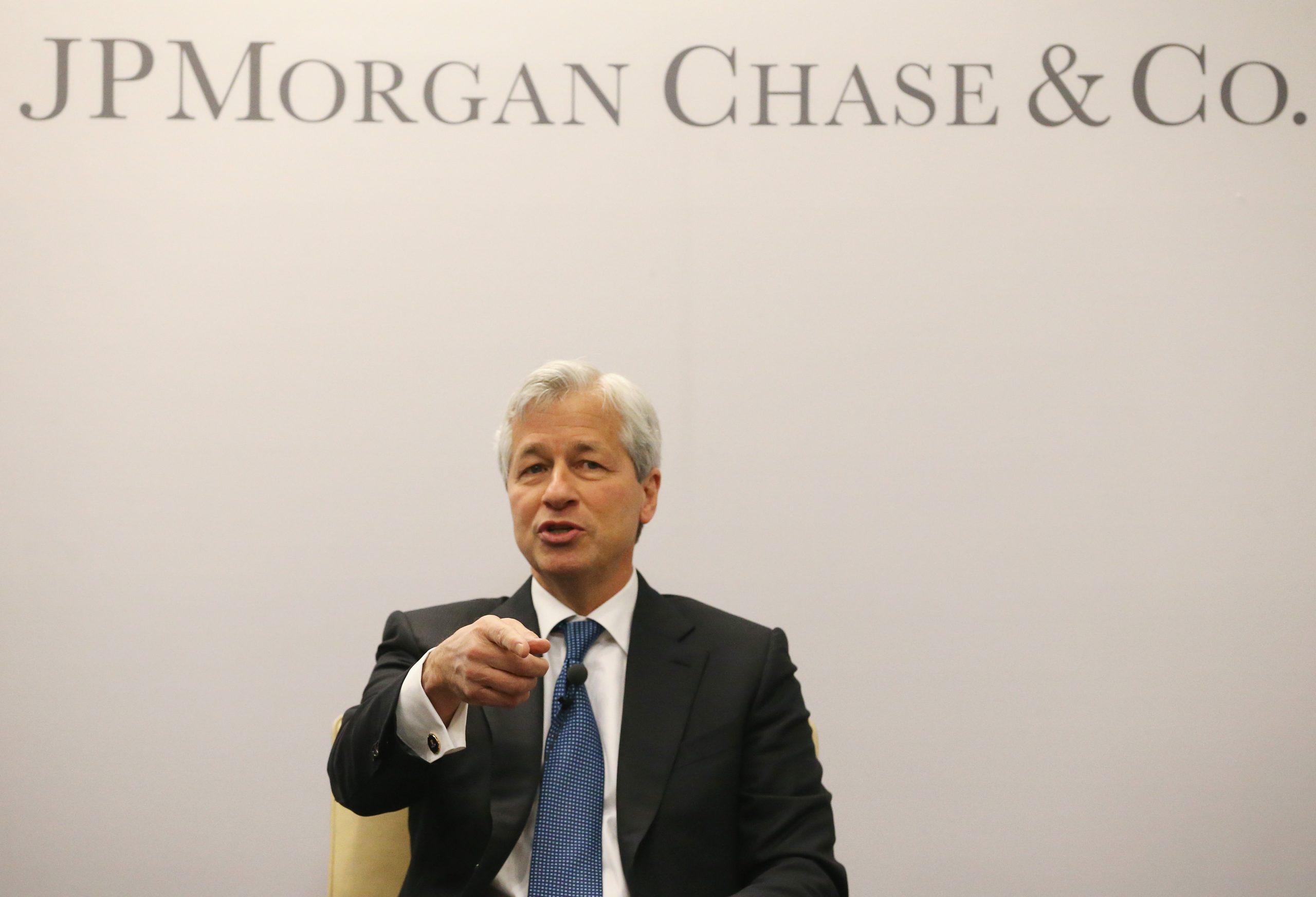
JP Morgan Chase puts contents through its CEO account, it goes viral. But the same content via JPMC account, no one cares (WSJ)

The U.S. Treasury’s efforts to ease pressure in the government bond market may provide temporary relief but will not address the deeper problem of rapidly rising debt issuance, according to JPMorgan.

James Sullivan, JPMorgan’s co-head of global fundamental research, said the Treasury’s strategy of buying back longer-dated bonds while financing itself with shorter-term bills could help manage borrowing costs in the near term, but ultimately leaves the government’s underlying debt burden unchanged.

“It’s a little bit like paying your mortgage with your credit card. It can work for a while, but eventually the mismatch starts to become more obvious,” Sullivan told CNBC’s “Squawk Box” on Friday.

The Treasury Department, led by Secretary Scott Bessent, announced Wednesday that it would at least double the size of its government debt buybacks. The programme is scheduled to run from Sept. 9 through Nov. 4.

The buybacks are designed to improve liquidity and manage the supply of longer-maturity Treasury securities. By purchasing older, less-liquid bonds, the Treasury can influence the composition of outstanding debt while issuing more short-term bills to meet its financing needs.

Sullivan argues, however, that this does not eliminate the central challenge facing global bond markets: an enormous volume of government and corporate debt that must ultimately be absorbed by investors.

“The only way you balance supply and demand is through price,” he said.

In bond markets, that price adjustment is reflected largely through yields. If the supply of debt rises faster than investor demand, issuers generally have to offer higher yields to attract buyers. That creates a potential feedback loop for governments because higher yields increase the cost of servicing existing and newly issued debt.

The issue extends well beyond the United States. Sullivan pointed to roughly $40 trillion of U.S. government debt and about $76 trillion of government debt across developed markets, alongside record corporate bond issuance.

“Governments trying to control markets is not a particularly attractive story most of the time,” Sullivan said.

One of the concerns is that some traditional buyers of U.S. government debt are reducing their exposure. China’s Treasury holdings have fallen to an 18-year low, while U.S. Treasury custody holdings for foreign governments are at their lowest level in 14 years. That means the Treasury could face a more difficult funding environment as it competes for capital with other sovereign issuers and increasingly large corporate borrowers.

The pressure is notable because the borrowing surge is occurring alongside a major investment cycle in artificial intelligence and other capital-intensive industries. Companies are increasingly issuing debt to finance data centers, semiconductor facilities and other AI infrastructure, as well as investment associated with reshoring manufacturing and national security. AI companies alone have issued about $200 billion of debt so far this year, according to Sullivan, an 80% increase from a year earlier.

That additional corporate borrowing creates another source of competition for investors’ money. A pension fund, asset manager or other institutional investor allocating capital to corporate bonds is potentially allocating less to government bonds or equities, while higher Treasury yields can force companies to offer still higher returns to attract financing.

The consequences are also spilling into equity markets.

Higher Treasury yields increase the attractiveness of bonds relative to stocks, particularly when equity valuations are elevated. Investors can demand a greater expected return from stocks when government bonds provide higher yields with considerably less credit risk.

According to JPMorgan data, Treasury yields are now above the earnings yield on the S&P 500. The earnings yield is the inverse of the market’s price-to-earnings ratio and provides a simple way of comparing the income generated by equities with the return available from bonds.

That relationship makes the asset-allocation decision more difficult for investors. If Treasury yields continue to rise, equities may need either stronger earnings growth or lower valuations to remain competitive.

“The asset allocation decision becomes significantly more complex going forward as we see these environments play out,” Sullivan said.

The Treasury’s buyback programme could therefore help smooth market conditions without resolving the structural imbalance. By shifting issuance toward shorter maturities, economic experts say the government can reduce some pressure at the long end of the curve, but it also increases its exposure to refinancing risk because short-term debt must be rolled over more frequently.

That distinction is becoming more glaring as the government seeks to finance a large fiscal deficit while long-term investors demand greater compensation for holding Treasury securities. The broader concern for markets is not simply the absolute level of U.S. government debt but the amount of new debt that needs to be absorbed at a time when governments and corporations around the world are competing for the same pool of savings.

If investor demand fails to keep pace with issuance, the adjustment mechanism will ultimately be higher yields. That could raise government financing costs, increase corporate borrowing expenses, and place further pressure on stock valuations.

Taiwan’s AI Boom Drives 11% Growth Forecast, but Heavy Chip Dependence Raises Risks

0

Taiwan is heading for one of its strongest economic expansions in decades as the global artificial intelligence boom drives unprecedented demand for semiconductors and technology products, but economists warn that the double-digit growth expected this year may prove difficult to sustain.

Taiwan’s statistics agency earlier this month raised its 2026 GDP growth forecast to 11.05%, sharply higher than the 9.64% estimate issued in May. The upgrade underscores the scale of the current AI-driven expansion, with Taiwan benefiting from massive investments by global technology companies and surging demand for advanced chips.

The island’s stock market has also reflected the strength of the technology cycle. Taiwan’s weighted stock index has risen more than 56% this year, supported by expectations that spending on AI infrastructure will remain strong.

But economists caution that the extraordinary pace of expansion should not be treated as a new normal.

“I think it is important not to extrapolate the exceptional pace of growth this year too far ahead,” said Saktiandi Supaat, head of FX research at Maybank.

Taiwan’s position at the center of the global semiconductor supply chain has made it one of the biggest beneficiaries of the AI investment boom. Semiconductor manufacturers and suppliers are expanding production and capacity to meet demand for processors used in data centers, AI servers and advanced computing systems.

The same concentration, however, creates a significant vulnerability.

If global technology companies reduce capital expenditure, the effects could move rapidly through Taiwan’s economy, affecting exports, industrial production and business investment.

“If the pace of AI investment slows, this could feed relatively quickly into Taiwan’s exports, manufacturing and investment,” Supaat said.

The concern is becoming more relevant as the AI industry enters a phase of exceptionally high capital spending. Technology companies are investing hundreds of billions of dollars in data centers, advanced processors, networking equipment and electricity infrastructure, creating a powerful demand cycle for Taiwanese manufacturers.

That cycle cannot accelerate indefinitely.

At some point, companies may begin demanding evidence that AI investments are generating sufficient revenue to justify continued spending. A slowdown in data-center construction or a reassessment of expected returns could therefore have a disproportionate impact on Taiwan.

Jeremy Tan, chief executive of Tiger Fund Management, said the country’s exposure to the technology cycle raises questions about the sustainability of its rapid expansion.

The risk extends beyond AI spending.

Taiwan’s dependence on semiconductors leaves its economy exposed to broader global downturns, changes in technology demand and geopolitical tensions. The semiconductor industry is cyclical, and periods of aggressive investment can eventually be followed by inventory corrections and weaker capital expenditure.

A global rise in interest rates could compound those pressures.

Higher inflation or stronger-than-expected economic activity could force central banks to keep borrowing costs elevated for longer. Tighter financial conditions would make it more expensive for companies to finance expansion and could put pressure on technology valuations.

Caroline Wong, country risk analyst at BMI, said tighter global financial conditions could intensify equity-market declines and increase stress in private credit markets.

“For AI startups, the resulting impact of limited refinancing options for tech firms could lead to a slowdown in Taiwan’s investment growth,” Wong said.

That risk has a bearing on Taiwan’s emerging AI ecosystem. Large semiconductor companies may have substantial financial resources and established global customers, but smaller AI companies depend more heavily on venture capital, private credit and continued investor confidence. A prolonged period of high interest rates could therefore affect the next generation of technology companies even while established chipmakers continue to benefit from AI demand.

Geopolitics presents another structural risk.

Taiwan remains at the center of tensions between Beijing and Washington, while the island’s semiconductor industry has become increasingly important to global technology supply chains.

Wong said heightened tensions with Beijing could weaken investor sentiment. Any significant disruption to investment flows could also encourage multinational customers of Taiwanese chipmakers to accelerate efforts to diversify their supply chains.

That diversification is already an important strategic issue for the global semiconductor industry. Governments and technology companies in the United States, Japan and Europe have been encouraging semiconductor production outside Taiwan to reduce their dependence on a single geographic hub.

Taiwan’s dominance in advanced chip manufacturing means it is unlikely to lose its strategic importance quickly. But a gradual diversification of production could reduce the economy’s exposure to the semiconductor sector over time.

There is also a question about how widely the benefits of the AI boom are spreading across the domestic economy.

Nick Marro, principal economist for Asia at the Economist Intelligence Unit, said Taiwan’s booming technology sector has supported private consumption through rising equity markets, but wage growth has remained weak and real wages have stagnated.

“All of this suggests that the dividends from the AI boom aren’t evenly dispersing through the economy, including in ways that would be structurally sustainable,” Marro said.

That creates an important distinction between headline GDP growth and broader economic prosperity. Taiwan can post exceptionally strong GDP figures because semiconductor exports and investment are surging, while households outside the technology sector experience a much less dramatic improvement in purchasing power.

The concentration of wealth and investment in technology could also make domestic demand more vulnerable if the AI cycle turns. A sharp correction in technology stocks could reduce household wealth and business confidence, weakening consumption and investment at the same time.

The longer-term challenge for Taiwan is therefore not simply maintaining its lead in semiconductors but converting that advantage into a broader economic base.

UOB economist Ho Woei Chen said maintaining Taiwan’s technological edge would be critical to sustaining growth.

“This requires continued investment in research and development, talent development, advanced manufacturing capabilities, and next-generation technologies,” Ho said.

That investment will be essential as competition in semiconductors intensifies. Taiwan’s current advantage is based on decades of accumulated expertise, a sophisticated supplier network and a highly developed advanced-manufacturing ecosystem. Maintaining that lead will require continued spending even if the global AI investment cycle becomes less explosive.

The immediate outlook remains strong.

An 11.05% growth forecast places Taiwan among the world’s fastest-growing major economies and highlights how strongly the AI boom is translating into real economic activity. The rise in the stock market also shows how investors continue to price in substantial future demand for Taiwanese technology companies.

But the more important question is what happens after the current investment surge peaks.

If global AI spending continues expanding at a rapid pace, analysts see Taiwan’s semiconductor-heavy economy remaining a major beneficiary. If technology companies begin reducing capital expenditure, the effects could be felt quickly through exports, manufacturing, investment and financial markets.

Taiwan’s economic success has therefore become closely tied to a global technology cycle that it does not control. The island’s semiconductor dominance gives it an enormous advantage in the current AI boom, but it also concentrates risk.

Bitcoin Surges Past $78,000 as Short Liquidations Accelerate Rally

0

Bitcoin has climbed above the $78,000 level, marking a sharp continuation of its multi-day advance and triggering fresh waves of short liquidations across the cryptocurrency market.

The move pushed the largest digital asset to an intraday high near $79,500 before settling in the mid-to-high $77,000 range later in the session, according to market data.

Over the past 24 hours, Bitcoin gained roughly 6–8%, contributing to a weekly advance exceeding 20% from levels near $64,000 earlier in the month.

The rally has been heavily amplified by forced buying from liquidated short positions. Data from tracking platforms showed more than $1 billion in short liquidations in recent 24-hour periods, part of a multi-day total exceeding $4 billion in bearish bets wiped out since the breakout began.

One concentrated burst earlier in the session aligned with reports of approximately $140 million in shorts closed within a single hour as price accelerated through key resistance. Bitcoin accounted for the majority of these liquidations, with additional pressure hitting positions in Ethereum and other major assets.

This short-squeeze dynamic has created a self-reinforcing cycle: rising prices force leveraged bears to cover, which in turn drives further buying and higher prices.

The latest surge follows a similar pattern from the previous day, when Bitcoin broke out of a multi-week range and liquidated billions in shorts amid improving macro conditions, including expanded U.S.

Treasury bond buybacks that eased long-term yields and boosted risk appetite. Spot Bitcoin ETF inflows have also provided underlying support during the advance.

Market participants note that while liquidations can produce rapid moves, sustained progress will depend on continued demand beyond forced covering.

Michaël van de Poppe, the well-known crypto analyst and founder of MN Fund, recently highlighted a striking parallel on Bitcoin’s weekly chart. He noted that the current price action is essentially a copy-and-paste of the 2022 breakout pattern: a period of consolidation followed by a sweep of the lows and then a powerful green weekly candle.

Van de Poppe expects the rally to continue in the near term, with the next technical targets being a sweep of the prior high around $83,000 and a test of the 50-week moving average.

In his view, clearing $83,000 would help confirm that the recent bearish phase is over. At the same time, he does not expect Bitcoin to power through these levels in a single uninterrupted move.

He therefore suggests treating those zones as logical areas for taking some profits and waiting for the inevitable pullbacks that usually follow such advances.

Notably, Bitcoin remains well below its October 2025 all-time high near $126,000 but has reclaimed important technical levels and shifted sentiment decisively higher. Traders are now watching whether the asset can hold gains above $75,000–$78,000 and challenge the psychological $80,000 mark in the coming sessions.

Outlook

Bitcoin’s near-term outlook has turned increasingly bullish as the cryptocurrency establishes itself above the $75,000–$78,000 region and momentum continues to build. The immediate focus for traders is now the psychological $80,000 level, followed by the previous high around $83,000.

However, the strength of the current rally also increases the likelihood of short-term pullbacks. Much of the recent acceleration has been driven by forced short covering, meaning momentum could cool if liquidation-driven buying fades.