

Taiwan is heading for one of its strongest economic expansions in decades as the global artificial intelligence boom drives unprecedented demand for semiconductors and technology products, but economists warn that the double-digit growth expected this year may prove difficult to sustain.
Taiwan’s statistics agency earlier this month raised its 2026 GDP growth forecast to 11.05%, sharply higher than the 9.64% estimate issued in May. The upgrade underscores the scale of the current AI-driven expansion, with Taiwan benefiting from massive investments by global technology companies and surging demand for advanced chips.
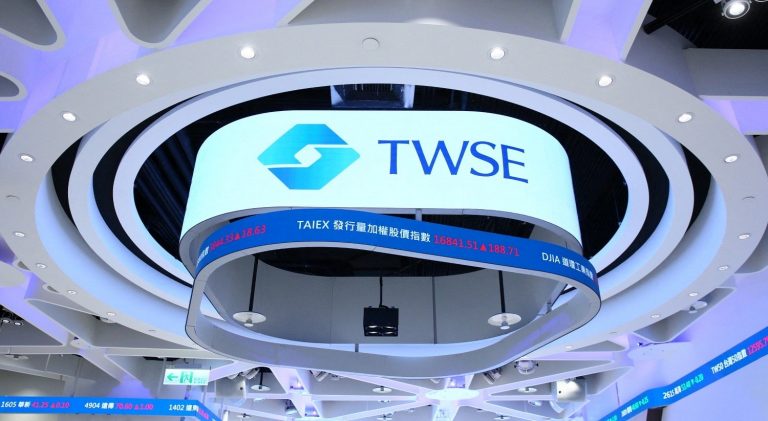
The island’s stock market has also reflected the strength of the technology cycle. Taiwan’s weighted stock index has risen more than 56% this year, supported by expectations that spending on AI infrastructure will remain strong.
Register for the next Tekedia Mini-MBA.
Register for Tekedia AI in Business Masterclass.
Join Tekedia Capital Syndicate and co-invest in great global startups.
But economists caution that the extraordinary pace of expansion should not be treated as a new normal.
“I think it is important not to extrapolate the exceptional pace of growth this year too far ahead,” said Saktiandi Supaat, head of FX research at Maybank.
Taiwan’s position at the center of the global semiconductor supply chain has made it one of the biggest beneficiaries of the AI investment boom. Semiconductor manufacturers and suppliers are expanding production and capacity to meet demand for processors used in data centers, AI servers and advanced computing systems.

The same concentration, however, creates a significant vulnerability.
If global technology companies reduce capital expenditure, the effects could move rapidly through Taiwan’s economy, affecting exports, industrial production and business investment.
“If the pace of AI investment slows, this could feed relatively quickly into Taiwan’s exports, manufacturing and investment,” Supaat said.

The concern is becoming more relevant as the AI industry enters a phase of exceptionally high capital spending. Technology companies are investing hundreds of billions of dollars in data centers, advanced processors, networking equipment and electricity infrastructure, creating a powerful demand cycle for Taiwanese manufacturers.
That cycle cannot accelerate indefinitely.
At some point, companies may begin demanding evidence that AI investments are generating sufficient revenue to justify continued spending. A slowdown in data-center construction or a reassessment of expected returns could therefore have a disproportionate impact on Taiwan.
Jeremy Tan, chief executive of Tiger Fund Management, said the country’s exposure to the technology cycle raises questions about the sustainability of its rapid expansion.
The risk extends beyond AI spending.
Taiwan’s dependence on semiconductors leaves its economy exposed to broader global downturns, changes in technology demand and geopolitical tensions. The semiconductor industry is cyclical, and periods of aggressive investment can eventually be followed by inventory corrections and weaker capital expenditure.
A global rise in interest rates could compound those pressures.
Higher inflation or stronger-than-expected economic activity could force central banks to keep borrowing costs elevated for longer. Tighter financial conditions would make it more expensive for companies to finance expansion and could put pressure on technology valuations.
Caroline Wong, country risk analyst at BMI, said tighter global financial conditions could intensify equity-market declines and increase stress in private credit markets.
“For AI startups, the resulting impact of limited refinancing options for tech firms could lead to a slowdown in Taiwan’s investment growth,” Wong said.
That risk has a bearing on Taiwan’s emerging AI ecosystem. Large semiconductor companies may have substantial financial resources and established global customers, but smaller AI companies depend more heavily on venture capital, private credit and continued investor confidence. A prolonged period of high interest rates could therefore affect the next generation of technology companies even while established chipmakers continue to benefit from AI demand.
Geopolitics presents another structural risk.
Taiwan remains at the center of tensions between Beijing and Washington, while the island’s semiconductor industry has become increasingly important to global technology supply chains.
Wong said heightened tensions with Beijing could weaken investor sentiment. Any significant disruption to investment flows could also encourage multinational customers of Taiwanese chipmakers to accelerate efforts to diversify their supply chains.
That diversification is already an important strategic issue for the global semiconductor industry. Governments and technology companies in the United States, Japan and Europe have been encouraging semiconductor production outside Taiwan to reduce their dependence on a single geographic hub.
Taiwan’s dominance in advanced chip manufacturing means it is unlikely to lose its strategic importance quickly. But a gradual diversification of production could reduce the economy’s exposure to the semiconductor sector over time.
There is also a question about how widely the benefits of the AI boom are spreading across the domestic economy.
Nick Marro, principal economist for Asia at the Economist Intelligence Unit, said Taiwan’s booming technology sector has supported private consumption through rising equity markets, but wage growth has remained weak and real wages have stagnated.
“All of this suggests that the dividends from the AI boom aren’t evenly dispersing through the economy, including in ways that would be structurally sustainable,” Marro said.
That creates an important distinction between headline GDP growth and broader economic prosperity. Taiwan can post exceptionally strong GDP figures because semiconductor exports and investment are surging, while households outside the technology sector experience a much less dramatic improvement in purchasing power.
The concentration of wealth and investment in technology could also make domestic demand more vulnerable if the AI cycle turns. A sharp correction in technology stocks could reduce household wealth and business confidence, weakening consumption and investment at the same time.
The longer-term challenge for Taiwan is therefore not simply maintaining its lead in semiconductors but converting that advantage into a broader economic base.
UOB economist Ho Woei Chen said maintaining Taiwan’s technological edge would be critical to sustaining growth.
“This requires continued investment in research and development, talent development, advanced manufacturing capabilities, and next-generation technologies,” Ho said.
That investment will be essential as competition in semiconductors intensifies. Taiwan’s current advantage is based on decades of accumulated expertise, a sophisticated supplier network and a highly developed advanced-manufacturing ecosystem. Maintaining that lead will require continued spending even if the global AI investment cycle becomes less explosive.
The immediate outlook remains strong.
An 11.05% growth forecast places Taiwan among the world’s fastest-growing major economies and highlights how strongly the AI boom is translating into real economic activity. The rise in the stock market also shows how investors continue to price in substantial future demand for Taiwanese technology companies.
But the more important question is what happens after the current investment surge peaks.
If global AI spending continues expanding at a rapid pace, analysts see Taiwan’s semiconductor-heavy economy remaining a major beneficiary. If technology companies begin reducing capital expenditure, the effects could be felt quickly through exports, manufacturing, investment and financial markets.
Taiwan’s economic success has therefore become closely tied to a global technology cycle that it does not control. The island’s semiconductor dominance gives it an enormous advantage in the current AI boom, but it also concentrates risk.