DD
MM
YYYY

PAGES

DD
MM
YYYY

spot_img

PAGES

Home Blog Page 1024

Solana (SOL) Aiming for $1,000 Is Impressive, But Here’s Why It Won’t Match Ripple (XRP) and Little Pepe’s (LILPEPE) Gains

0

Solana’s trajectory toward a $1,000 valuation is, without question, one of the most ambitious goals in the current crypto cycle. It has already demonstrated incredible resilience in 2025 by climbing to $147, bolstered by ultra-fast speeds, microtransaction-level fees, and a growing foothold in the institutional DeFi and NFT sectors. But despite the excitement, Solana’s climb—while admirable—may ultimately offer more of a steady marathon than a thrilling sprint.

That’s where Ripple (XRP) and Little Pepe (LILPEPE) change the game. Both projects are generating explosive momentum, driven not just by hype but by smart fundamentals, unique positioning, and actual catalysts for market-shaking growth. Unlike SOL, which is starting to show signs of saturation, XRP and LILPEPE are poised for asymmetric upside that even Solana may struggle to replicate in the short to medium term.

Solana’s Strength—and Its Ceiling

There’s no denying Solana has had a remarkable run. Its transaction speeds are blistering, its fees are negligible, and its infrastructure is increasingly being adopted by developers and institutional DeFi players. The path to $1,000? Not impossible—especially with institutional adoption and the maturation of its ecosystem.

But therein lies the limitation.

Solana is no longer the scrappy underdog. It’s a semi-mature, relatively stable Layer 1 with a large market cap. That kind of scale brings predictability. For short-term speculators or investors seeking 10x or more returns, predictability can be boring. The very strength of Solana’s network is what caps its explosive potential.

Solana might be a great hold. But it’s no longer a great story.

XRP: The Institutional Sleeper Waking Up

Ripple’s XRP, on the other hand, is in the middle of a powerful resurgence. Trading around $2.30 and flirting with key resistance levels, XRP has not only rebounded from bearish sentiment—it’s beginning to retake territory most analysts thought was lost to history.

Recent developments are helping to turn that optimism into action:

  • Near-certain approval (98%) of a spot XRP ETF
  • Inclusion in the NASDAQ Crypto Index
  • CME futures launch, boosting its legitimacy among institutions
  • Guardian Arch strategy analysts targeting $20–$27 in the medium term
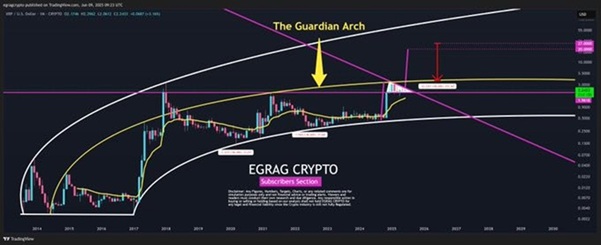
Ripple Guardian Arch Strategy

What makes XRP different from Solana is the degree of untapped speculative and institutional capital waiting on the sidelines. This isn’t just about use case anymore—it’s about the long-overdue unlocking of value that regulatory clarity and major integrations can catalyze. Unlike SOL, XRP still has a narrative: the comeback. And investors love a comeback.

Little Pepe (LILPEPE): The Meme Coin With Utility and Velocity

If XRP is the comeback king, then Little Pepe (LILPEPE) is the wild card nobody saw coming—but everyone’s watching.

On the surface, it may be just another meme coin. But dig deeper, and you’ll find that LILPEPE is anything but ordinary. It’s a Layer-2 blockchain, not just a token, and it brings actual infrastructure to the meme space, pairing lightning-fast transactions with zero tax and a strong decentralization ethos. Think of it as the Pepified version of Arbitrum or Optimism—only with a massive culture engine and a personality.

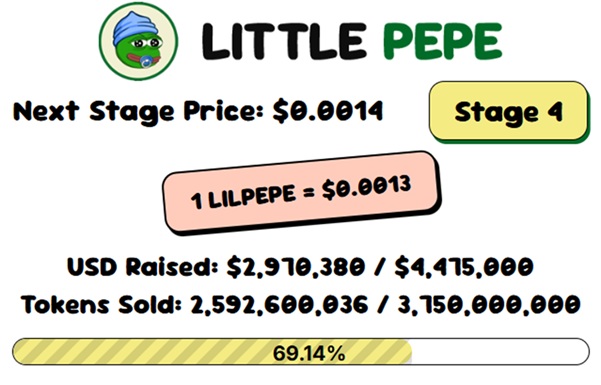
What’s more compelling is its presale momentum, with $2.9 million already raised of a $4.47 million goal, and deep into Stage 4, where each token is priced at $0.0013. Investors are snapping up their share of the 3.75 billion tokens allocated to early adopters, and with a total supply of just 100 billion, scarcity is baked in.
And if that weren’t enough, a $777,000 giveaway is currently underway—ten winners will each receive $77,000 worth of LILPEPE, incentivizing both presale participation and viral community engagement. LILPEPE isn’t just aiming to become a meme—it’s building a chain. A proper Layer 2, with real utility and community fuel behind it. That’s a level of ambition not even Dogecoin or Shiba Inu ever dared to reach.

The Verdict: Solana Grows, But XRP and LILPEPE Explode

Solana’s march to $1,000 may well happen. But it will be measured, institutionally driven, and ultimately constrained by its maturity and scale. It’s an asset for those who want exposure to stability rather than seeking a specific upside.

In contrast, XRP and LILPEPE represent a new generation of asymmetric plays. XRP is rediscovering bullish momentum with regulatory tailwinds and mass-scale integrations. LILPEPE is carving out a new category entirely: the memechain—a hybrid of culture and infrastructure.

If Solana is climbing a mountain, XRP and LILPEPE are strapping on jetpacks.

And in a market that rewards speed, narrative, and timing, jetpacks almost always win.

Ready to Leap?

With LILPEPE’s presale in full swing and over 2.2 billion tokens already sold, time is running out to grab this meme-layer opportunity before it lists. Visit the official website to join the presale and enter the $777K giveaway. Minimum contribution: $100. Maximum vibes: unlimited. Because in 2025, the best gains aren’t found in old empires—they’re minted in the memes.

For more information about Little Pepe (LILPEPE) visit the links below:

Website: https://littlepepe.com

Whitepaper: https://littlepepe.com/whitepaper.pdf

 Telegram: https://t.me/littlepepetoken

Twitter/X: https://x.com/littlepepetoken

Casino Affiliate Programs: How Streamers and Influencers Make Money

0

The rise of streaming platforms and social media has created lucrative opportunities for content creators in the online gambling space. Casino streamers and influencers are earning substantial incomes by partnering with gambling platforms through affiliate programs. But how exactly does this business model work, and what does it take to succeed? This guide breaks down everything aspiring affiliates need to know about monetizing casino content.

Understanding Casino Affiliate Marketing Basics

Casino affiliate marketing operates on a simple principle: content creators promote online casinos like NV Online Casino to their audience and earn commissions based on the players they refer. When viewers sign up and play using special tracking links, affiliates receive a percentage of the revenue generated.

Successful programs provide creators with marketing materials, tracking tools, and competitive commission rates. The beauty of this model lies in its scalability – the more quality content you create and the larger your audience grows, the higher your earning potential becomes.

Essential components of affiliate marketing:

  • Unique tracking links or codes;
  • Real-time reporting dashboards;
  • Marketing materials and assets;
  • Commission payment systems;
  • Dedicated affiliate support.

Popular Platforms for Casino Content Creation

Choosing the right platform significantly impacts your success as a casino affiliate. Each platform offers unique advantages and caters to different audience demographics and content styles.

Twitch remains the dominant force for live casino streaming, with dedicated gambling categories and an engaged viewer base. YouTube provides excellent long-term value through searchable content and video monetization options. TikTok and Instagram work well for bite-sized content and reaching younger audiences, though platform restrictions require creative approaches.

Platform comparison for casino content:

  • Twitch – Best for live streaming sessions and real-time interaction;
  • YouTube – Ideal for tutorials, reviews, and evergreen content;
  • TikTok – Perfect for viral clips and highlights;
  • Instagram – Great for lifestyle content and story features;
  • Discord – Excellent for building communities;
  • Twitter – Useful for updates and engagement.

Commission Structures and Earning Models

Understanding different commission structures helps you choose programs that align with your content strategy and audience. Most casino affiliate programs offer multiple earning models, allowing creators to optimize their income streams.

Revenue share remains the most popular model, offering ongoing passive income from player activity. CPA (Cost Per Acquisition) deals provide upfront payments for each new player, while hybrid models combine both approaches for balanced earnings.

Model Type Payment Structure Best For
Revenue Share 25-50% of player losses Long-term passive income
CPA $50-500 per player Quick cash flow
Hybrid Lower CPA + revenue share Balanced approach
Sub-affiliates 5-10% of referral earnings Network builders
Tiered Increasing rates with volume High-volume creators

Building Your Audience and Content Strategy

Success in casino affiliate marketing requires more than just posting referral links. Building a loyal, engaged audience demands consistent, valuable content that entertains and informs viewers about online gambling.

Authenticity plays a crucial role in audience trust. Successful streamers share genuine reactions, both wins and losses, creating relatable content that resonates with viewers. Educational content, such as strategy guides and game reviews, provides value beyond entertainment while naturally incorporating affiliate promotions.

Content ideas that drive conversions:

  • Live streaming gambling sessions with commentary;
  • Game strategy tutorials and tips;
  • Casino review videos comparing features;
  • Bonus hunting guides and walkthroughs;
  • Community challenges and giveaways;
  • Behind-the-scenes content about streaming setup.

Legal Considerations and Compliance

Operating as a casino affiliate comes with important legal responsibilities. Different jurisdictions have varying regulations regarding gambling promotion, and failing to comply can result in serious consequences.

Always disclose affiliate relationships transparently to maintain trust and meet legal requirements. Age restrictions must be strictly enforced, with content clearly marked as 18+ only. Some countries prohibit gambling advertising entirely, requiring geo-blocking or careful audience targeting.

Compliance checklist for affiliates:

  • Include clear affiliate disclosures in content;
  • Implement age-gating mechanisms;
  • Respect self-exclusion requests;
  • Avoid targeting restricted territories;
  • Promote responsible gambling resources;
  • Keep records of earnings for tax purposes.

Maximizing Your Affiliate Income

Successful affiliates employ various strategies to optimize their earnings beyond simply sharing links. Data analysis, A/B testing, and continuous optimization separate top earners from casual creators.

Diversifying across multiple programs reduces risk while maximizing opportunities. Seasonal promotions and exclusive bonuses can significantly boost conversion rates. Building email lists and communities creates additional touchpoints for promotion while providing value to your audience.

Strategy Implementation Expected Impact
A/B Testing Try different thumbnails/titles 20-40% CTR increase
Email Marketing Weekly newsletter with offers 15-25% revenue boost
Exclusive Bonuses Negotiate special deals 30-50% conversion increase
Cross-Platform Promote on multiple channels 2-3x audience reach
SEO Optimization Target search keywords Long-term traffic growth

Your Path to Affiliate Success

Casino affiliate marketing offers genuine opportunities for content creators willing to invest time and effort into building their brand. Success requires understanding your audience, creating engaging content, and partnering with reputable programs that align with your values. Start small, focus on providing value to your viewers, and scale your operations as you learn what works. Whether you’re streaming on Twitch or creating YouTube reviews, the key lies in authenticity and consistency. Ready to turn your passion for casino content into a profitable venture? Choose your platform, select trusted affiliate programs, and start creating content that connects with fellow gambling enthusiasts today.

Okra Shutdown: Fintech to Return Investors’ Funds And Prioritize Employees’ Severance Amid Strategic Pivot

0

In a rare move that underscores transparency and responsibility in Africa’s startup ecosystem, Nigerian fintech Okra has announced its decision to return unspent funds to investors despite having three years of financial runway remaining.

This comes after the company reportedly shut down operations on July 3, 2025, after raising more than $16 million in funding. The closure also marked the end of Nebula, its cloud services platform, which had aimed to provide cost-effective cloud infrastructure amid Nigeria’s rising tech expenses.

Rather than prolonging operations with limited growth prospects, Okra opted for an orderly wind-down, prioritizing investor returns and employee welfare.

In an interview with Techpoint Africa, co-founder and CEO Fara Ashiru, stated that a significant amount will be returned to investors. Okra, which raised $16.5 million in funding over its lifespan, is estimated to return between $4 million and $5 million to investors. While Ashiru declined to disclose the specific amount, industry estimates suggest the startup spent around 60–75% of its total funding, leaving a significant amount unspent.

The decision to return funds reflects a focus on maintaining investor trust, a critical factor in Africa’s evolving startup ecosystem. The company has also implemented tiered severance packages based on tenure, with long-term staff receiving up to six months’ worth of salary and newer team members also receiving financial bonuses, an approach that stands in stark contrast to many high-profile startup failures.

Ashiru also addressed the shutdown of Nebula, Okra’s cloud product designed as a cost-effective alternative for African businesses. She noted that although some companies adopted Nebula, its lack of mission-critical use limited long-term viability. “This was a bold one and showed early promise, but the speed of adoption simply wasn’t fast enough,” Ashiru explained. She noted that continuing would have required additional capital and an extended timeline, a move she deemed irresponsible without stronger market traction.

Nebula positioned Okra alongside other homegrown cloud providers like Nobus and Layer3, targeting businesses seeking to reduce reliance on expensive foreign infrastructure. However, over time, it became increasingly unsustainable to run the business, because the company was spending more than it was bringing in.

Okra’s shutdown indeed marks a significant moment for Africa’s fintech ecosystem. As a pioneer in open banking, Okra built APIs that enabled seamless financial data access and payment processing, connecting bank accounts to third-party apps and serving major clients like Renmoney, Branch, and Bamboo.

The shutdown of Okra has sparked varied reactions across the African tech ecosystem. Many expressed sadness over the startup closure, recognizing its bold vision and contributions to Africa’s open banking landscape. Users highlighted the emotional weight of the shutdown, noting that behind it was a team that dared to innovate in a challenging environment. 

Several takes pointed to Nigeria’s harsh business environment as a key factor in Okra’s demise. Commentators cited a lack of government support, and economic volatility such as naira depreciation and high cloud infrastructure costs as major hurdles. The consensus is that even well-funded startups like Okra struggle to scale in a dollarized ecosystem with naira-based revenue.

Notably, some framed Okra’s closure as a “semicolon” rather than a full stop, suggesting its contributions to open banking and financial APIs will inspire future fintech ventures. These takes reflect a mix of frustration with systemic challenges, admiration for Okra’s achievements, and cautious optimism for the future of African fintech. While Okra’s legacy in open banking endures, its shutdown underscores the complexity of building sustainable startups in Africa’s volatile markets. 

The Grand Playbook of Business and Four Plays in Markets – Ndubuisi Ekekwe

0

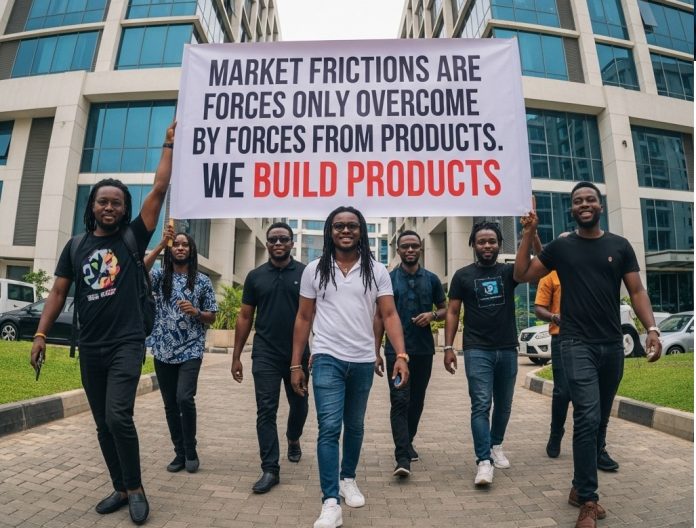
The world is full of market frictions. Only products can overcome those frictional market forces because products generate forces. Until your startup has great products, it will not exert any impact on the market because it will have no force to deal with the frictions customers are facing. Do not just build a company; build a product or service!

Join me tomorrow at Tekedia Mini-MBA.

Sat, July 5 | 7pm-8.30pm WAT | The Grand Playbook of Business and Four Plays in Markets – Ndubuisi Ekekwe | Zoom link

Response to a question: 

Yesterday, we chronicled a company which is tapping into the skills of young Nigerians and providing them opportunities in Europe and America. What All Talentz is doing is part of building communities you noted. With those jobs, the human spirit is strengthened.

On this particular post, my focus is making it clear that if people gather in a company and they fail to build that force (the product) that impacts, that company has no value. We cannot have companies everywhere and yet we cannot find solutions to our market needs… that is the point.  Thanks for the pointers.

Tesla Misses Deadline for Affordable EV Amid Sales Slump and Mounting Global Pressure

0

Tesla has once again missed a self-imposed deadline to begin production of its long-promised affordable electric vehicle, intensifying questions about its roadmap just as the company reels from a second consecutive year-over-year drop in vehicle deliveries.

Despite repeatedly assuring investors that the new low-cost model would begin production in the first half of 2025, the June deadline passed this week without an update. Notably, the company made no mention of the project in its latest earnings call, which instead focused on reaffirming earlier claims.

Tesla’s silence comes at a critical moment. After years of dominating the electric vehicle market, the automaker is now grappling with a stark slowdown in global EV adoption, fierce competition from cheaper Chinese models, and the erosion of brand loyalty in key regions. The push for a budget-friendly EV—reportedly a stripped-down version of the Model Y, codenamed “E41″—is not just a delayed product; it’s part of a larger rescue effort to reverse Tesla’s downward spiral trajectory and reclaim its edge in a shifting market.

A Race Against Time and Rivals

The idea of a $25,000 Tesla first surfaced in 2020, when CEO Elon Musk pledged to deliver a fully autonomous, mass-market EV within three years. The announcement, made during the company’s Battery Day presentation, raised expectations that Tesla would finally become a true mass-market automaker. But despite multiple reassurances, the timeline has been pushed back, contradicted, and rebranded—at times dismissed altogether.

By 2022, Musk admitted Tesla had deprioritized the project. In early 2024, he suggested production could begin by the end of 2024 or early 2025. But just months later, in October, he publicly argued that building a $25,000 “non-robotaxi” model would be “pointless” and “completely at odds” with Tesla’s mission—a statement that stunned investors who had been counting on affordable models to expand the company’s reach.

Still, in January 2025, following shareholder disappointment over the lackluster robotaxi debut, Tesla recommitted to the timeline, promising that cheaper models remained on track. April brought another twist. Reuters reported that Tesla had delayed the rollout of the E41 and had shifted focus to retooling factories in preparation for eventual mass production. The company declined to confirm or deny the report but reiterated that the launch was still planned within the first half of the year.

As of July, nothing has materialized.

China’s Subsidized Onslaught and Tesla’s Sliding Market Share

China, once Tesla’s crown jewel market, has become an increasingly hostile battlefield. Local manufacturers such as BYD have flooded the market with ultra-cheap, government-subsidized EVs, selling for nearly half the price of Tesla’s cheapest models. BYD, now the world’s top EV seller by volume, has capitalized on its scale, local supply chain advantages, and generous state support to displace Tesla in China’s mid-range market.

Tesla, lacking the same pricing flexibility and facing rising production costs, has been forced to slash prices aggressively, hurting its margins and brand perception. The new affordable model—reportedly intended to be cheaper to build than even the Model 3—is a key part of Musk’s counteroffensive. With lower-cost vehicles, Tesla hopes to retake ground lost in China and protect its presence as EV sales growth softens globally.

Reclaiming Europe’s Disenchanted Buyers

Europe presents another challenge—one not only rooted in price but in perception. Once Tesla’s second-largest market, the region has grown increasingly cold toward the brand, with critics citing Musk’s political antics, including his vocal support for far-right figures and controversial statements on social media platform X. These moves have alienated large swaths of European consumers, particularly in progressive cities that once embraced Tesla’s clean energy ethos.

Sales in Germany, France, and the UK have slowed, and Musk’s reputation is now seen as a liability in many European circles. The affordable EV project is expected to help offset this damage by returning focus to practical, sustainable transportation—at a price point that is palatable to middle-class Europeans who might otherwise turn to competitors like Renault, Peugeot, or Volkswagen.

A Shifting Narrative With No Clear Endpoint

Internally, Tesla appears to be facing mounting pressure to shift its narrative. The luxury halo once surrounding the brand is fading fast as competitors catch up on software, performance, and battery efficiency. Musk’s insistence on prioritizing robotaxis and full autonomy has also worn thin, especially after repeated delays and underwhelming demonstrations.

The affordable EV was meant to be the antidote to that fatigue—a way to broaden Tesla’s reach and tap into the global demand for economically viable electric vehicles. With the delay, however, the company risks not only missing out on that opportunity but also losing further credibility with investors and consumers alike.

Vehicle engineering VP Lars Moravy insisted in April that Tesla had already retooled factories and was resolving “last-minute issues” related to the new models. But his comments now read like the final thread in a timeline marked by shifting promises and missed milestones.

Tesla’s rivals aren’t waiting. BYD has already entered European markets and is expanding rapidly in Latin America and Southeast Asia. Volkswagen, Hyundai, and General Motors are all moving forward with affordable EV offerings, many with established supply chains and government backing.

Unless Tesla delivers on its promise soon, the company risks being left behind—not just by newcomers, but by the very market it helped pioneer.