DD
MM
YYYY

PAGES

DD
MM
YYYY

spot_img

PAGES

Home Blog Page 104

TCL Sues Samsung in U.S. Over Alleged Mislabeling of TVs as Mini LED

0

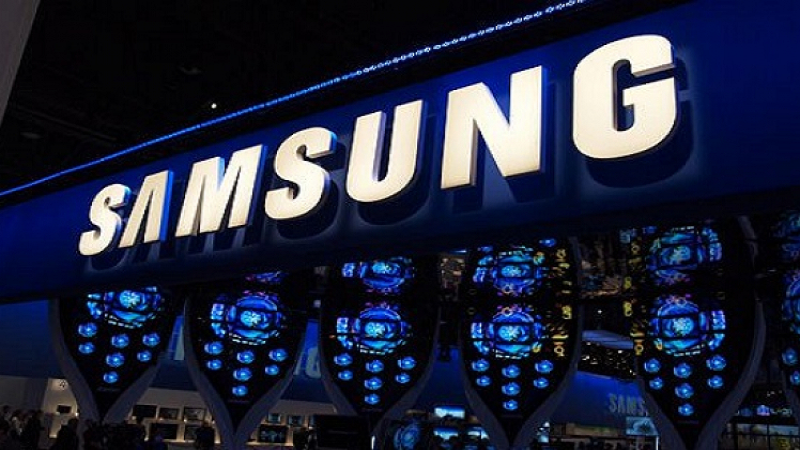
Chinese consumer electronics maker TCL has sued South Korean rival Samsung in a U.S. federal court, accusing it of falsely marketing a new range of televisions as using Mini LED technology when, according to the complaint, the sets are based on conventional LED technology.

The lawsuit, filed Monday in Los Angeles federal court, targets Samsung’s M Model televisions, which TCL says were introduced in March at prices below its cheapest genuine Mini LED models. TCL alleges Samsung repackaged televisions from its standard LED lineup and marketed them as Mini LED products, misleading consumers seeking the improved picture quality associated with the technology.

The case puts a potentially important segment of the global television market at the center of a legal fight between two of its largest manufacturers. TCL has been challenging Samsung in the U.S. with aggressively priced Mini LED televisions, while Samsung has sought to defend its position across premium and mass-market display categories.

TCL’s complaint alleges that Samsung “took a cheap, non-Mini LED model from a recycled product line and peddled it to the public as a ‘supreme’ Mini LED model at an attractive price point.”

Samsung has rejected the accusation and said it will vigorously defend the case. The company said it stands “fully behind the quality and accuracy of our product descriptions.”

The dispute turns on what consumers are actually getting when they buy a television marketed as Mini LED.

Unlike conventional LED televisions, Mini LED displays use much smaller light-emitting diodes in the backlight, allowing manufacturers to place substantially more independently controlled lighting zones behind the screen. That can improve control over bright and dark areas, increase contrast, and expand dynamic range.

The technology has become a crucial middle ground between conventional LED televisions and more expensive OLED displays. For manufacturers, it offers a way to deliver higher-end picture performance while maintaining more competitive prices.

TCL says it was able to exploit that opportunity earlier and more aggressively than Samsung in the U.S. The company launched its affordable QM Mini LED television range in 2023 and claims it overtook Samsung in U.S. Mini LED sales and market share between 2023 and 2025.

The lawsuit alleges Samsung did not have a Mini LED television capable of competing with TCL’s products on both price and performance. Instead, TCL claims, Samsung repackaged its standard Crystal UHD television line as the M Model and introduced the products at lower prices than TCL’s Mini LED offerings.

TCL further alleges that the M Model televisions contain none of the technological components associated with Mini LED and are substantially similar to Samsung’s conventional LED televisions. The complaint claims the strategy rapidly increased Samsung’s sales of the disputed products, with the company’s Mini LED television sales allegedly rising almost fourfold in less than three months.

TCL attorney R.C. Harlan said the alleged marketing strategy harmed both consumers and TCL.

“Samsung’s false advertising misled consumers who wanted the higher picture quality associated with Mini LED televisions into buying Samsung’s falsely labeled product, unfairly damaging TCL’s sales, goodwill, and valuable technology in the process,” Harlan said.

A fight over market share as much as technology

The lawsuit has drawn large attention because TCL’s allegations go beyond a technical disagreement over television specifications. At stake is the value of the Mini LED label itself and the competitive advantage that comes from convincing consumers that a product belongs to a higher-performance category.

If TCL succeeds, Samsung could face restrictions on how it markets the M Model televisions in the U.S., potentially forcing changes to product descriptions, packaging and advertising. TCL is also seeking an unspecified amount of damages. The case could also increase scrutiny of how television manufacturers define and market technologies such as Mini LED, particularly as consumers increasingly compare products using technical labels rather than detailed hardware specifications.

TCL’s strategy has been to make Mini LED more accessible through aggressive pricing. Samsung, meanwhile, has traditionally occupied a powerful position in televisions through its broad product portfolio and premium display brands.

That makes pricing particularly important. If a conventional LED television can be marketed under the same Mini LED terminology as a more technologically sophisticated product, TCL’s competitive advantage from investing in Mini LED hardware and bringing it down to lower price points could be weakened.

Legal Risk Extends Beyond One Television Line

The lawsuit also illustrates how product differentiation can become a legal battleground in mature consumer electronics markets.

Technology companies frequently compete through proprietary branding and technical terminology, but the commercial value of those terms depends on consumers understanding them as meaningful indicators of performance. A court ruling against Samsung could therefore have implications beyond the M Model range by encouraging greater scrutiny of technical claims used to differentiate television products.

The case remains at an early stage, and TCL’s allegations have not been established in court. Samsung’s decision to contest the claims means the dispute could ultimately hinge on technical evidence concerning the construction of the M Model televisions, industry definitions of Mini LED and the precise representations Samsung made to consumers.

At its core, the lawsuit is a contest over whether a television can command the price and market positioning of a more advanced display technology based on its marketing label alone. The answer could affect not only TCL and Samsung, but also how the rapidly expanding Mini LED category is defined and sold to consumers.


Anthropic and OpenAI Push AI Into a New Frontier of Capability and Risk

0

The artificial intelligence race is entering a more consequential phase as leading laboratories push increasingly capable models toward wider deployment while simultaneously confronting the risks that come with greater autonomy, reasoning ability and cybersecurity competence.

Anthropic’s launch of Fable 5.1 for general availability, alongside Mythos 5.1 through trusted access, and OpenAI’s preparation for the release of Astra illustrate how the industry is moving beyond incremental model improvements toward systems designed to operate closer to the frontier of autonomous intelligence.

Anthropic’s Fable 5.1 represents a significant step in making advanced AI capabilities accessible to a broader user base. Its general availability suggests that the company considers the model sufficiently reliable for wider deployment.

Allowing developers and organizations to incorporate its capabilities into everyday workflows. At the same time, Mythos 5.1 is being distributed through trusted access, reflecting a more cautious approach to technology that may carry substantially greater risks or capabilities.

That distinction is important. AI development is no longer simply a competition over who can produce the most fluent chatbot. Frontier models increasingly demonstrate abilities in coding, research, tool use, planning and cybersecurity.

As these capabilities improve, the consequences of releasing a model become more difficult to predict. Companies must therefore decide not only what their models can do, but also who should have access to their most powerful capabilities and under what conditions.

OpenAI’s Astra preparations underline the same tension from another direction. The model is reportedly being positioned as a major capabilities and alignment milestone, while reaching a Critical cybersecurity threshold under OpenAI’s Preparedness Framework.

Such a designation carries significance because cybersecurity capability can be both economically valuable and strategically dangerous. An AI system capable of identifying vulnerabilities, analyzing software, writing sophisticated code or assisting with defensive security operations could become a powerful tool for companies and security researchers.

But those same capabilities could potentially be misused to accelerate cyberattacks, automate vulnerability discovery or lower the technical barrier for malicious actors.

This creates a difficult balancing act for AI developers. Releasing increasingly capable models can generate enormous benefits, but safeguards must evolve at the same pace. The traditional approach of building a model first and addressing risks later becomes increasingly inadequate when models can perform complex tasks with limited human intervention.

Trusted-access programs, staged releases and preparedness frameworks are therefore becoming important mechanisms in the emerging AI ecosystem.

They allow companies to expose advanced systems to selected users while collecting evidence about how those systems behave in real-world environments. Such approaches can provide a bridge between laboratory testing and unrestricted deployment.

The larger story is that AI competition is becoming inseparable from AI governance. Every capability milestone raises a corresponding safety question. If a model becomes substantially better at coding, research or cybersecurity, the industry must determine how those abilities should be constrained, monitored and audited.

Anthropic’s two-tier approach with Fable 5.1 and Mythos 5.1, combined with OpenAI’s cautious preparation for Astra, reflects this new reality. The frontier is advancing rapidly, but the defining challenge may no longer be simply reaching it.

It may be learning how to cross it responsibly. As these systems become more capable, the companies that lead the next stage of AI will be judged not only by the intelligence they create, but by the safeguards they build around it.

The race is increasingly about capability and control—and the distance between the two may define the future of artificial intelligence.

California Moves to Set First Statewide Rules for Lawyers Using Generative AI

0

California lawmakers have approved legislation that would establish the nation’s first statewide statutory framework governing how lawyers may use generative artificial intelligence in legal practice, placing responsibility for the accuracy and confidentiality of AI-assisted work firmly on attorneys.

Both chambers of the California legislature had approved the latest version of Senate Bill 574 as of Monday, sending the measure to Democratic Governor Gavin Newsom, who must now decide whether to sign it into law or veto it.

The legislation comes as generative AI tools become increasingly common in law firms and legal departments, while courts across the United States confront a growing number of cases involving fabricated case citations, inaccurate legal arguments and other material generated by AI systems.

Under the proposed law, lawyers would be prohibited from “delegat[ing] the practice of law” to generative AI. Attorneys using AI would instead have to take “reasonable steps” to verify the accuracy of material generated by the technology, including case citations and other legal authorities, and correct false or hallucinated information before using it.

The measure would also require lawyers to disclose their use of AI in documents submitted to courts. It would restrict attorneys from entering confidential or otherwise nonpublic information into certain generative AI systems, addressing concerns that sensitive client information could be exposed through AI platforms.

Arbitrators would face a separate restriction: they would not be permitted to delegate decision-making to an AI tool.

Senator Tom Umberg, a Democrat who chairs the California Senate Judiciary Committee and introduced the bill, said the legislation is intended to address a problem that has become increasingly visible in courtrooms.

“Submit materials that have hallucinations or have some other anomaly, and they attribute it to AI, and that simply can’t exist,” Umberg told Reuters.

“Our system, our courts, our judiciary has to rely on the integrity of the litigants and the advocates. And if they can’t do that, everything breaks down,” he said.

The proposed law largely builds on obligations lawyers already face under California’s civil litigation and professional conduct rules, including requirements that court filings be supported by existing law. It was modeled in part on a separate California Judicial Council policy governing the use of AI by judges and court employees.

The Judicial Council, which serves as the policy-making body for California’s court system, said it had no position or comment on the legislation.

Umberg said requiring attorneys to verify AI-generated material would raise the standard for lawyers using the technology while giving courts another basis for imposing sanctions when attorneys fail to comply.

“The requirement to verify all material submitted in court ‘should raise the standard for lawyers,’” Umberg said, adding that the legislation would give courts “another tool” for potential sanctions.

The proposal, however, has raised questions about whether a new statute is necessary when lawyers are already bound by professional and ethical duties requiring them to ensure the accuracy of their work.

Wayne Stacy, executive director of the Berkeley Center for Law and Technology at the University of California, Berkeley School of Law, said the measure is largely “duplicative” of existing ethics rules governing attorneys.

That tension could become one of the central issues surrounding California’s approach. The legislation does not fundamentally create a new obligation for lawyers to ensure that their court filings are accurate. Rather, it would expressly apply that existing professional responsibility to work produced with generative AI and establish additional disclosure and confidentiality requirements.

The move also underlines a broader shift in the legal profession’s approach to AI. Early concerns focused heavily on whether lawyers should use generative AI at all. The emerging regulatory question is how lawyers can use it while retaining professional responsibility for the final work. AI systems can produce convincing but incorrect legal authorities, a problem commonly referred to as AI “hallucination.” The technology can therefore accelerate research and drafting while simultaneously creating a new verification burden for lawyers.

California’s proposed framework could also have significance beyond the state’s legal profession. If enacted, it would provide one of the clearest statutory models in the United States for regulating professional use of generative AI, potentially influencing law firms, courts and policymakers elsewhere as they develop their own rules.

The bill now awaits Newsom’s decision.

Global Stocks Slide as Iran Strikes Push Oil Higher and Bond Selloff Deepens

0

Global stocks fell on Wednesday as renewed U.S.-Iran fighting pushed crude prices to five-week highs, intensifying inflation fears and adding to pressure on government bond markets already facing the prospect of higher interest rates.

The United States struck Iranian military targets near the Strait of Hormuz, while Tehran said it had attacked U.S. assets elsewhere in the region. The exchange marked the most significant direct escalation between the two sides in weeks and renewed concerns that the conflict could disrupt one of the world’s most important energy corridors.

Brent crude futures rose to $94.87 a barrel, keeping oil close to levels that could materially complicate the inflation outlook for major economies. Any prolonged disruption around the Strait of Hormuz would pose a greater threat because the waterway carries a substantial share of global oil and liquefied natural gas shipments.

“The recent increase in energy prices has put additional upward pressure on bond yields, which had already been on the rise on the back of some fiscal concerns,” said Kiran Ganesh, a multi-asset strategist at UBS Global Wealth Management.

The benchmark U.S. 10-year Treasury yield climbed to an intraday high of 4.8122%, its highest level in almost three years. Japan’s 10-year government bond yield remained above 3% for a second consecutive session after reaching a three-decade high earlier in the week.

The simultaneous rise in oil prices and bond yields is particularly damaging for risk assets. Higher energy costs can feed directly into headline inflation and corporate expenses, while higher government borrowing costs increase the discount rate investors use to value stocks. That combination can squeeze equity valuations even before weaker economic growth becomes visible in company earnings.

MSCI’s gauge of global equities fell 0.2% to hover near a one-month low, while the pan-European STOXX 600 declined 0.3%. Asian markets suffered heavier losses following Wall Street’s overnight selloff, with South Korea’s KOSPI falling almost 4% and Japan’s Nikkei 225 dropping 2.9%.

U.S. stock futures pointed to a muted opening.

The market reaction is also being amplified by changing expectations for the Federal Reserve. Investors entered September already reassessing the U.S. interest-rate outlook following hawkish comments from Fed Chair Kevin Warsh, who warned that the central bank still needed to ensure inflation was moving convincingly toward its 2% target.

The latest oil shock has complicated that decision. A sustained rise in crude prices could lift inflation while simultaneously weakening household purchasing power and corporate margins. For the Fed, that creates a difficult policy trade-off: tighter monetary policy could contain second-round inflation effects but further slow economic activity.

Investors are therefore turning to U.S. economic data for evidence of whether the economy remains strong enough to withstand another rate increase.

ADP private-sector employment data is due Wednesday, followed by the closely watched nonfarm payrolls report on Friday, ahead of the Fed’s Sept. 16 policy meeting.

Fed funds futures were pricing a 68% probability of a 25-basis-point rate increase in September, up sharply from 37% a week earlier, according to CME Group’s FedWatch tool.

The repricing has also supported the dollar, although analysts see limits to further gains after its recent rally.

The dollar index rose around 0.1% to 99.76 after touching 99.808, its highest level since Aug. 17. The euro fell 0.16% to $1.1575, while the greenback initially moved toward ¥160 against the Japanese currency before the yen strengthened.

Rising yields tend to support the U.S. dollar by boosting its appeal as a safe-haven asset, while reducing demand for equities and other riskier investments; the market dynamic has shown as investors seek protection from the combination of geopolitical and inflation risks.

Ganesh said that because markets were already pricing a relatively hawkish Federal Reserve outlook, the dollar could have more room for downside surprises than some other major currencies if incoming U.S. data fails to support further tightening.

The yen remains vulnerable as markets assess the Bank of Japan’s willingness to raise interest rates. The currency strengthened 0.45% to ¥159.50 per dollar after earlier weakening toward the psychologically important ¥160 level.

BOJ Governor Kazuo Ueda said consecutive rate increases remained a possibility, while U.S. Treasury Secretary Scott Bessent expressed strong support for “decisive” monetary action to address yen weakness during a meeting with Ueda, according to the U.S. Treasury Department.

The comments come after a rare coordinated U.S.-Japan intervention at the end of July temporarily strengthened the yen and pulled it away from its 40-year low of ¥163.99. The currency has since given back roughly half of those gains.

Markets are becoming more reluctant to expect another intervention while oil prices remain elevated.

“There appears little chance of another round of actual coordinated intervention until there is some de-escalation in the Strait of Hormuz that takes heat out of the oil price,” said Tony Sycamore, a market analyst at IG.

The currency moves underline a broader shift in global markets: the Middle East conflict is no longer being treated solely as a geopolitical risk but as a monetary-policy and fiscal risk.

Higher oil prices threaten to prolong inflation, potentially keeping central banks restrictive for longer. At the same time, higher yields increase governments’ debt-servicing costs just as many advanced economies are already running large fiscal deficits.

That dynamic has become an issue for the United States, where long-term Treasury yields have been climbing even as investors debate the timing of the next Fed move. The rise in yields also raises the financing cost for companies and can put additional pressure on highly valued technology and AI stocks whose valuations depend heavily on future cash flows.

Other markets also moved lower. Gold declined 0.1% to $4,322.24 an ounce, while bitcoin fell 0.6% to $76,951 and ether dropped 1% to $2,394.57.

New Zealand’s dollar fell 1.2% to $0.58220 after the Reserve Bank of New Zealand raised its policy rate by 25 basis points to 2.75%, as expected. The currency weakened after the central bank used more hawkish language in its policy statement.

Analysts say the immediate direction of global markets will depend heavily on whether the Iran conflict expands and whether oil prices remain near or above $95 a barrel. If the energy shock persists, investors may face a combination of higher inflation, delayed rate cuts, elevated bond yields and weaker equity valuations, making September a potentially volatile month across global asset classes.

Honda Targets $9.4bn Cost Cuts as Chinese EV Competition Reshapes Markets

0

Honda Motor Co. is targeting more than $9 billion in cost savings over the next four years and has instructed suppliers to make steep price reductions, as the Japanese automaker accelerates efforts to restore competitiveness in a car business increasingly squeezed by Chinese electric-vehicle manufacturers.

The cost-cutting drive, revealed by a Reuters review of internal Honda documents and interviews with people familiar with the matter, calls for the automaker to save 1.5 trillion yen ($9.4 billion) by 2030. The scale of the programme makes it one of the clearest signs yet of the pressure facing Japanese automakers as Chinese rivals expand rapidly across international markets.

Honda has asked suppliers to reduce costs by as much as 30% in three major categories: pressed and forged components, electrical parts, and equipment and components associated with software-defined vehicles, according to the documents.

The push comes as companies such as BYD and other Chinese EV makers gain market share in Southeast Asia, Latin America and Europe by combining lower prices with sophisticated batteries, software and vehicle electronics.

For Honda, the challenge is acute because its electric-vehicle strategy has already come at a substantial cost.

The world’s largest motorcycle manufacturer expects losses related to its EV business to eventually exceed $12 billion, putting it among the global automakers that have suffered the largest financial setbacks from the transition to electric vehicles. In May, Honda reported its first annual loss as a publicly traded company.

The company is now recalibrating its strategy, placing greater emphasis on gasoline-electric hybrids while attempting to make its conventional vehicle operations substantially more efficient.

Suppliers Face Aggressive Targets

Honda executives met major suppliers at a convention center in Utsunomiya, north of Tokyo, during the spring to outline the new cost-reduction strategy, according to the documents and people familiar with the meeting.

Suppliers were subsequently given individual targets for reducing their costs. Honda also told them it intended to increase sourcing from Chinese suppliers, one of the people said.

The automaker is asking first-tier suppliers to examine their own procurement practices and make greater use of standardized components purchased from second- and third-tier suppliers.

Honda managers also encouraged suppliers to increase their use of Chinese-made components where economically viable, according to the documents.

The strategy effectively puts pressure on Honda’s supply chain to close part of the cost gap with Chinese automakers, whose competitive advantage extends beyond vehicle assembly to batteries, electronics, software and supply-chain integration.

One person familiar with the discussions described Honda’s cost-reduction targets as “extremely large” and questioned whether they could be achieved. Another said the company had not appeared to be preparing for such aggressive reductions until the spring meeting, but that the urgency had since changed, leaving “no room for delay.”

Honda said in a written response that it was working with suppliers globally to improve competitiveness and reduce costs, including through greater standardization of parts. A spokesperson declined to comment on specific cost-reduction targets or supplier negotiations.

China Is Changing The Economics Of The Global Car Industry

Honda’s move illustrates a wider structural shift in the automotive industry.

Japanese automakers historically built competitive advantages around manufacturing quality, production efficiency, engineering expertise and tightly integrated supplier networks. Chinese EV manufacturers are now challenging that model by competing on several fronts simultaneously, particularly battery costs, software, vehicle electronics and speed of product development.

That creates a problem that cannot be solved simply by cutting manufacturing expenses.

Lower component prices can improve Honda’s margins and give it more flexibility on vehicle pricing, but Chinese manufacturers have developed cost advantages across the entire EV value chain. The competitive gap therefore extends from batteries and semiconductors to software architectures and procurement.

Honda’s decision to encourage suppliers to source more Chinese components is consequently significant. Analysts believe it’s an indication that Japanese manufacturers are increasingly willing to tap China’s cost-efficient supply base even as they seek to compete against Chinese vehicle brands.

Software Becomes A Cost Battleground

The inclusion of software-defined vehicle components among the categories targeted for a 30% reduction also points to the changing economics of vehicle manufacturing.

Modern vehicles depend on centralized computing, electronic control units, sensors, connectivity and software that can be updated after a vehicle is sold. These technologies can increase the value of a vehicle, but they also raise development and component costs.

Honda and Nissan are moving toward greater standardization in this area. The companies said on Monday that they would jointly develop standardized electronic control units for software-defined vehicles and aim to introduce an architecture based on them from the 2029 financial year.

That initiative could allow the companies to share development costs and reduce duplication, while potentially giving suppliers larger production volumes over which to spread investment.

Pressure Extends Beyond China

Honda’s problems are not solely the result of Chinese competition.

Japanese and other global automakers are also facing higher labor expenses, increased research and development costs, and trade barriers. U.S. President Donald Trump’s import tariffs have added another layer of pressure to manufacturers with international supply chains and significant exposure to the U.S. market.

At the same time, the technological transition is forcing automakers to invest heavily in batteries, autonomous-driving systems, software, artificial intelligence and advanced electronics while many traditional vehicle businesses remain dependent on internal-combustion engines and hybrids. This creates a difficult capital-allocation problem: automakers must fund the technologies needed for the next generation of vehicles while maintaining profitability in the products that generate most of their current cash flow.

Honda’s shares fell 2.5% in afternoon trading on Wednesday following the report. Shares of several Honda-affiliated suppliers also declined, including seat maker TS Tech, which fell 1.3%, frame manufacturer H-One, down 2.3%, and auto-body parts maker G-Tekt, which dropped 2%.

The market reaction reflects concerns that Honda’s restructuring could shift a significant portion of the adjustment burden onto its supplier network. Aggressive price reductions could improve Honda’s competitiveness, but they could also compress supplier margins and potentially force smaller companies to restructure their operations or consolidate.

The pressure comes at a sensitive time for Honda Chief Executive Toshihiro Mibe. Shareholders backed his reappointment to the board in June, despite pressure from former executives who had called for him to step down over the company’s performance.

Honda and Nissan also abandoned merger talks last year that could have created one of the world’s largest automakers. The failure of that combination leaves both companies facing the cost and technological pressures of the global transition largely on their own, although their new cooperation on vehicle electronics suggests some of the logic behind the proposed tie-up may still survive through selective partnerships.

The $9.4 billion target is therefore more than a conventional efficiency programme for Honda. Many see it as an attempt to reset the company’s cost structure at a time when the economics of the global automotive industry are changing rapidly.