
DD
MM
YYYY

PAGES

DD
MM
YYYY

spot_img

PAGES

Home Blog

Bitcoin Retraces Above $81,000 as Crypto-Linked Stocks Rebound Sharply

0

Bitcoin has rebounded above the $81,000 mark, extending a sharp recovery that has lifted the broader cryptocurrency market and triggered a strong rally in crypto-linked stocks.

The world’s largest cryptocurrency climbed more than 5% on Friday, surging as high as $81,204, while shares of companies including Coinbase, Strategy and Robinhood posted double-digit or near-double-digit gains.

The recovery comes after Bitcoin fell below $75,000 earlier in the week following the U.S. Senate’s failure to advance the CLARITY Act, with renewed regulatory developments and a wave of short liquidations helping fuel the latest rebound.

Recall that earlier this week, the CLARITY Act failed to advance in the U.S. Senate, dealing a setback to efforts to establish a comprehensive regulatory framework for the cryptocurrency industry.

The Senate voted 49-50 against invoking cloture on the motion to proceed to H.R. 3633. The measure needed 60 votes to advance to full debate. All Democrats opposed the motion.

Republican U.S. senator representing Wyoming Sen. Cynthia Lummis, has accused Democrats of putting politics ahead of progress, after the CLARITY Act failed to advance in the U.S. Senate.

In a statement following the vote, Lummis said Democrats proved they were never truly serious about protecting consumers and preserving American leadership.

She argued that after more than a year of negotiations and substantial concessions, the opposition amounted to political gamesmanship rather than genuine policy disagreement.

The collapse of the Clarity Act ought to have dealt a big blow to the price of Bitcoin, but the world’s largest crypto asset showed resilience.

Bitcoin’s latest upside saw it reclaim its True Market Mean, the aggregate cost basis of all coins acquired on secondary markets, which currently sits at $76,660.

“That puts price back above a crucial level and back into a bullish regime,” on-chain analytics platform Glassnode told X followers on Friday.

Commenting on low-time frame BTC price action, trader and analyst Rekt Capital said that bulls now faced a “moment of truth.”

A chart uploaded to X showed $82,000 as a key level for BTCUSD to break through. Failing to do so would constitute a double rejection pattern together with the price action that ended the mid-May rebound.

Since the vote, US regulators have begun moving ahead with crypto-related actions under their existing authority. 

Thursday brought actions from both agencies, with the CFTC providing no-action relief to passive software providers and the SEC temporarily easing requirements for certain platforms facilitating onchain trading of tokenized securities.

The CFTC also submitted a crypto market regulatory action for White House review, though the “prerule” filing does not disclose details of the planned regulation.

A House panel voted earlier this week to move forward with the American Reserve Modernization Act, which would direct the Treasury Department to maintain a “secure Bitcoin storage facility.”

“The industry doesn’t need Congress,” Dan Morehead, Pantera Capital founder and managing partner, told CNBC on Friday. “The SEC and CFTC are enacting all of the things that would have been in Clarity anyway.”

Morehead said people remain bullish on bitcoin because the U.S. Federal Reserve is “still way behind on inflation… rates should be much higher than they are today.”

Outlook

Bitcoin’s near-term outlook now hinges on whether the cryptocurrency can sustain its recovery above the $80,000–$81,000 area.

Analysts have identified the $81,000–$86,000 range as a significant resistance zone, where cost-basis levels, existing supply, and short-liquidation positions could create additional volatility.

A sustained break above $82,000 could strengthen the recovery and put higher resistance levels into focus, while failure to clear the zone could leave Bitcoin vulnerable to another period of consolidation or a pullback.
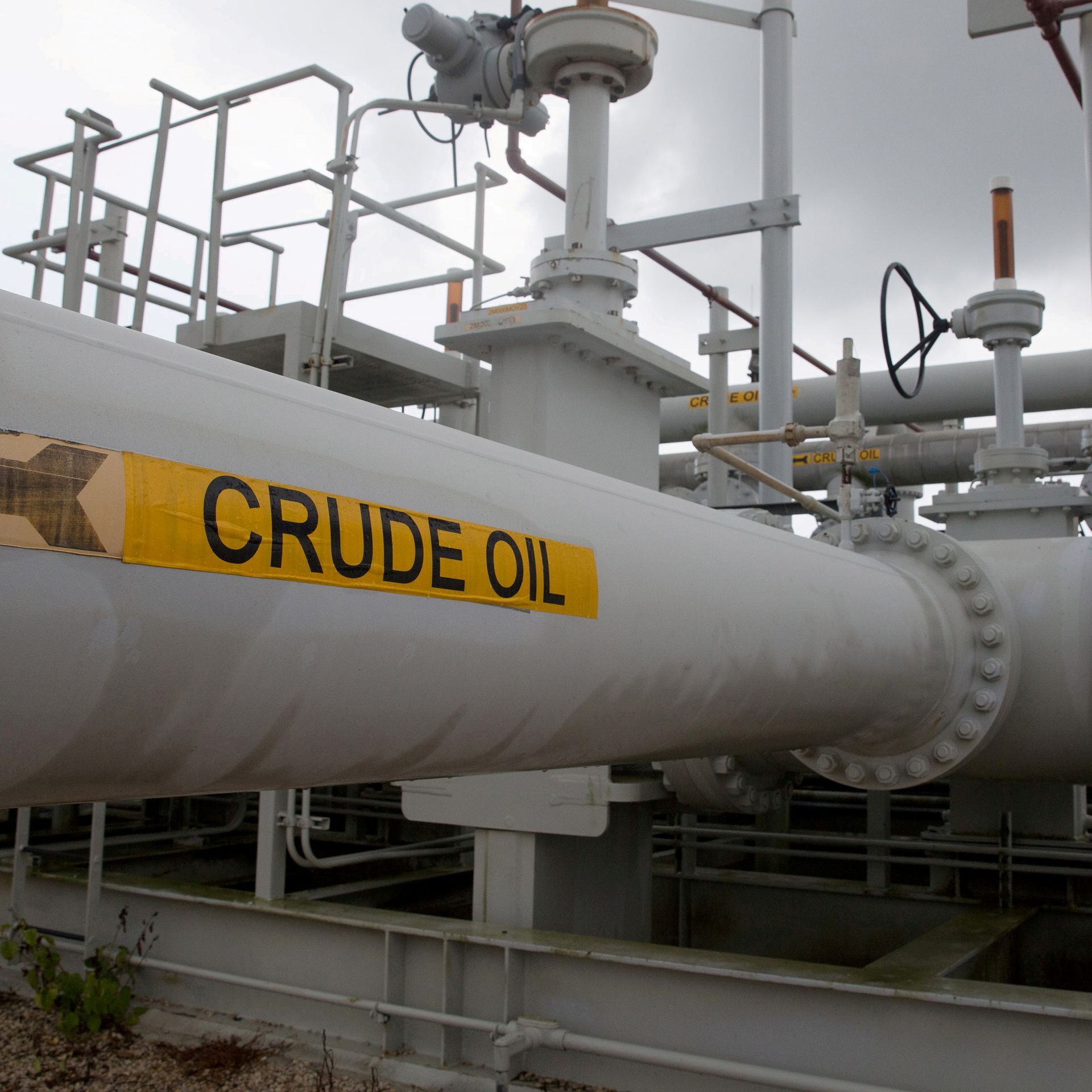

Aramco Cuts Crude Supplies to European Refiners After Saudi Pipeline Attack, Opening Opportunity for Dangote

0

Saudi Aramco has told at least two European refining customers that they will receive no Saudi crude oil next month, Bloomberg News reported on Friday, as an attack on the kingdom’s critical East-West pipeline disrupts established supply flows and forces refiners to search for replacement barrels.

The development represents a further escalation of the disruption created by the attack. European refiners typically rely on term contracts with Saudi Aramco for predictable monthly crude deliveries, but at least two customers have now been told that their October supplies will not proceed, according to people familiar with the matter cited by Bloomberg.

The immediate consequence is a scramble for alternative crude. Poland’s Orlen, one of the affected buyers, has already been seeking replacement supplies, with traders saying the refiner bought North Sea crude to compensate for disrupted Saudi deliveries.

The significance for the wider oil market extends beyond the individual cargoes that have been cancelled. Saudi Arabia is one of the world’s most important crude suppliers, and any interruption to its established export infrastructure forces refiners to compete for alternative grades from other producers. That can increase crude procurement costs, freight rates and, depending on the duration of the disruption, refined-product prices.

The attack damaged three pumping stations along Saudi Arabia’s East-West pipeline, which transports crude from the kingdom’s oil-producing region in the east toward the Red Sea port of Yanbu. The pipeline provides Saudi Arabia with an alternative export route that reduces its reliance on the Strait of Hormuz.

Aramco is working to partially restart the pipeline within days and restore full capacity within six weeks, Bloomberg reported. In the meantime, the company has been increasing crude movements from its Gulf operations through ship-to-ship transfers near Oman’s Sohar port.

Trade sources said Aramco plans to move about 60 million barrels from its Gulf port of Ras Tanura through ship-to-ship transfers at Sohar during September and October, equivalent to roughly 1 million to 1.5 million barrels per day.

Those measures could reduce the immediate impact of the pipeline shutdown, but they do not eliminate the disruption. The cancellation of contracted European supplies shows that logistical workarounds are not yet sufficient to maintain all established customer flows.

A Potential Opening for Dangote

For Nigeria’s Dangote Refinery, the timing creates an unusually favorable commercial environment.

The refinery is currently at the center of an initial public offering through which Dangote is seeking to raise about 2.15 trillion naira, or roughly $1.6 billion, from the sale of 4.1 billion shares at 525 naira each. The offering values the refinery at roughly $47 billion and is scheduled to close on October 13.

The Saudi disruption provides investors with a real-world example of why large refining capacity outside traditional Middle Eastern supply corridors can become valuable when geopolitical shocks disrupt global energy flows.

Dangote is already operating at about 700,000 barrels per day, its current processing capacity, and has increasingly established itself as an important supplier of refined products beyond Nigeria.

The refinery generated $1.82 billion in after-tax profit in the first half of 2026, compared with a $476 million loss for all of 2025. Its growing exports of jet fuel, diesel and gasoil have also given the plant a larger role in international petroleum markets.

The Saudi disruption could strengthen that position if European buyers continue looking for alternative sources of refined products as Middle Eastern crude and refining operations remain vulnerable to attacks and transport disruptions.

For Dangote, the opportunity is not necessarily about replacing the Saudi crude that European refiners have lost. Rather, it is about benefiting from the broader market consequences of that shortage.

When refiners lose access to contracted crude, they have to compete for replacement barrels. When regional refining capacity or crude transportation is disrupted, buyers also become more dependent on refiners elsewhere that have available production. If those conditions push up product prices and refining margins, a large refinery with access to international markets can benefit.

But there is a hard limit to how much Dangote can capture.

The refinery can currently process about 700,000 barrels of crude per day. It cannot immediately increase that figure simply because international fuel markets have become tighter.

That constraint bears a heavy impact as Dangote prepares its IPO because the company’s longer-term investment proposition is built around substantially greater capacity.

Dangote plans to double the refinery’s capacity to 1.4 million barrels per day by 2029. The additional capacity would give the company significantly greater ability to serve Nigeria, supply other African markets and maintain exports to Europe and other international destinations at the same time.

At 700,000 bpd, Dangote is already a major single-site refinery. At 1.4 million bpd, it would become one of the world’s largest refining complexes, giving the company considerably more flexibility to allocate production toward markets offering the strongest margins.

That flexibility becomes particularly valuable during supply disruptions.

The IPO Is Betting On Future Scale

The current geopolitical crisis thus arrives at an important moment for Dangote. The refinery is demonstrating strong earnings at the same time that disruptions in Middle Eastern energy infrastructure are creating tighter global petroleum markets. Analysts say that combination can strengthen the near-term economics of the business and provide investors with a tangible illustration of the value of additional refining capacity.

But investors need to separate the temporary benefit of a supply shock from the refinery’s underlying long-term economics.

Geopolitical disruptions can produce unusually high refining margins because crude supplies become constrained while demand for fuels remains relatively firm. Refiners that have available capacity and access to alternative crude can capture those spreads.

While those conditions can generate exceptional profits, they cannot automatically be assumed to persist.

If Saudi Arabia restores the East-West pipeline within the expected six-week timeframe, crude exports normalize, and Middle Eastern refining capacity recovers, some of the scarcity premium supporting current fuel prices could disappear.

That makes the timing of Dangote’s IPO significant. The company is asking investors to value not only the refinery’s current earnings but also its future expansion and its ability to remain profitable when market conditions become less favorable.

Reuters Breakingviews has calculated that the offering implies a valuation of roughly $50 billion and noted that Dangote’s implied 2026 EBITDA multiple is substantially above those of major U.S. refiners including Valero, Marathon Petroleum and Phillips 66.

That premium effectively places considerable value on the refinery’s future growth. The Saudi disruption strengthens the argument that additional refining capacity can be valuable in a fragmented global energy market. It does not, by itself, establish that the IPO valuation is justified.

U.S. Inflation Reaccelerates in August as Gasoline Drives Consumer Prices Higher

0

U.S. consumer prices accelerated in August, adding another layer of uncertainty to the country’s inflation outlook as households confronted sharply higher gasoline costs.

The Consumer Price Index (CPI) rose 0.4% in August, following a 0.1% increase in July, while prices were 3.4% higher than a year earlier, according to the U.S. Bureau of Labor Statistics.

The headline figure is notable not simply because inflation remains above the Federal Reserve’s 2% target, but because gasoline accounted for more than one-third of the monthly increase.

Gasoline prices rose 3.9% during August, reversing two consecutive monthly declines. Over the past year, gasoline prices have increased 27.4%, while the broader energy index has risen 16.3%.  Energy prices can have an influence far beyond the petrol station.

Higher gasoline costs immediately affect household transportation budgets, but they can also raise expenses for businesses that depend on road transportation, logistics and delivery services. When those costs persist, companies may attempt to pass part of the increase to consumers through higher prices.

Yet August’s inflation report was not entirely an energy story. Core CPI, which excludes food and energy, increased 0.3% during the month, compared with 0.2% in July. On an annual basis, core inflation eased to 2.4%, down from 2.5% in July. Shelter prices rose 0.3% in August, while food prices increased 0.1%.

That distinction matters for monetary policy. Energy prices can be volatile, meaning a gasoline-driven monthly increase does not necessarily indicate that inflationary pressure is spreading throughout the economy.

At the same time, the rise in core prices suggests that policymakers cannot simply dismiss the August increase as an isolated movement in fuel markets. The Federal Reserve therefore faces a complicated inflation environment.

Reuters reported that the August data strengthened market expectations for a further interest-rate increase, as investors assessed whether persistent price pressures could prevent inflation from returning smoothly toward the central bank’s target.

For consumers, the distinction between headline and core inflation is less abstract. A household filling its vehicle with gasoline, paying rent and buying food experiences the combined cost of those categories regardless of whether economists classify some prices as volatile.

The cumulative effect can place pressure on disposable income, particularly for households with limited room in their budgets. The August numbers also underline how quickly energy markets can reshape the inflation narrative.

Earlier declines in gasoline had provided some relief to the headline CPI. August reversed that benefit, demonstrating how movements in fuel markets can quickly change the monthly inflation picture.

The broader question is whether higher energy costs remain temporary or begin feeding into other parts of the economy. If transportation, production and operating expenses continue rising, businesses could face greater pressure to increase prices.

If those increases become persistent, the challenge for monetary policymakers becomes more difficult. For now, August presents a mixed picture: headline inflation remains at 3.4% annually, core inflation is considerably lower at 2.4%, but gasoline and energy prices are moving sharply higher.

The next several months will determine whether August represents a temporary energy-driven acceleration or another sign that the final stretch toward stable inflation will be more difficult than expected.

Oil, Trump and the New Treasury Yield Equation

The outlook for U.S. Treasury yields is becoming increasingly difficult to frame around the Federal Reserve alone.

iCapital has raised its forecast for the 10-year Treasury yield to a range of 4.5% to 5.3%, with global strategist Dan Suzuki arguing that energy prices and President Donald Trump could have a greater influence on where long-term borrowing costs ultimately settle than the Federal Reserve’s projections.

Suzuki’s argument reflects a broader shift in how investors are interpreting the bond market.

While monetary policy remains important, the 10-year Treasury yield is ultimately shaped by a much wider combination of inflation expectations, economic growth, fiscal conditions, investor demand and global risk. The Federal Reserve can influence short-term rates.

But longer-dated yields can move independently when markets begin to price changes in inflation or the economy. “I don’t think you even care about the dot plots,” Suzuki told CNBC’s Fast Money, highlighting the growing importance of forces outside the central bank’s immediate control.

The comment comes as financial markets confront a more complicated backdrop involving geopolitical tensions, oil prices and uncertainty surrounding U.S. economic policy. Oil is particularly important because energy costs can feed directly into inflation.

A sustained rise in crude prices can increase transportation, manufacturing and consumer costs, potentially making it harder for inflation to return to the Federal Reserve’s target.

Higher inflation expectations can, in turn, place upward pressure on Treasury yields as investors demand greater compensation for holding longer-term government debt.

Trump’s economic policies could influence the trajectory. Changes involving tariffs, fiscal spending, regulation and energy policy can alter inflation expectations, economic growth and the supply of government debt.

The interaction between those forces could become increasingly important for investors trying to determine whether long-term yields remain elevated. At the same time, signs of stress are appearing across risk assets. The Nasdaq and small-cap stocks are roughly 6% below their recent highs.

While high-yield credit spreads have begun to widen. Neither development necessarily signals an economic downturn on its own, but together they suggest that investors are becoming more cautious about the relationship between economic growth, financing conditions and asset valuations.

For equities, the direction of Treasury yields is only part of the story. The reason yields decline could be more important than the decline itself. If yields fall because geopolitical tensions ease while economic growth remains resilient, lower borrowing costs could provide meaningful support for stocks.

Businesses could benefit from improved financial conditions without facing a severe deterioration in demand. A recessionary decline in yields would present a very different scenario. Falling Treasury yields caused by weakening economic activity could coincide with declining corporate earnings, tighter credit and greater investor risk aversion.

In that environment, cheaper money would not necessarily translate into stronger equity markets. Suzuki therefore favors a more defensive and diversified approach, pointing toward financials and healthcare, private infrastructure as a potential inflation hedge, and cash.

The broader message is that investors may need to look beyond the Federal Reserve when assessing the next phase of the bond market. The Treasury market is increasingly being shaped by the interaction between energy, geopolitics, fiscal policy and economic resilience.

Uber Layoffs Highlight Growing Concerns over AI’s Expanding Role in Daily Workflows

0

The layoffs at Uber are raising a broader question about the changing relationship between artificial intelligence and human work.

Some former employees say AI had already begun playing a larger role in their day-to-day responsibilities in the period leading up to the cuts, suggesting that the technology was not simply an experiment at the edges of the company but was becoming embedded in ordinary workplace processes.

That distinction matters. Companies have used software to automate repetitive tasks for decades, but generative AI can reach further into work traditionally associated with knowledge, judgment and communication.

At a company as large and operationally complex as Uber, AI can potentially assist with writing, data analysis, customer support, coding, internal research, planning and other functions that once required substantial employee time.

For workers, greater AI adoption can create an uncomfortable contradiction. The same tools that make an employee more productive can also reduce the amount of labor a company believes it needs. If one employee equipped with increasingly capable software can complete work that previously required several people.

Productivity gains may eventually become a workforce-reduction strategy. That does not necessarily mean AI caused Uber’s layoffs. Corporate restructuring rarely has a single explanation. Companies cut jobs for many reasons, including changes in demand, cost pressures, organizational redesign, strategic priorities and expectations about future growth.

AI can be one factor within that broader calculation without being the direct reason a particular employee loses a job.

Yet the experiences described by some laid-off workers are significant because they illustrate how automation can happen gradually.

Employees may initially encounter AI as an assistant: a tool that summarizes documents, generates drafts, analyzes information or speeds up routine processes. Over time, those capabilities can become part of standard workflows. What begins as optional technology can become an expectation of productivity.

For Uber, whose business already depends heavily on software, algorithms and data, this evolution is particularly notable. The company’s core operations rely on technology to match riders and drivers, estimate prices, optimize routes and manage enormous quantities of information.

Bringing increasingly capable AI into corporate functions extends that technological model beyond the platform itself and into the organization that operates it. The bigger economic question is whether AI will primarily eliminate jobs, transform them or create new categories of employment.

History offers evidence for all three outcomes. Automation has displaced particular tasks while creating demand for new skills and industries. The difference with modern AI is its potential reach across white-collar work, where employees may have previously assumed that their expertise provided greater protection from automation.

This makes reskilling increasingly important, but it also places pressure on employers to explain how AI will be deployed. Workers need to know whether new systems are designed to augment their responsibilities or eventually replace them. Investors and executives, meanwhile, have to balance efficiency gains against the organizational knowledge and creativity that experienced employees provide.

The Uber layoffs therefore represent more than another corporate workforce reduction. They offer a snapshot of a workplace in transition, where artificial intelligence is moving from an emerging productivity tool into the infrastructure of everyday work. The critical issue is no longer whether AI will enter the office. It already has.

The question is how companies, workers and policymakers will manage the consequences when greater technological efficiency changes the number and nature of jobs required.

OpenAI Astra for Law vs Claude Projects: How AI Is Evolving Into Professional Workflows

0

The latest moves from OpenAI and Anthropic point to a deeper shift in artificial intelligence: the leading AI companies are no longer competing only to build smarter chatbots. They are building systems designed to organize professional work, understand specialized domains and execute increasingly complex tasks.

OpenAI has launched Astra for Law, a legal-focused configuration of GPT-6 Astra aimed at law firms and legal technology companies.

The system combines GPT-6 Astra with a dedicated legal search index, specialized instructions and tools designed for professional legal research, analysis and drafting.

Its legal index covers U.S. case law, statutes, regulations, court rules and administrative decisions, with new sources added daily. That architecture matters because legal work depends heavily on authoritative source material.

A general-purpose chatbot may generate a persuasive answer, but lawyers need to know where an argument comes from, which authority supports it and what evidence could undermine it.

Astra for Law is therefore designed to search relevant legal materials and help users examine opposing arguments, develop legal positions and analyze contractual issues.

OpenAI is also positioning Astra for Law as infrastructure rather than simply another chatbot feature. Legal technology companies such as Harvey and Legora can build products and workflows on top of the model.

While integrations with platforms including Relativity, Clio, iManage and Intapp can connect AI capabilities with established legal systems. The initial rollout is focused on selected U.S. law firms through a controlled access program.

Anthropic is changing the meaning of a project inside Claude Code. Its redesigned Projects experience turns a project from essentially a container for work into a coordinated environment in which Claude can divide a large objective among multiple threads.

The system can scope a task, delegate work, coordinate parallel sessions, review results and assemble the finished output.

The implications are significant for software development. Instead of asking an AI to modify one file at a time, a developer can give Claude a broader engineering objective.

Different threads can investigate separate components, test changes or work on different repository branches, while a central coordination layer keeps the overall project aligned. Anthropic says users can continue steering the process, even from a phone, while the system continues working after they leave their computer.

The announcements approach professional AI from different directions. OpenAI is specializing intelligence around a regulated knowledge domain: law. Anthropic is specializing workflow around coordinated execution: software projects. Yet both reveal the same competitive direction.

The next phase of AI may therefore be defined less by the question, “Which model gives the best answer?” and more by, “Which system can complete the most valuable professional workflow?”

That distinction changes the economics of AI. A model that drafts a paragraph is useful. A system that can research authorities, analyze documents, identify counterarguments and integrate its findings into an existing legal workflow can become infrastructure.

Likewise, an AI that writes code is useful; an AI that can coordinate multiple engineering tasks toward a shared objective begins to resemble a digital project team.

OpenAI’s Astra for Law and Anthropic’s redesigned projects suggest that the AI race is moving steadily from conversation toward execution. The decisive advantage may increasingly belong to systems that combine intelligence, specialized knowledge, tools, memory and coordination into a single working environment.