DD
MM
YYYY

PAGES

DD
MM
YYYY

spot_img

PAGES

Home Blog Page 1040

Voyager Technologies Rockets to $3.8bn Valuation in Explosive Market Debut, Buoyed by Trump’s Defense Agenda

0

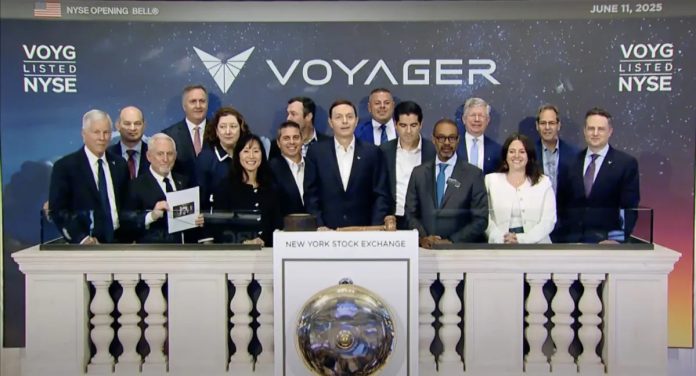
Voyager Technologies soared in its U.S. stock market debut on Wednesday, more than doubling in value and closing with a $3.8 billion valuation—a dramatic entry that underscores investor enthusiasm for the defense and space sector amid growing government support under President Donald Trump.

Shares of the Denver-based company opened at $69.75, jumping 125% from the IPO offer price of $31. The upsized offering raised $382.8 million after Voyager sold approximately 12.4 million shares. The company, which provides mission-critical defense and space technologies, is listed on the Nasdaq under the ticker symbol VOYG.

Founded in 2019, Voyager has quickly become a major player in U.S. defense infrastructure, securing contracts with both the Department of Defense and NASA. Its market entry comes at a time of sweeping policy changes in defense and space spending driven by Trump’s push for strategic autonomy and missile defense expansion.

One of the largest drivers of optimism around Voyager’s public debut is Trump’s proposed $175 billion Golden Dome project, a vast missile defense shield designed to protect the U.S. homeland from long-range threats. The administration has framed the plan as central to its national security strategy, with a focus on technologies like space-based sensors, propulsion systems, and precision optical guidance—areas in which Voyager specializes.

“Strategic government backing amid increased defense spending somewhat shields these firms from tariff-induced supply chain risks,” said IPOX research associate Lukas Muehlbauer.

As of March 31, Voyager reported a backlog of $179.2 million in contracted work, an indicator of sustained demand for its offerings in a sector marked by long development cycles and high entry barriers. The company’s business spans propulsion systems, satellite guidance, spacecraft design, and orbital defense systems.

In 2024, Lockheed Martin selected Voyager to supply critical propulsion and optical systems for missile interceptors, a role integral to the U.S. effort to defend against hypersonic and long-range missile threats. In parallel, Voyager has been tapped by NASA for a $217.5 million project to develop Starlab, a modular orbital outpost intended as a successor to the International Space Station. Voyager is leading the project in partnership with Airbus, Mitsubishi, and Palantir.

The IPO marks the most high-profile space-related listing in months, following the successful debut of Karman, another defense and aerospace firm, whose shares have also doubled since going public. Voyager’s entry confirms growing investor confidence in the commercial space and defense industry, especially companies that are seen as aligned with Trump’s military modernization strategy.

“This IPO is a significant milestone for the broader space sector, indicating its progression towards greater commercial maturity,” said Rob Desborough, managing director at Seraphim Space Investment Trust, one of Voyager’s backers.

The administration’s defense budget proposals, which prioritize space superiority and high-tech military deterrents, have created fertile ground for firms like Voyager. Analysts point out that such strategic policy moves make companies in the sector more resilient to economic uncertainty, including inflationary pressure and international trade tensions.

“Although high entry barriers in the defense sector naturally limit the pool of IPO candidates, the current environment is encouraging established companies to go public,” Muehlbauer added.

Voyager’s offering was further boosted by early commitments from institutional investors. Janus Henderson and Wellington Management had each expressed interest in acquiring up to $60 million worth of Voyager shares, providing an anchor that helped strengthen market confidence ahead of the listing.

The surge in stock price also reflects renewed enthusiasm for space infrastructure investments, which had cooled in recent quarters. The Trump administration’s consistent push for re-militarizing space and insulating defense suppliers from foreign reliance appears to be resetting investor expectations.

While the broader market remains volatile, Voyager’s debut signals a bullish outlook for companies at the intersection of commercial innovation and national security, particularly those backed by strong federal contracts and future-facing projects like orbital habitats and missile defense.

With its debut, Voyager not only joins the growing league of publicly listed space companies—it does so with a war chest and policy tailwinds that suggest its trajectory is only beginning.

The 94.6% Drop In Russian Imports Has Reshaped Germany’s Economy

0

German imports from Russia have plummeted by 94.6% from 2021 to 2024, dropping from €33.1 billion to €1.8 billion, largely due to EU sanctions following Russia’s invasion of Ukraine in February 2022. The decline is primarily attributed to a near-total halt in Russian energy imports, including a 99.8% drop in oil and gas and a 92.5% reduction in coal by early 2023. Germany’s exports to Russia also fell by 71.6%, from €26.6 billion to €7.6 billion, resulting in a trade surplus of €5.8 billion in 2024, the largest since the Soviet Union’s collapse. Russia’s share of German imports shrank from 2.8% to 0.1%, relegating it from the 11th to the 59th largest supplier.

Remaining imports are limited to metals, chemicals, and some food products, while German exports to Russia now mainly consist of pharmaceuticals and chemical products. Germany’s near-total cessation of Russian oil, gas, and coal imports has forced a rapid pivot to alternative energy sources. By 2024, Germany increased LNG imports from Norway, the US, and Qatar, and expanded renewable energy capacity (wind and solar). However, higher energy costs persist, with industrial electricity prices in Germany rising 30-40% since 2021, impacting manufacturing competitiveness.

Short-term energy shortages in 2022-2023 led to economic strain, with Germany entering a recession in 2023 (GDP contracted by 0.3%). Long-term, diversification reduces reliance on geopolitically unstable suppliers but requires sustained infrastructure investment (e.g., LNG terminals, grid upgrades). The trade collapse contributed to Germany’s economic slowdown, as high energy costs and disrupted supply chains hit industries like chemicals, automotive, and steel. Industrial output fell by 4.7% from 2021 to 2024.

Small and medium-sized enterprises (SMEs), which form the backbone of Germany’s economy, faced higher input costs, reducing profitability. Some firms relocated energy-intensive operations to countries with cheaper energy, like Poland or the US. The €5.8 billion trade surplus with Russia in 2024 reflects reduced imports rather than export growth, masking underlying economic challenges.

The drastic reduction in trade signals a broader decoupling from Russia, aligning Germany with EU and NATO efforts to isolate Moscow economically. This has strengthened transatlantic ties, with increased US energy exports to Germany. However, it has strained relations with countries like China and India, which continue to buy Russian energy and raw materials, complicating Germany’s global trade strategy.

Higher energy prices drove inflation in Germany, peaking at 8.7% in 2022 and averaging 5.9% in 2023. This reduced household purchasing power, with real wages declining by 4% from 2021 to 2024. Consumers faced higher costs for heating, electricity, and goods reliant on energy-intensive production, disproportionately affecting lower-income households.

The crisis accelerated Germany’s green energy transition, with renewables accounting for 55% of electricity production in 2024, up from 41% in 2021. However, reliance on coal and LNG as transitional fuels has delayed net-zero targets, with CO2 emissions rising slightly in 2022-2023. The energy crisis and economic fallout have fueled political tensions. The far-right Alternative für Deutschland (AfD) gained support (polling at 18-20% in 2024), criticizing sanctions and high energy costs. In contrast, the Greens and SPD advocate for continued sanctions and green investment, creating a rift in public opinion.

Eastern German states, historically more reliant on Russian gas and with cultural ties to Russia, express greater skepticism toward sanctions. Western states, more integrated into global markets, support EU policies. This divide is evident in regional election results, with AfD stronger in the east. Large corporations like BASF and Volkswagen have absorbed higher costs or shifted operations abroad, while SMEs and households bear the brunt of price hikes. This has sparked debates over government subsidies, with €200 billion in energy relief packages criticized for favoring big business.

While Germany aligns with EU sanctions, countries like Hungary and Slovakia maintain closer ties to Russia, importing significant energy volumes. This creates friction within the EU, with Germany pushing for stricter enforcement while others resist. Western nations, including Germany, have reduced Russian trade, but Global South countries (e.g., India, China, Turkey) have increased imports of discounted Russian oil and gas. India’s Russian oil imports rose from 2% to 40% of its total by 2024. This divide complicates global energy markets and Germany’s efforts to secure non-Russian supplies.

Germany’s shift toward US energy strengthens NATO unity but highlights Europe’s dependence on American LNG, raising concerns about long-term sovereignty. Meanwhile, Russia’s pivot to Asia (China now accounts for 50% of its exports) creates a competing Eurasian economic bloc, challenging Germany’s export markets. The 94.6% drop in Russian imports has reshaped Germany’s economy, energy landscape, and geopolitical stance, with lasting implications.

While it has accelerated diversification and green energy, it has also triggered economic hardship, inflation, and political divides. Internationally, the trade collapse underscores a fracturing global order, with Germany navigating tensions between EU unity, transatlantic dependence, and competition with a Russia-aligned Global South. The domestic divide—between regions, political factions, and economic classes—mirrors the international split, complicating Germany’s path forward.

Trump Declares Rare Earth Deal with China a Victory, But Doubts Shadow Agreement Pending Final Approval

0

President Donald Trump on Wednesday hailed a new trade framework with China as a major win, declaring that Beijing would resume shipments of rare earth minerals to the U.S. and accept a heavier tariff load, while Washington would allow the return of Chinese students to American universities.

“WE ARE GETTING A TOTAL OF 55% TARIFFS, CHINA IS GETTING 10%. RELATIONSHIP IS EXCELLENT!” Trump wrote, summarizing the arrangement without elaborating on specifics.

He added: “FULL MAGNETS, AND ANY NECESSARY RARE EARTHS, WILL BE SUPPLIED, UP FRONT, BY CHINA. LIKEWISE, WE WILL PROVIDE TO CHINA WHAT WAS AGREED TO, INCLUDING CHINESE STUDENTS USING OUR COLLEGES AND UNIVERSITIES (WHICH HAS ALWAYS BEEN GOOD WITH ME!).”

A White House official confirmed that under the proposed framework, the United States will charge a combined 55% tariff on Chinese goods. This includes a 10% baseline “reciprocal” tariff, a 20% tariff in response to fentanyl trafficking, and a 25% tariff carried over from previous trade rounds. China, in turn, will impose a 10% tariff on U.S. imports, the official said.

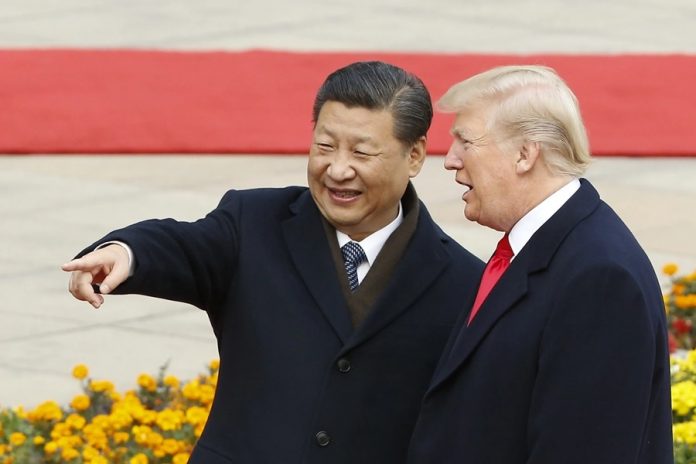
Trump stated that the deal is still pending final approval by both himself and Chinese President Xi Jinping.

The agreement follows two days of high-level negotiations in London, where U.S. officials, led by Commerce Secretary Howard Lutnick and Trade Representative Jamieson Greer, met with a Chinese delegation headed by Vice Premier He Lifeng and top trade negotiator Li Chenggang. The meetings were aimed at putting substance behind the Geneva consensus reached last month, which had unraveled amid disagreements over China’s restrictions on exports of rare earths and critical minerals.

At the conclusion of the talks, Lutnick told reporters the new framework puts “meat on the bones” of the Geneva deal. He added: “There were a number of measures the United States of America put on when those rare earths were not coming. You should expect those to come off — sort of, as President Trump said, in a balanced way.”

The framework includes a pledge from China to resume shipments of rare earth metals and industrial magnets vital to technologies such as electric vehicles, smartphones, and missile guidance systems. In exchange, the U.S. is expected to ease certain export restrictions on industrial inputs required by Chinese manufacturers.

“President Trump is watching fentanyl closely,” Greer said, referencing the specific 20% tariff tier tied to Beijing’s cooperation on curbing fentanyl production.

However, officials on both sides acknowledged that the deal remains only a framework — not a finalized accord.

“We’ve got a framework, but we still need our principals to sign off,” China’s Li Chenggang said outside the negotiations venue.

Concerns are already surfacing that the framework may be more symbolic than substantive. While Trump’s social media declaration painted the outcome as a done deal, the absence of any formal documentation, timeline, or implementation mechanism has left analysts skeptical.

U.S. and Chinese negotiators said Tuesday that they had agreed to get the trade truce back on track and remove Chinese restrictions on rare earth exports. But even with these steps, the deeper rifts in the bilateral relationship — spanning industrial overcapacity, data security, and technology access — remain unaddressed.

The Trump administration’s prior use of export controls on semiconductor software, aviation components, and high-end manufacturing tools had drawn sharp backlash from Beijing. In response, China began restricting exports of key minerals, triggering fears across Western supply chains. Wednesday’s announcement suggests both sides are attempting to reset that escalation — but it remains unclear how long the reset will last.

Trump’s tariff policies over the past years have frequently shifted, creating uncertainty for global markets and contributing to supply chain congestion, port delays, and corporate losses. In recent weeks, the president has been labeled TACO (Trump always chickens out), underlining his pattern of inconsistency when it comes to deals.

With no enforcement clause or verification plan disclosed as of yet, there is concern that the deal may not survive the political and economic pressure ahead.

However, both delegations have pledged to continue remote talks. While Trump’s declarations cast the deal as a major geopolitical and economic win, the agreement still hinges on a final endorsement by him and Xi — and whether the promises on paper translate to action on the ground.

Musk Apologizes to Trump After Feud Over ‘Big Beautiful Bill’ and Epstein Mockery, But Will It Settle It?

0

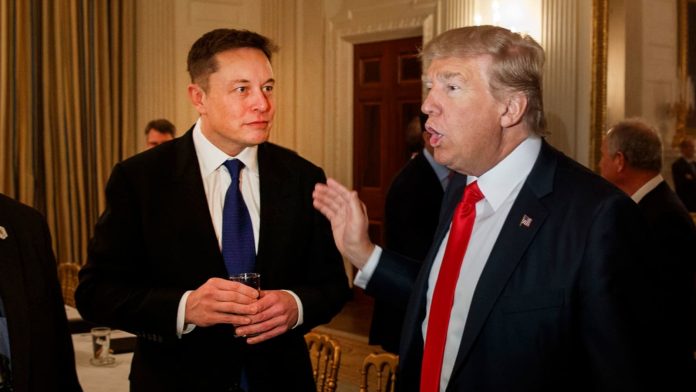
Elon Musk has publicly apologized to President Donald Trump following an extraordinary and personal feud that erupted last week, threatening to damage both men’s political and business interests.

Musk, once the largest donor to Trump’s re-election campaign, posted on Wednesday: “I regret some of my posts about President @realDonaldTrump last week. They went too far.”

The apology followed several days of escalating confrontation, beginning with Musk’s fierce criticism of Trump’s $2.5 trillion infrastructure and industrial policy proposal, dubbed the “Big Beautiful Bill.” Musk had denounced the bill as a “disgusting abomination” that would “add $2.4 trillion to U.S. government borrowing,” and said it amounted to a handout to “cronies and consultants.”

He also called for Trump’s impeachment and mocked the president’s past association with convicted sex offender Jeffrey Epstein.

In response, Trump lashed out on Truth Social: “Elon Musk went crazy. I took away his EV Mandate that forced everyone to buy Electric Cars that nobody else wanted.”

He also warned of financial consequences, writing: “The easiest way to save money in our Budget, Billions and Billions of Dollars, is to terminate Elon’s Governmental Subsidies and Contracts.”

Musk’s statement of regret on X, the social platform he owns, followed a private phone call to Trump on Monday night, according to the New York Times, which cited three people familiar with the matter. That outreach came after Musk spoke on Friday with Vice President JD Vance and White House Chief of Staff Susie Wiles to discuss the fallout of the public spat.

According to CNN, Vance had asked Trump how he wanted the situation addressed publicly before a scheduled interview with conservative podcast host Theo Von. During the podcast, which aired Saturday, Vance said: “Really, man, I think it’s a huge mistake for him to go after the president like that … I actually think if Elon chilled out a little bit, everything would be fine.”

Trump, speaking to the New York Post, responded to the apology by saying: “I thought it was very nice that he did that.” In a previously recorded interview with the paper, he had said, “I guess I could” reconcile with Musk, though he noted he was “not a happy camper” when Musk launched the tirade.

“I think he feels very badly, that he said that,” Trump added. “I have no hard feelings for it.”

The feud had reached a boiling point last week, marking the sharpest rupture yet in what had been a mutually beneficial alliance. Musk briefly served as the head of the administration’s “Department of Government Efficiency” (DOGE). The initiative, which aimed to slash federal programs, has since faced scrutiny, with experts warning some of the cost-cutting measures may be illegal.

At the peak of the row, Trump made repeated references to Musk’s companies. Beyond the jab at Tesla’s electric vehicle mandate, Trump warned about cutting off billions in federal contracts awarded to SpaceX, the rocket firm run by Musk that launches more satellites for U.S. agencies than any other company. Musk, in turn, threatened to decommission SpaceX’s Dragon spacecraft — a key vehicle for NASA’s astronaut missions to the International Space Station — though he later walked back the threat.

Tesla’s stock, which had been under pressure amid weakening sales in Europe and criticism of Musk’s increasingly political behavior, rose 2.6% in pre-market trading Wednesday following signs of a truce. The apology came just one day before Tesla’s planned launch of its highly anticipated “robotaxi” service in Austin, Texas — a pivotal moment for the company, which is struggling to maintain its valuation as the world’s most valuable carmaker.

Despite the conciliatory tone, it remains uncertain whether the damage is fully repaired. Trump, who had declared last week that he would “never speak to [Musk] again,” has so far offered no clear sign of reconciliation beyond brief comments. Given his long history of punishing dissent from even close allies, the future of their relationship, and the business implications that come with it, appear far from settled.

Nigeria’s $5bn Oil-Backed Loan Talks with Aramco Stalled as Crude Prices Fall, Lenders Grow Cautious

0

Negotiations between Nigeria and Saudi oil giant Aramco over a proposed $5 billion oil-backed loan — expected to be the largest in Nigeria’s history — have slowed significantly, as falling global oil prices and concerns over Nigeria’s crude supply capacity make lenders increasingly hesitant to commit.

The deal, initially advanced by President Bola Tinubu during a meeting with Saudi Crown Prince Mohammed bin Salman at the Saudi-Africa Summit in Riyadh in November 2023, was designed to secure much-needed foreign exchange for the Nigerian economy. If concluded, it would mark Aramco’s first major financing venture in Nigeria, and represent the deepest oil-for-cash deal the country has ever sought.

However, sources familiar with the talks told Reuters that the drop in global crude prices has triggered renewed skepticism among banks that were expected to participate in financing the facility.

“The facility would be Nigeria’s largest oil-backed loan to date and Saudi Arabia’s first participation of this scale in the country, although the decline in oil price could shrink the size of the deal,” a source said.

The problem lies in the mechanics of oil-backed loans: when oil prices fall, the borrower must commit a higher volume of crude to repay the same amount of money. For Nigeria, a country already devoting over 300,000 barrels per day (bpd) to servicing prior oil-for-cash deals, this creates a significant strain on available crude for new obligations. One of the existing loans is reportedly due for repayment this month, further limiting headroom.

Experts say the Aramco deal has become complicated by these variables, raising fears of over-leveraging Nigeria’s already-stretched oil commitments.

Supply Constraints As A Major Risk

Nigeria’s crude output has been persistently hampered by years of underinvestment, oil theft, pipeline vandalism, and disruptions in the Niger Delta. These structural issues have undermined confidence in the country’s ability to guarantee stable long-term crude deliveries — a key requirement for any oil-backed facility.

The Nigerian National Petroleum Company Limited (NNPC) also faces pressure to allocate crude to joint venture partners like Shell, Seplat, and Oando to cover production costs. This limits how much oil the state can freely allocate for financing purposes. In the proposed Aramco deal, Oando is expected to handle the offtake of the physical cargoes, further complicating the logistics.

With oil prices falling below expectations — currently hovering around $75 per barrel, well below the $85–$90 range seen earlier in the year — the economics of the loan have weakened. For banks, lower oil prices raise the risk that Nigeria may default on the agreed repayment schedule, especially if production fails to ramp up.

The Aramco loan had also been viewed as a potential gateway for Saudi Arabia to expand its financial and strategic footprint in Africa’s biggest oil producer. Many hoped that such a deal would spur broader investment cooperation, possibly involving downstream assets and refinery partnerships.

But the current deadlock may push both sides to reconsider terms. Analysts believe that if a consensus can be reached, perhaps through renegotiated volume commitments or partial guarantees, it could unlock a new template for future resource-backed lending in Nigeria.

Nigeria’s Track Record and the Afreximbank Deal

This isn’t Nigeria’s first foray into oil-backed borrowing. In April 2024, the country received the final $1.05 billion tranche of a $3.3 billion facility secured from the African Export-Import Bank (Afreximbank). That deal, structured similarly to the Aramco one, is being repaid with 90,000 barrels per day of crude, priced at a fixed $65 per barrel.

While that arrangement helped boost dollar liquidity and stabilize the naira in the short term, it also locked Nigeria into long-term delivery obligations — a model some critics warn is unsustainable without significant output growth or price recovery.

President Tinubu’s administration has defended the practice as necessary for stabilizing the foreign exchange market and rebuilding reserves. But falling oil prices now threaten the logic behind such loans.

The delays in reaching an agreement with Aramco come at a time when Nigeria is banking heavily on oil-backed loans to bridge fiscal and external imbalances. The country’s foreign reserves have been under pressure, and the naira has experienced prolonged volatility amid dollar shortages and speculative trading.

If the $5 billion loan fails to materialize, it may force the government to look elsewhere — possibly revisiting bilateral talks with China or turning again to Afreximbank — although few partners offer the scale and strategic potential of a deal with Saudi Arabia’s oil giant.

As talks drag on, it is believed that finding consensus on the Aramco deal could pave the way for resolving broader issues around Nigeria’s use of oil-for-loan arrangements. But that will depend on whether the two sides can overcome current market risks and rebuild lender confidence in Nigeria’s oil supply capabilities.