DD
MM
YYYY

PAGES

DD
MM
YYYY

spot_img

PAGES

Home Blog Page 1043

TAJBank Gets Approval to Launch N20 Billion Second Sukuk Tranche with 20.5% Return

0

TAJBank, Nigeria’s flagship non-interest lender, has secured regulatory clearance for the second tranche of its ambitious N100 billion Mudarabah Sukuk bond programme, announcing a new N20 billion issuance that offers a 20.5% annual return to investors.

The new issuance, officially announced on Tuesday, comes nearly two years after the bank broke new ground with its maiden N10 billion Sukuk bond in 2023. That inaugural offering—Nigeria’s first-ever Sukuk to be listed on the Nigerian Exchange—was oversubscribed by 115%, reflecting strong investor interest in sharia-compliant, profit-sharing investment options.

TAJBank’s second Sukuk tranche is structured under the Mudarabah model, where funds are pooled into profit-generating ventures managed by the bank, with investors entitled to a share of the profits. The bank said the latest issuance aims to broaden financial inclusion and attract ethically driven investors seeking stable returns amid volatile market conditions.

“This second tranche presents another opportunity for individuals and corporate investors to stake their funds in an ethical instrument with a competitive 20.5% per annum return,” the bank said in a statement.

Alhaji Tanko Isiaku Gwamna, Chairman of TAJBank, said the bond aligns with the lender’s core commitment to providing investment alternatives that are grounded in transparency, shared risk, and equitable profit-sharing principles. He noted that the issuance will allow a broader group of investors to benefit from the bank’s business success while adhering to non-interest banking standards.

Reaffirming TAJBank’s performance, Managing Director Hamid Joda recalled his 2023 pledge during the listing of the maiden bond, when he assured stakeholders of strong and consistent returns.

“The board has been fulfilling that promise since then,” he said.

Partnering for Scale and Trust

AVA Capital Ltd., the lead issuing house for the bond, reiterated confidence in TAJBank’s capacity to deliver returns to investors. AVA’s CEO, Mr. Kayode Fadahunsi, described the new N20 billion issuance as a critical step toward completing the broader N100 billion Sukuk programme, calling it a “milestone for ethical finance in Nigeria.”

Fadahunsi also emphasized that TAJBank’s growth in the non-interest banking segment has laid a solid foundation for investor confidence.

“We are optimistic that this Sukuk will not only deepen Islamic finance but also offer compelling returns, especially for investors looking for lower-risk alternatives outside traditional markets,” he said.

Broader Momentum in Nigeria’s Islamic Finance Market

TAJBank’s move comes amid a broader surge in Nigeria’s Islamic finance landscape, which is witnessing renewed momentum after years of slow traction. According to Fitch Ratings, non-interest banks in Nigeria recorded a 110% year-on-year asset growth by the end of 2024—driven by increased deposits and lending, each more than doubling within the year.

Fitch also projects that the Islamic finance industry will expand significantly between the second half of 2025 and 2026, supported by new regulatory incentives, capital requirements, and rising investor demand for Sukuk and other sharia-compliant assets.

The growing appetite was further demonstrated when Nigeria’s Debt Management Office (DMO) announced that the Federal Government had secured over N2.2 trillion in Sukuk subscriptions since its inaugural issuance in 2017—a figure that reflects an oversubscription rate of 735%, despite a two-year pause in sovereign Sukuk offerings.

Analysts suggest that TAJBank’s 20.5% return structure offers a compelling case for conservative investors amid inflationary pressures and volatile returns from equities and other traditional assets.

TAJBank’s successful issuance is expected to serve as a catalyst for further private Sukuk offerings in Nigeria, helping to complement the government’s sovereign Sukuk issuances. With the bank’s overall Sukuk programme still holding N80 billion in unissued potential, more tranches are expected in the coming years, offering even wider access to Nigeria’s expanding ethical investment market.

US SEC Plan On DeFi Exemptions Could Unleash Innovation And Position The U.S. As A DeFi Leader

0

U.S. Securities and Exchange Commission (SEC) Chairman Paul Atkins has announced that the agency is developing policies to potentially exempt decentralized finance (DeFi) platforms from certain regulatory restrictions. During the SEC’s Crypto Task Force roundtable titled “DeFi and the American Spirit” on June 9, 2025, Atkins outlined plans for an “innovation exemption” to provide conditional relief from regulatory requirements. This initiative aims to foster innovation in blockchain-based systems while maintaining investor protections and market integrity.

Atkins emphasized that software developers building DeFi tools should not be held liable for how their code is used, criticizing the previous administration’s enforcement-heavy approach. He directed SEC staff to explore exemptions or guidance to allow DeFi platforms to operate with fewer barriers, supporting the development of on-chain financial systems. This marks a shift from the prior SEC leadership’s reliance on broad interpretations of securities laws and enforcement actions.

Atkins also stressed the importance of self-custody of digital assets as a foundational American value and advocated for rulemaking through a transparent “notice and comment” process rather than ad hoc enforcement. The SEC’s Crypto Task Force, led by Commissioner Hester Peirce, is expected to release a policy report in the coming months to further clarify the regulatory framework for DeFi and digital assets. Industry experts are awaiting details on how these exemptions will be implemented, as they could significantly shape the future of DeFi in the United States.

The announcement by SEC Chairman Paul Atkins regarding potential exemptions for DeFi platforms from regulatory barriers has significant implications for the decentralized finance sector, the broader crypto industry, and regulatory approaches in the U.S. It also highlights a divide in perspectives on how DeFi should be regulated. Exemptions could reduce regulatory burdens, allowing DeFi developers to innovate without fear of enforcement actions.

This aligns with Atkins’ view that software developers shouldn’t be liable for how their code is used, potentially spurring growth in blockchain-based financial systems. DeFi platforms could scale faster, offering decentralized alternatives to traditional finance, such as lending, trading, and yield farming, with fewer compliance costs. While exemptions may encourage innovation, they could weaken investor protections if not carefully designed.

DeFi’s pseudonymous nature and lack of centralized oversight raise risks like fraud, hacks, or mismanagement, which the SEC aims to address through “conditional relief.” The SEC’s focus on maintaining market integrity suggests exemptions will likely include guardrails, such as transparency requirements or anti-fraud measures. A lighter regulatory touch could make the U.S. a more attractive hub for DeFi development, countering the trend of projects moving offshore to avoid stringent SEC rules under prior leadership.

This could position the U.S. to compete with jurisdictions like Singapore or the EU, which have clearer crypto frameworks. DeFi tokens and platforms could see increased investment and adoption if regulatory clarity reduces uncertainty. Posts on X reflect optimism among crypto enthusiasts, with some predicting a “DeFi boom” if exemptions materialize. However, traditional financial institutions may push back, fearing competition from unregulated DeFi alternatives.

The “innovation exemption” could set a precedent for regulating emerging technologies beyond DeFi, balancing innovation with oversight. The SEC’s Crypto Task Force report, expected soon, will likely provide further clarity, influencing how other agencies approach digital assets. Pro-Innovation Camp (Atkins, Crypto Industry, Commissioner Peirce): Advocates argue that DeFi’s decentralized nature doesn’t fit traditional securities frameworks, and overregulation stifles innovation. Atkins’ critique of past enforcement-heavy approaches reflects this view.

Supporters, including many in the crypto community (evident in X posts), see exemptions as a way to empower developers and users, emphasizing self-custody and financial freedom. They argue that DeFi’s transparency (via public blockchains) and community governance can mitigate risks without heavy-handed regulation.

Pro-Regulation Camp (Traditional Finance, Some Policymakers): Critics, including some regulators and traditional financial institutions, warn that exemptions could enable illicit activities, such as money laundering or tax evasion, due to DeFi’s pseudonymous transactions. They argue that investor protections require strict oversight, citing high-profile DeFi hacks (e.g., $600M+ in losses in 2024 alone, per web data) and scams.

Some Democrats and consumer protection groups may push for robust rules, fearing that exemptions could undermine financial stability or leave retail investors vulnerable. Some stakeholders, including certain industry leaders, advocate for a balanced approach—exemptions with conditions like enhanced disclosures or anti-money laundering (AML) compliance. This aligns with Atkins’ mention of “conditional relief.”

Atkins’ appointment under a crypto-friendly administration (post-2024 election) signals a departure from the previous SEC’s aggressive enforcement, led by Gary Gensler. This shift amplifies the divide between those favoring innovation and those prioritizing oversight. The EU’s MiCA framework and other jurisdictions’ clear rules put pressure on the U.S. to act. Exemptions could bridge the gap, but critics argue they risk regulatory arbitrage.

The SEC’s move toward DeFi exemptions could unleash innovation and position the U.S. as a DeFi leader, but it risks weakening investor protections if not carefully implemented. The divide between pro-innovation and pro-regulation camps reflects broader tensions in balancing financial freedom with oversight. The forthcoming Crypto Task Force report will be critical in shaping how these exemptions balance opportunity and risk.

South Korea’s Stablecoin Legislation Is A Bold Step Toward Integrating Digital Assets Into Its Financial System

0

South Korea’s ruling Democratic Party has introduced the Digital Asset Basic Act, a bill to regulate and enable stablecoin issuance by local companies. The legislation, proposed by lawmaker Min Byeong-deok, requires stablecoin issuers to hold over 500 million Korean won (approximately $367,890) in capital and maintain separate reserves. It aims to establish clear rules for the crypto sector, positioning South Korea as a leader in the global digital economy.

The bill also includes provisions for a self-regulatory body and clearer guidelines for crypto service providers. This move aligns with President Lee Jae-myung’s pro-crypto stance, including plans for a won-backed stablecoin to reduce reliance on foreign stablecoins like USDT and USDC, addressing capital outflows estimated at 56.8 trillion Won. The central bank has expressed concerns about monetary policy implications, advocating for oversight. South Korea’s crypto market, with 18 million users and a Q1 2025 stablecoin volume of 57 trillion won, is one of the world’s most active.

The introduction of the Digital Asset Basic Act in South Korea, allowing stablecoin issuance, has significant implications for the economy, financial system, and global crypto landscape. With 18 million crypto users and a Q1 2025 stablecoin trading volume of 57 trillion won ($41.9 billion), South Korea is a crypto powerhouse. The legislation could further mainstream digital assets by providing regulatory clarity, encouraging institutional participation, and fostering innovation in blockchain-based financial services.

The push for a won-backed stablecoin aims to curb reliance on foreign stablecoins like USDT and USDC, which reportedly caused ?56.8 trillion ($41.7 billion) in capital outflows. A domestic stablecoin could retain economic value within South Korea, strengthening the won and reducing exposure to foreign exchange risks. The Bank of Korea has raised concerns about stablecoins’ impact on monetary policy, as they could bypass traditional banking systems and complicate liquidity control. The requirement for issuers to hold reserves and substantial capital (500 million won, ~$367,890) aims to mitigate risks but may limit smaller players’ ability to enter the market.

By establishing a clear legal framework, South Korea could set a global standard for stablecoin regulation, attracting international crypto firms and positioning itself as a hub for digital finance innovation. A won-backed stablecoin could challenge the dominance of USD-pegged stablecoins, aligning with South Korea’s ambition to lead in the digital economy. However, it may face hurdles in gaining global adoption due to the won’s limited international use compared to the dollar.

The legislation’s focus on reserves, capital requirements, and a self-regulatory body could protect consumers from risks like issuer insolvency or fraud, addressing concerns seen in past crypto failures (e.g., Terra-Luna). The bill aims to foster innovation while imposing strict oversight, potentially creating a safer environment for crypto adoption but also increasing compliance costs for businesses.

President Lee Jae-myung and the Democratic Party’s pro-crypto stance contrasts with the central bank’s cautious approach. The Bank of Korea’s concerns about monetary policy disruptions and financial stability reflect a tension between innovation and control. This could lead to friction in policy implementation, especially if the central bank pushes for stricter oversight than the bill currently proposes. South Korea’s crypto market is heavily urban, with younger, tech-savvy populations driving adoption. Rural areas, with less access to digital infrastructure, may see limited benefits, potentially widening economic disparities.

The high capital requirement (500 million won) favors well-funded corporations, potentially sidelining startups and smaller firms. This could concentrate stablecoin issuance among a few large players, reducing competition and innovation diversity. Crypto adoption is already skewed toward wealthier, urban investors. While the legislation may stabilize the market, it could deepen financial inequality if access to stablecoin-related opportunities (e.g., investment or services) remains limited to those with significant resources.

South Korea’s proactive regulation could give it a first-mover advantage in the global crypto race, but it may also create tensions with countries like the U.S., where stablecoin regulation remains fragmented. A won-backed stablecoin could face challenges in international markets dominated by USD-based assets. South Korea’s advanced infrastructure and crypto user base contrast with developing nations lacking similar regulatory or technological capacity. This could widen the global digital finance gap, as South Korea attracts investment and talent that might otherwise flow to less-regulated markets.

The crypto community often champions decentralization, but the bill’s regulatory framework and potential central bank oversight lean toward centralized control. This could alienate purist crypto advocates who see stablecoins as a tool for financial sovereignty, creating tension between regulators and the crypto community. The legislation balances fostering innovation with preventing risks, but stricter rules may stifle experimental blockchain projects. This could divide the crypto industry between those prioritizing compliance and those pushing for unregulated innovation.

South Korea’s stablecoin legislation is a bold step toward integrating digital assets into its financial system, with potential to boost economic growth, reduce capital outflows, and establish global leadership in crypto regulation. However, it also risks deepening divides—politically between pro-crypto and cautious factions, economically between large and small players, and globally between nations with varying regulatory approaches. The success of the Digital Asset Basic Act will depend on navigating these tensions, ensuring inclusive access, and balancing innovation with stability.

US, China Strike Rare Earth Trade Framework Pending Trump-Xi Approval, Paving Path for Broader Tariff Resolution

0

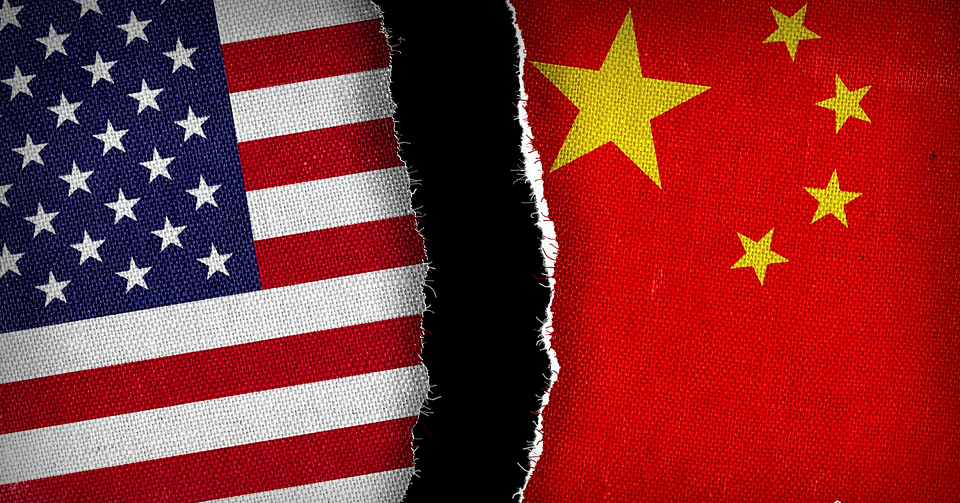
The United States and China have concluded two days of tense, high-level trade negotiations in London with what both sides describe as a breakthrough framework to restore the flow of rare earth metals and ease certain export controls — a deal now awaiting the approval of President Donald Trump and Chinese President Xi Jinping.

The talks, held behind closed doors at Lancaster House near Buckingham Palace, include US Commerce Secretary Howard Lutnick and US Trade Representative Jamieson Greer, while China dispatched Vice Premier He Lifeng and chief trade negotiator Li Chenggang. Over 20 hours of negotiations culminated in a late-night agreement on Tuesday, with officials describing the mood as “intense but productive.”

Lutnick confirmed that the two delegations had agreed on a path forward to implement the Geneva consensus reached last month, which had aimed to scale back tariffs imposed during the prolonged trade war.

“First we had to get sort of the negativity out,” Lutnick told reporters. “Now we can go forward to try to do positive trade, growing trade.”

Rare Earths at the Heart of a Larger Shift

The centerpiece of the agreement is China’s commitment to accelerate shipments of rare earth metals — elements critical for electric vehicles, missile guidance systems, smartphones, and other advanced technologies. In return, Washington will begin unwinding select export controls, particularly those related to industrial software and components needed by Chinese manufacturers.

This mutual compromise on rare earths and strategic goods is being interpreted by insiders as a potential inflection point. It’s believed that by resolving the long-standing deadlock on rare earth exports, both sides may be able to build momentum for addressing broader tariff disputes and other contested areas in trade.

Analysts note that rare earths have emerged as one of the most powerful bargaining chips in the US-China trade standoff. China controls over 70% of the global supply, and disruptions in recent months triggered alarm across major economies, particularly in Europe and Asia, where automakers and defense contractors have warned of production slowdowns.

While negotiators expressed cautious optimism, the agreement is still tentative. “We’ve got a framework, but we still need our principals to sign off,” said China’s Li Chenggang as he addressed reporters outside the historic venue around midnight.

The positive tone offered some relief to investors who feared an escalation in trade tensions. Markets responded with limited enthusiasm — US equity futures edged lower, the offshore yuan remained stable, and China’s CSI 300 Index gained nearly 1%, marking its best day in weeks.

“Markets will likely welcome the shift from confrontation to coordination,” said Charu Chanana, chief investment strategist at Saxo Markets. “We’re not out of the woods yet — it’s up to Trump and Xi to approve and enforce the deal.”

If approved, the rare earth arrangement is expected to act as a springboard for resolving contentious disputes on steel and aluminum tariffs, industrial overcapacity, and digital services taxes — all of which have weighed heavily on bilateral trade since 2018.

The Chips-for-Metals Conundrum

Lutnick hinted at concessions by Washington that would ease controls imposed under national security grounds.

“There were a number of measures the United States of America put on when those rare earths were not coming,” he said. “You should expect those to come off — sort of, as President Trump said, in a balanced way.”

That “balance,” however, is delicate. Export controls on semiconductor technologies and AI-enabling software remain politically charged in Washington, where hawks argue that loosening restrictions could empower Beijing’s military and surveillance capabilities. But Trump officials now appear willing to leverage some of those restrictions to secure concessions in other areas, especially rare earth access.

Wendy Cutler, a former senior US trade official, called the shift “unprecedented,” warning that the deal’s durability depends on sustained political will.

“It took two days, three US Cabinet members, and a Chinese vice premier just to get back to upholding the Geneva accord,” she wrote on LinkedIn. “That’s a preview for the next 60 days.”

What’s Next: 60 Days to Resolve Broader Issues

The Geneva deal in May established a 90-day pause on retaliatory tariffs, set to expire in early August. The current framework on rare earths buys time, but trade remains volatile. US imports from China dropped sharply in May, marking the worst contraction since early 2020, when China’s economy was shuttered by COVID.

Among the unresolved issues is China’s industrial overcapacity — particularly in steel, solar panels, and electric vehicles — which the US argues has led to global price distortions. In addition, the Trump administration has pressed China for measurable action on fentanyl production, an issue it cited in levying a 20% tariff earlier this year.

“President Trump is watching fentanyl closely,” said Jamieson Greer. “We would expect to see progress from the Chinese on that issue in a major way.”

No further meetings are currently scheduled, but both sides say discussions will continue remotely. “We hope the progress we made will be conducive to building trust,” Li Chenggang added.

Beyond trade data, what’s been most damaged by the years-long standoff is trust. According to Josef Gregory Mahoney, a professor of international relations at East China Normal University, “We’ve heard a lot about agreements on frameworks for talks, but the fundamental issue remains: Chips vs rare earths. Everything else is a peacock dance.”

However, many believe the rare earth deal may mark the beginning of a pragmatic phase. If both leaders endorse the proposal, it could open the door for more substantive discussions — not just on trade, but on global supply chains, climate coordination, and digital governance.

OpenAI Rolls Out o3-pro: A Reasoning Powerhouse Surpassing Rivals

0

OpenAI has unveiled O3-Pro, its most powerful artificial intelligence (AI) model to date, built for advanced reasoning and task execution.

As a significant upgrade to the earlier O1-Pro, the new model is designed to handle complex workflows, such as data analysis, programming, math, and science with remarkable precision and speed.

According to OpenAI, O3-Pro excels in comprehensiveness, instruction-following, and accuracy, outperforming both its predecessor and leading models from competitors like Google and Anthropic.

In internal benchmark tests:

On AIME 2024, a top math benchmark, O3-Pro surpassed Google’s Gemini 2.5 Pro.

On GPQA Diamond, which assesses PhD-level science knowledge, it outperformed Claude 4 Opus from Anthropic.

Expert reviewers rated it significantly higher across multiple domains including education, scientific reasoning, and content generation.

OpenAI wrote,

“In expert evaluations, reviewers consistently prefer o3-pro over o3 in every tested category and especially in key domains like science, education, programming, business, and writing help. Reviewers also rated o3-pro consistently higher for clarity, comprehensiveness, instruction-following, and accuracy”.

Unlike conventional AI models, O3-Pro uses step-by-step reasoning, making it more reliable in technical and academic contexts. It can search the web, analyze uploaded files, execute Python code, understand and reason about visual inputs, and personalize responses using memory. While O3-Pro doesn’t generate images and lacks support for OpenAI’s Canvas workspace feature, it offers what matters most for product builders: clarity, speed, and consistency.

O3-Pro is currently available to ChatGPT Pro and Team users, with Enterprise and Edu users gaining access the following week. It’s also live on OpenAI’s developer API, priced at $20 per million input tokens and $80 per million output tokens—a fraction of the cost of rival models.

Despite a temporary ChatGPT outage during the rollout and some limitations (like disabled temporary chats), O3-Pro is a strong push by OpenAI to make reasoning models the industry standard.

O3-Pro marks a turning point in the AI landscape, emphasizing step-by-step reasoning over simple text generation. This pressures other AI chatbot providers to upgrade their models’ logical thinking, accuracy, and reliability, especially in technical fields like math, coding, and data analysis.

The launch of O3-Pro has no doubt pushed the bar upward with faster reasoning, cheaper API pricing, and deeper tool integration. Chatbot providers must now evolve from simple assistants to powerful reasoning engines or risk being outpaced in performance, utility, and adoption.

OpenAI is once again pushing the market toward the widespread adoption of reasoning models. With an astonishingly low price nearly five times cheaper than rivals, it is becoming the standard for various tasks, from assistants to internal tools. Startups can get to save on infrastructure, and large companies can streamline processes and automate complex workflows.

Notably, a team of three can easily launch a B2B system for legal practice, where each new question is a complex logical chain, without having to spend on API calls or expensive computations. Also, companies can implement automated technical support and analytical modules without needing to connect costly APIs.

With cutting-edge capabilities and competitive pricing, O3-Pro is poised to become the go-to model for developers, researchers, and businesses building intelligent tools and assistants.

OpenAI says it’s released its most “capable” artificial intelligence model yet. The o3-pro reasoning model can analyze files, search online and complete other tasks that made it score especially well with reviewers on “comprehensiveness, instruction-following and accuracy,” the company said. The o3-pro drop came as OpenAI’s ChatGPT suffered a widespread outage on Tuesday. Meanwhile, the company’s CEO, Sam Altman, garnered attention with an essay predicting that by 2026, the world will see AI systems that can generate “novel insights.”

The Gentle Singularity

by Sam Altman

We are past the event horizon; the takeoff has started. Humanity is close to building digital superintelligence, and at least so far it’s much less weird than it seems like it should be.

Robots are not yet walking the streets, nor are most of us talking to AI all day. People still die of disease, we still can’t easily go to space, and there is a lot about the universe we don’t understand.

And yet, we have recently built systems that are smarter than people in many ways, and are able to significantly amplify the output of people using them. The least-likely part of the work is behind us; the scientific insights that got us to systems like GPT-4 and o3 were hard-won, but will take us very far.

AI will contribute to the world in many ways, but the gains to quality of life from AI driving faster scientific progress and increased productivity will be enormous; the future can be vastly better than the present. Scientific progress is the biggest driver of overall progress; it’s hugely exciting to think about how much more we could have.

In some big sense, ChatGPT is already more powerful than any human who has ever lived. Hundreds of millions of people rely on it every day and for increasingly important tasks; a small new capability can create a hugely positive impact; a small misalignment multiplied by hundreds of millions of people can cause a great deal of negative impact.

2025 has seen the arrival of agents that can do real cognitive work; writing computer code will never be the same. 2026 will likely see the arrival of systems that can figure out novel insights. 2027 may see the arrival of robots that can do tasks in the real world.

A lot more people will be able to create software, and art. But the world wants a lot more of both, and experts will probably still be much better than novices, as long as they embrace the new tools. Generally speaking, the ability for one person to get much more done in 2030 than they could in 2020 will be a striking change, and one many people will figure out how to benefit from.

In the most important ways, the 2030s may not be wildly different. People will still love their families, express their creativity, play games, and swim in lakes.

But in still-very-important-ways, the 2030s are likely going to be wildly different from any time that has come before. We do not know how far beyond human-level intelligence we can go, but we are about to find out.

In the 2030s, intelligence and energy—ideas, and the ability to make ideas happen—are going to become wildly abundant. These two have been the fundamental limiters on human progress for a long time; with abundant intelligence and energy (and good governance), we can theoretically have anything else.

Already we live with incredible digital intelligence, and after some initial shock, most of us are pretty used to it. Very quickly we go from being amazed that AI can generate a beautifully-written paragraph to wondering when it can generate a beautifully-written novel; or from being amazed that it can make live-saving medical diagnoses to wondering when it can develop the cures; or from being amazed it can create a small computer program to wondering when it can create an entire new company. This is how the singularity goes: wonders become routine, and then table stakes.

We already hear from scientists that they are two or three times more productive than they were before AI. Advanced AI is interesting for many reasons, but perhaps nothing is quite as significant as the fact that we can use it to do faster AI research. We may be able to discover new computing substrates, better algorithms, and who knows what else. If we can do a decade’s worth of research in a year, or a month, then the rate of progress will obviously be quite different.

From here on, the tools we have already built will help us find further scientific insights and aid us in creating better AI systems. Of course this isn’t the same thing as an AI system completely autonomously updating its own code, but nevertheless this is a larval version of recursive self-improvement.

There are other self-reinforcing loops at play. The economic value creation has started a flywheel of compounding infrastructure buildout to run these increasingly-powerful AI systems. And robots that can build other robots (and in some sense, datacenters that can build other datacenters) aren’t that far off.

If we have to make the first million humanoid robots the old-fashioned way, but then they can operate the entire supply chain—digging and refining minerals, driving trucks, running factories, etc.—to build more robots, which can build more chip fabrication facilities, data centers, etc, then the rate of progress will obviously be quite different.

As datacenter production gets automated, the cost of intelligence should eventually converge to near the cost of electricity. (People are often curious about how much energy a ChatGPT query uses; the average query uses about 0.34 watt-hours, about what an oven would use in a little over one second, or a high-efficiency lightbulb would use in a couple of minutes. It also uses about 0.000085 gallons of water; roughly one fifteenth of a teaspoon.)

The rate of technological progress will keep accelerating, and it will continue to be the case that people are capable of adapting to almost anything. There will be very hard parts like whole classes of jobs going away, but on the other hand the world will be getting so much richer so quickly that we’ll be able to seriously entertain new policy ideas we never could before. We probably won’t adopt a new social contract all at once, but when we look back in a few decades, the gradual changes will have amounted to something big.

If history is any guide, we will figure out new things to do and new things to want, and assimilate new tools quickly (job change after the industrial revolution is a good recent example). Expectations will go up, but capabilities will go up equally quickly, and we’ll all get better stuff. We will build ever-more-wonderful things for each other. People have a long-term important and curious advantage over AI: we are hard-wired to care about other people and what they think and do, and we don’t care very much about machines.

A subsistence farmer from a thousand years ago would look at what many of us do and say we have fake jobs, and think that we are just playing games to entertain ourselves since we have plenty of food and unimaginable luxuries. I hope we will look at the jobs a thousand years in the future and think they are very fake jobs, and I have no doubt they will feel incredibly important and satisfying to the people doing them.

The rate of new wonders being achieved will be immense. It’s hard to even imagine today what we will have discovered by 2035; maybe we will go from solving high-energy physics one year to beginning space colonization the next year; or from a major materials science breakthrough one year to true high-bandwidth brain-computer interfaces the next year. Many people will choose to live their lives in much the same way, but at least some people will probably decide to “plug in”.

Looking forward, this sounds hard to wrap our heads around. But probably living through it will feel impressive but manageable. From a relativistic perspective, the singularity happens bit by bit, and the merge happens slowly. We are climbing the long arc of exponential technological progress; it always looks vertical looking forward and flat going backwards, but it’s one smooth curve. (Think back to 2020, and what it would have sounded like to have something close to AGI by 2025, versus what the last 5 years have actually been like.)

There are serious challenges to confront along with the huge upsides. We do need to solve the safety issues, technically and societally, but then it’s critically important to widely distribute access to superintelligence given the economic implications. The best path forward might be something like:

  1. Solve the alignment problem, meaning that we can robustly guarantee that we get AI systems to learn and act towards what we collectively really want over the long-term (social media feeds are an example of misaligned AI; the algorithms that power those are incredible at getting you to keep scrolling and clearly understand your short-term preferences, but they do so by exploiting something in your brain that overrides your long-term preference).
  2. Then focus on making superintelligence cheap, widely available, and not too concentrated with any person, company, or country. Society is resilient, creative, and adapts quickly. If we can harness the collective will and wisdom of people, then although we’ll make plenty of mistakes and some things will go really wrong, we will learn and adapt quickly and be able to use this technology to get maximum upside and minimal downside. Giving users a lot of freedom, within broad bounds society has to decide on, seems very important. The sooner the world can start a conversation about what these broad bounds are and how we define collective alignment, the better.

We (the whole industry, not just OpenAI) are building a brain for the world. It will be extremely personalized and easy for everyone to use; we will be limited by good ideas. For a long time, technical people in the startup industry have made fun of “the idea guys”; people who had an idea and were looking for a team to build it. It now looks to me like they are about to have their day in the sun.

OpenAI is a lot of things now, but before anything else, we are a superintelligence research company. We have a lot of work in front of us, but most of the path in front of us is now lit, and the dark areas are receding fast. We feel extraordinarily grateful to get to do what we do.

Intelligence too cheap to meter is well within grasp. This may sound crazy to say, but if we told you back in 2020 we were going to be where we are today, it probably sounded more crazy than our current predictions about 2030.

May we scale smoothly, exponentially and uneventfully through superintelligence.