Crypto casinos have redefined the way players experience online betting, but in 2025, bonuses are the real battleground. With players chasing maximum value for every deposit, the best platforms aren’t just those with flashy ads, they’re the ones offering real returns with clear terms.
This article ranks the six most rewarding crypto casino bonus programs this year. From generous welcome packages to transparent daily boosts, we’ve evaluated each site based on the overall value to players. At the top is Spartans, a platform where clarity, speed, and trust combine to deliver rewards that actually matter.
1. Spartans: Clear, Consistent, and Crypto-Friendly Bonuses
Spartans has quickly gained the trust of the bonus-savvy crowd in 2025 by offering exactly what players want: real value without fine-print surprises. Its flagship 300% Casino Welcome Bonus turns a $5 deposit into $20 in play value instantly, without unnecessary delays or hidden conditions. Unlike platforms that bury players in restrictive playthrough hoops, Spartans keeps it transparent.
The wagering requirement is posted upfront, 35x, and players know exactly which games qualify. Bonus winnings are capped at 10x, and you get seven full days to use your bonus funds, which is more than enough time given how fast crypto betting moves.
Beyond the welcome offer, Spartans keeps the rewards flowing with a 25% Daily Casino Deposit Bonus that’s available every day with just a $10 deposit. These bonuses don’t just sit in your balance collecting dust. They’re activated quickly, and withdrawals are tied to real-time crypto wallets like Trust Wallet, MetaMask, or Coinbase Wallet.
This eliminates the long waiting periods common with legacy betting sites. The platform also runs a 300% Sports Welcome Bonus for fans of football, basketball, and UFC betting, again with clear odds requirements and capped max withdrawals. For frequent depositors, Spartans feels less like a casino trying to trap users and more like a crypto-native platform designed to reward active players without friction.
2. Stake.com: Big Promos, But Higher Requirements
Stake.com is one of the most recognizable names in crypto betting, and its promotions are a big reason why. The platform regularly runs deposit matches, free spins, and even monthly prize pools worth millions. However, these offers often come with multiple tiers of conditions. Stake’s welcome bonuses are usually customized via VIP codes or influencer links, which can confuse new users.
Additionally, some bonuses may be “sticky,” meaning they can’t be withdrawn even after meeting wagering requirements. While Stake’s community rewards system remains attractive, players need to read the terms carefully to get full value.
3. Roobet: Fun Promotions, Tricky Playthrough
Roobet caters to crypto players with an appetite for gamified promotions and unique slot tournaments. Its bonus offers tend to favor entertainment over raw value, with cashback percentages, unlockable rewards, and a rotating cast of sponsored events. While this makes the experience enjoyable, the actual wagering requirements can be steep.
Some bonuses require users to wager multiple times the initial deposit across specific games, and bonus caps vary by region. Still, Roobet remains a favorite for loyal users who enjoy its energetic atmosphere and creative campaigns, especially around new game launches.
4. BC.Game: Frequent Bonuses, But Fragmented Value
BC.Game stands out for its sheer volume of bonus options. From daily free spins to recharge bonuses and lucky spins, players are constantly being offered something. However, this volume can be overwhelming. Most bonuses require detailed reading to understand what’s actually being rewarded, and the value of each reward is often small unless you’re betting regularly and in large amounts.
The platform’s VIP program does offer more meaningful perks, including rakeback and cashback, but unlocking those requires consistent high-stakes activity. It’s a strong platform for grinders but less ideal for casual players seeking immediate rewards.
5. Betano: Region-Specific Promotions with Decent Value
Betano has carved out a space in the crypto casino market by offering tailored promotions for specific countries, especially in Europe and Latin America. While not strictly a crypto-exclusive platform, it supports select digital currencies and offers competitive sportsbook and casino welcome bonuses. These usually come with moderate wagering requirements and occasional free bet promotions.
Betano’s loyalty structure isn’t as robust as some crypto-native competitors, but its bonuses are well-suited for players in eligible regions who want a balanced betting experience with both fiat and crypto options.
6. 888Casino: Trusted Brand with Limited Crypto Bonus Options
888Casino has entered the crypto bonus conversation mainly due to its legacy reputation and limited adoption of digital assets. The platform does offer welcome bonuses and promo codes that can be activated with crypto deposits, but the range is more limited compared to the top performers on this list.
Wagering requirements are usually standard, around 30x, but bonuses are often capped and subject to geographical restrictions. Still, for players looking to stick with a known brand that now accepts crypto, 888Casino provides a relatively safe and secure bonus experience.
Last Say
In 2025, crypto casino bonuses are more than just flashy headlines, they’re a deciding factor for where players choose to spend and win. Among the platforms reviewed, Spartans takes the lead with its player-first structure, rapid bonus delivery, and crystal-clear terms. While others like Stake.com and Roobet offer high entertainment value, their bonuses often require extra effort to unlock.
Whether you’re a high roller or just getting started, choosing a platform with transparent, high-value bonuses can significantly enhance your play. Spartans stands out as the best place to start if you’re after the most rewarding crypto casino bonuses this year.
The first time I left the amazing Ovim village to a city was to represent my beloved alma mater, Secondary Technical School Ovim, and Abia State, in a regional JETS (junior engineers, technicians and scientists) competition at Federal Government College Okigwe. We had come up first in Abia State, but the FGC Okigwe team was well ahead of us and defeated us.
But making it back, after being taken into an Okigwe supermarket to get a donut (the first time inside a supermarket), my Chemistry teacher, Mr Udeagu Jr, explained the essence of the experience and purpose of building for the future. He challenged us to see what our peers have known, and why we must put in more effort. The peerless student leaders of FGC Okigwe, Isiodu and Arinze (I picked their names from their badges) left impressions, reminding me that even though WAEC was a year ahead for me, some students were already ready. I made changes and became better!
Young People, that type of intellectual and academic engagement is back. Yes, the Abia State Government has something for young people aged 16-20 years old. Our State invites you to apply for a chance to be a part of the 1, 000 young Abians to be selected for a unique learning and mentorship experience at the 2025 Abia Leadership Academy.
The Abia Leadership Academy is an initiative of His Excellency, Dr. Alex Chioma Otti, OFR, the Executive Governor of Abia State, to prepare young Abians for the demands of leadership in a fast-changing world. The Academy is FREE with all registration and training costs borne entirely by the Abia State Government.
Let me add: If you are from Ovim, and you are selected, and there is an additional cost, for you, in whatever form, I will cover that for you. Good Luck.
In crypto, a few weeks can shift the outlook completely. Right now, the market is showing some of the best setups seen in months. Some coins are bouncing back after major drops, while others are offering new ways to improve the user experience. But price alone isn’t the focus anymore. The top altcoins to buy now offer real use, work well with real-world systems, and have clear plans for growth.
This list highlights more than short-term wins. These projects are building networks that reward user activity, lower barriers, and deliver value in simple ways. Thanks to strong upgrades, cashback systems, and active communities, these four stand out. Whether you’re thinking about where to place funds or just want to be early, these are the top altcoins to buy now as we move into the second half of 2025.
1. Cold Wallet: 100% Gas Refunds and No Lock-Ins
Cold Wallet changes how wallets work. Instead of charging fees for every move, it gives back rewards in CWT. Whether you’re sending crypto, swapping coins, or converting fiat, you receive automatic cashback in its native token. With enough holdings, users can even get back up to 100% of gas fees. There’s no staking or lock-in, just direct and automatic benefits. That’s what makes Cold Wallet one of the top altcoins to buy now for users tired of losing money to high fees.
Cold Wallet has raised over $5.2 million in presale in a few weeks. The presale is open at $0.00942, moving through 150 small stages with a rising price at each one. This setup rewards early participants with better value. Out of the total supply, 4 billion tokens are set for public sale, and 25% is saved for giving cashback. The structure supports long-term use and real activity within the network.
Cold Wallet is designed for people who use crypto every day. It makes each action worthwhile by returning value. With its low entry cost, useful reward model, and focus on long-term function, it remains one of the top altcoins to buy now for those looking ahead to 2025.
2. XRP: Can It Push Past Key Resistance?
XRP is now trading at $3.18 after rebounding from the $3.00 support level earlier in the week. Traders are focusing on the $3.21 to $3.23 range, as a clear move above this zone could open the way toward $4.00 shortly. Analysts have reported over $415 million in whale purchases over the last 48 hours, which may show growing confidence in the asset. This level of buying often supports a stronger price climb, especially if smaller traders follow.
There is growing talk of XRP reaching $5.00 before year-end, with some long-term projections even mentioning $18. Whether those targets are hit or not, XRP continues to show strength while many others are still recovering. Based on volume, technical setup, and large wallet activity, it remains one of the top altcoins to buy now. Its real-world use case keeps interest high, and if the trend stays in place, early movers could benefit.
3. Dogecoin: Chart Patterns Signal a Shift
Dogecoin is priced around $0.236, holding steady with support at about $0.235. The current chart shows signs of a double-bottom and a possible bull pennant, both of which have drawn attention from chart watchers. If confirmed, the price may target a breakout toward $0.42 or even $0.50. DOGE has a record of bouncing back faster than many others when market sentiment is positive.
With a $35 billion market cap and $1.8 billion in daily trading, DOGE is more than just a trend. The community plays a big role in keeping momentum alive. Some believe it may even be added to mainstream apps, and early ideas about a DOGE ETF are being discussed. While these ideas are still in early stages, growing interest shows that the mood is shifting. Strong support and rising energy on the charts place DOGE among the top altcoins to buy now.
4. Ethereum: Activity Grows as ETF Demand Climbs
Ethereum is trading around $3,814, lifted by strong ETF interest. BlackRock’s ETHA alone has taken in $440 million, and all Ethereum ETFs together now hold more than $20.6 billion. These flows are seen as the key reason behind ETH’s recent rise from $3,500 to nearly $3,830. The slowdown in the withdrawal queue also hints that fewer users are moving away from the network.
Large holders and new wallets have added over $2.1 billion in ETH since July 10. Some experts now expect ETH to perform better than Bitcoin in the next few months. This puts it clearly among the top altcoins to buy now. Ethereum’s next upgrade, Fusaka, is planned for Q4 2025. It will focus on backend improvements for performance and stability. While it may not seem big from the outside, it lays the ground for lasting growth. ETH’s role in DeFi and smart contracts keeps it a strong pick.
The Bottom Line
Each project mentioned here brings something important to the market. XRP is aiming at key price levels with major backing. DOGE shows strong technical signs and growing attention. Ethereum keeps its lead in DeFi and attracts serious institutional interest. These are some of the top altcoins to buy now as we head into the final part of 2025.
Cold Wallet, though, brings another angle. It focuses on real use and gives value back through gas cashback and rewards with every action. With a presale price of $0.00924 and a clear reward system, it offers a different kind of opportunity in a market gaining momentum. For those wanting to enter a system made for regular users, Cold Wallet is not just another name on the list. It reflects where crypto could be heading. Cold Wallet focuses on real value, and that’s why it belongs with the top altcoins to buy now.
In 2025, crypto gamblers aren’t just looking for game variety or flashy interfaces, they want fast withdrawals and proven trust. Too often, players win big only to face delays, manual reviews, or confusing limits when trying to cash out. That’s where the safest crypto gambling platforms stand apart.
These aren’t just sites with big names, they’re trusted platforms with instant crypto withdrawals, transparent game fairness, and strong reputations. Whether you’re a casual player or a high roller, you deserve a site that pays out when you win, without red tape. Below are the top five platforms that prioritize both safety and speed.
1. Spartans: The Ultimate Safe Bet for Instant Crypto Withdrawals
Spartans leads the pack in 2025 when it comes to safe, fast, and trustworthy crypto gambling. Designed from the ground up for crypto users, Spartans removes the usual roadblocks that frustrate players. You won’t find outdated banking delays or payout approvals here.
Instead, players deposit and withdraw using BTC, ETH, USDT, and other major cryptocurrencies directly through their wallets, with no conversion lag or manual processing.
What sets Spartans apart is its combination of speed and transparency. All games are provably fair, meaning players can verify the outcome of every spin, card, or result. That level of honesty is rare, even among the biggest platforms. The casino includes over 5,900 games, ranging from high-volatility slots and crash games to live blackjack and sports betting. On the sportsbook side, bettors can place live wagers on football, UFC, cricket, and more, all with seamless bet slips and real-time odds.
The platform’s safety-first approach is backed by its crypto-native wallet system. Since no fiat banking is involved, users avoid chargebacks, blocked cards, or compliance delays. Withdrawals are processed instantly to your wallet of choice. Whether you’re cashing out $50 or $5,000, it’s smooth and automatic, a rare combination of trust and speed that makes Spartans the safest crypto betting site for 2025.
2. Stake.com: Trusted But Slower on Withdrawals
Stake.com is a well-known name in crypto gambling and offers a reputable platform with strong community support. It features thousands of games and a polished sportsbook, along with big-brand partnerships. However, one common drawback is its withdrawal processing time.
Depending on activity levels and withdrawal size, players often experience delays that can stretch into hours. While still reliable overall, Stake doesn’t match Spartans when it comes to instant crypto access.
3. Roobet: Fun Gameplay, Average Payout Speed
Roobet is another trusted crypto platform with a strong entertainment vibe and unique branded games. It offers a wide selection of slots, crash games, and live dealer content. Players praise the user experience and daily promotions, but withdrawals often go through a verification process or wait period.
For casual users, Roobet remains a safe choice, but those prioritizing immediate access to their winnings might prefer a faster alternative.
4. BetMGM: Traditional Trust, Slower Crypto Features
BetMGM has built a long-standing reputation in online betting, especially for its sportsbook and regulated operations in the U.S. While it now accepts some crypto, the integration feels secondary.
Withdrawals using digital assets can take longer, with extra ID checks and limitations based on location. BetMGM remains a safe platform overall, but its crypto services are still catching up to more agile competitors like Spartans.
5. BC.Game: Big Variety, Mixed Feedback on Speed
BC.Game is a popular site among crypto gamblers for its huge selection of games and daily bonuses. It supports a wide range of coins and tokens, and has built a loyal following. However, its withdrawal process isn’t always instant.
Some users report inconsistencies in processing times, especially during high activity periods or bonus-related cashouts. It’s a solid platform with strong potential, but still not as consistent on fast withdrawals as Spartans.
Last Say
Safety and speed go hand-in-hand when choosing a crypto gambling platform. The thrill of a win loses its shine when payouts are delayed or complicated. That’s why platforms like Spartans are setting the new standard in 2025, by combining provably fair games, instant withdrawals, and a crypto-native approach that puts control back in the player’s hands.
While Stake.com, Roobet, BetMGM, and BC.Game all offer secure environments with strong reputations, Spartans delivers the fastest and most trustworthy crypto gambling experience for players who won’t settle for less.
For the first time in crypto history, the total market cap surged past $4 trillion and this might just be the beginning. As regulatory clarity improves and adoption accelerates globally, and especially in the U.S., investors are turning their attention to the next crypto to hit $1, hunting for coins with asymmetric upside potential.
While Bitcoin and Ethereum remain solid long-term bets, it’s often the one dollar crypto contenders (low-cap crypto tokens on the verge of breakout) that deliver the most explosive 100x or even 1000x gains. So, which projects are lining up for that next big milestone?
Our time-sensitive market analysis has narrowed it down to five top picks: the rising GameFi star Pikamoon (PIKA), the battle-tested TRON (TRX), meme legend Dogecoin (DOGE), enterprise-grade HBAR, and the ambitious PI Network (PI).
But before we get into each pick, let’s break down what actually makes a crypto a true contender for that $1 mark, and why these five made the cut.
Factors That Make a Crypto a Potential Contender for a $1 Breakout
Micro?Cap with Sky?High Upside The most explosive cryptos usually start with ultra?low market caps. This leaves massive room for price expansion as investor attention shifts. A token with double?digit upside expectations and a valuation still in the single- or low tens of millions naturally fits that profile.
Tokenomics Built for Scarcity and Growth Candidates for hitting the $1 milestone often feature mechanisms that actively reduce circulating supply, like deflationary tokenomics, token burns, or staking locks. These features align supply compression with rising demand when momentum begins rolling, setting the stage for explosive rallies.
Real, Observable Product Progress Projects that achieve a one?dollar breakout usually have more than good marketing, they deliver product milestones. Live product updates, improvements, new versions, adding new utility, expanding the use cases, etc. provide tangible proof that the roadmap is real. Markets reward visible progress far more than vague promises.
Viral Community Dynamics Without Paid Ads A grassroots audience that shills organically, and rallies new holders by word-of-mouth builds powerful flywheel effects. Viral user growth and free organic social traction tend to precede major price surges, especially when combined with drip-release catalysts.
Upcoming Catalysts, Clear Timeline, and Liquidity Expansion Tokens primed to hit $1 often have scheduled catalysts on the horizon that could push its price upwards. These can be unique deadlines, major exchange listings, or referral launches etc, that inject momentum over well-defined windows. Layered on top, news of broad CEX/DEX listings or viral marketing campaigns turn small signals into a snowball effect for projects.
With these five criteria in mind, we filtered through dozens of $1?potential projects, and Pikamoon emerged as the clear winner, ticking all five factors and then some.
While other tokens may check three or four boxes, PIKA delivers full alignment across micro?cap pricing, visible product delivery, built?in scarcity mechanics, organic viral momentum, and upcoming liquidity catalysts. Let’s find out more below:
Next Crypto to Hit $1 – Our Top 5 Picks for Q4 2025
1. Pikamoon ($PIKA) – A GameFi Breakout on Track for $1 and More!
Pikamoon ($PIKA) is our top pick for the next crypto to hit $1 because it aligns with every key driver needed to move from micro?cap obscurity into mainstream awareness, and it’s already firing on all cylinders. Let’s take a look at some of the reasons why we placed it at the summit of our list.
Why Pikamoon ($PIKA) tops our list?
A Low-Cap GEM
Pikamoon is currently trading at around $0.0001001 as of late July 2025, with a fully diluted valuation near $4.7 million, placing it firmly in ultra?low?cap territory with exponential upside potential should it reach the $1 milestone. The token is roughly 97.5% below its previous $0.003966 ATH, meaning merely retracing that path delivers almost a 40× return. Now imagine what happens if it breaks into other listings, tightens supply, and a game launch fires expectations.
Native Token of Upcoming AAA Web3 Game
Pikamoon boasts a real, live product runway. Its alpha gameplay is set to drop in Q4 2025, followed by a full Unity?6 developed triple?A battle?royale in 2026. Over the past month, the team has released multiple closed-door combat play?tests and gameplay reels, showcasing weapons, combo mechanics, and region-specific animations that have resonated strongly across social media platforms. The footage reveals a unique, melee-focused PikaRoyale experience, complete with collectible Pikamoon creatures that act as active companions on the battlefield, a feature not seen in prior GameFi titles.
Deflationary Tokenomics Weaponized
Pikamoon’s deflationary token mechanics are now being weaponized with the upcoming bridge to Solana. As such, any ERC?20 $PIKA left un?bridged to Solana after the 45?day bridge window will be permanently burned, instantly tightening supply, and rewarding early, committed believers. Its pertinent to mention that its deflationary tokenomics burn 0.5% from every sell order, permanently increasing the token’s scarcity over time.
A diamond-handed cult of community
Its community execution has been viral without paying for ads. Pikamoon’s most recent $25K giveaway has ignited referral loops, while its fully doxxed founder Conrad Lewis and Head of Community Nixx deliver daily updates across podcasts, X, Discord, with holders generating thousands of organic views per post. When paid marketing kicks into gear post?relaunch, that base turns into a wildfire.
Part of the booming GameFi market
Pikamoon is part of a booming GameFi sector that generated biggest returns in the 2021 crypto bull run with Axie Infinity, Iluvium and Sandbox all gaining $1 billion plus valuations (without having a playable product). This time around, the GameFi sector is expected to grow from $23B in 2025 to $160B by 2033. Even if Pikamoon captures just a small slice of that, the magnitude of capital flow is immense. And right now, PIKA trades under $2M market cap, despite being on the cusp of shipping a AAA product in an ignored sub?segment.
Immediate Green-candle catalysts on the horizon
Last but not least, strategic listings are coming for Pikamoon. Currently available on MEXC, Pikamoon has several CEX and DEX launches planned at relaunch, each primed to spark new liquidity and awareness. Every listing headline acts like a green-candle pump magnet, perfect for compounding narrative and speculation in the current altcoin season.
All things considered, Pikamoon checks every box, from scarcity-enhancing tokenomics to game-ready product, viral outreach, sector tailwinds, and priced like a micro?cap with macro?cap potential. If you’re looking for a top crypto contender to actually hit $1 this cycle, get positioned before PIKA’s next catalyst kicks in.
Your chance to be part of this breakout and secure life-changing returns is live now, don’t sleep on what could be the next one?dollar crypto superstar.
2. Tron ($TRX)
Currently trading around $0.334 with a market cap hovering near $31 billion, Tron is one of the most established layer-1 blockchains in the space. While it hasn’t been the loudest name in recent headlines, Tron has quietly built one of the largest active user bases, especially in Asia and for USDT transactions. It remains a top chain for stablecoin transfers and boasts high throughput and low fees. Its all-time high, set last year in December, was around $0.44, showing it hasn’t even retested previous highs in recent months, leaving plenty of headroom on the table.
What makes TRX a solid contender to hit $1 is its strong foundational layer combined with relatively low retail hype. As the broader market rotates into altcoins and mainstream adoption accelerates, TRX could easily become a sleeper giant. A nearly 3x move from current levels would push it to $1 with a market cap under $90 billion, entirely achievable if stablecoin demand rises and more DeFi products build on Tron. If its usage in cross-border transactions keeps rising and token burns continue under Justin Sun’s ecosystem vision, TRX may finally break out of its multi-year range and surprise the market.
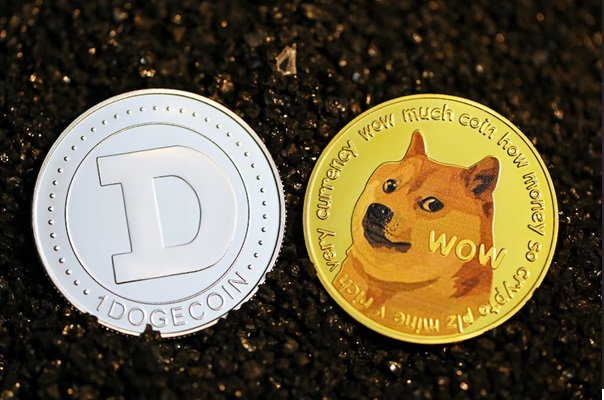
3. Dogecoin ($DOGE)
Dogecoin is currently trading at approximately $0.23, with a market cap of $34 billion, putting it well below its $0.73 all-time high from the 2021 bull run. It’s the most iconic memecoin in crypto history and continues to benefit from retail support, celebrity endorsements, and integration speculation (especially around platforms like X). Despite lacking a complex tech layer, DOGE thrives on virality and sentiment, often making massive moves when the broader market gains steam.
To reach $1, Dogecoin needs roughly a 4.1x from its current price, pushing its market cap to about $140 billion. Given its cultural impact and potential inclusion in more payment rails , this milestone remains plausible. More importantly, Dogecoin doesn’t need DeFi or GameFi to explode, it needs one viral moment. With a proven ability to rally on nothing but sentiment, it remains one of the few tokens that could sprint to $1 on hype alone.
4. Hedera ($HBAR)
Hedera is trading at $0.2, with a market cap of about $11 billion, significantly below its $0.56 all-time high from 2021. What makes Hedera unique is its governing council model and hashgraph consensus, which offers extremely fast and eco-friendly transaction processing. Major enterprises like Google, IBM, and LG are part of the governing council, a rare setup that adds credibility and long-term viability.
For $HBAR to reach $1, it would require roughly a 5x move, pushing its market cap to ~$55 billion, an ambitious but not unrealistic figure if enterprise blockchain adoption catches fire in the 2025–26 cycle. Hedera continues to grow in payments, NFTs, and enterprise-grade tokenization. Should more global companies begin deploying real-world applications on Hedera, its fundamentally strong yet underhyped positioning makes it a serious dark horse in the race to $1.
5. Pi Network ($PI)
Finally, the most speculative yet captivating candidate is Pi Network ($PI), currently trading around $0.44 with a market cap of approximately $3.39 billion. Though it reached a lofty $2.98 all-time high in February 2025, PI has since retraced and now presents a clear entry point for investors hoping to ride it back toward that previous ceiling, or beyond. With over 47 million users mining tokens via its mobile app and a massively underutilized circulating supply (~7.7 billion of 100B max), even modest growth in mainstream traction could pressure the price upward toward $1, especially as sentiment rebounds.
The lion’s share of PI trading today occurs on tier-2 exchanges like MEXC, OKX, and Gate.io. Any listing on major platforms such as Binance or Coinbase could be a powerful trigger, expanding liquidity and credibility almost overnight.
Final Verdict: Which Crypto Has the Highest ?$1?Breakout Potential?
After vetting dozens of sub?dollar tokens for their odds at achieving a $1 valuation in the 2025–26 bull cycle, Pikamoon ($PIKA) rises to the top because its ultra?micro?cap priced, deeply undervalued vs its ATH, shipping real product, enforcing genuine scarcity, and soon expanding its liquidity via new exchange listings. No other project in the lineup matches full alignment across these five pillars, combined with a GameFi roadmap that could ignite massive adoption.
At its current ~$0.000099 price, PIKA trades just above a $1.7–1.9?million market cap (nearly $5 million FDV), meaning the jump from here to $1 represents a nearly 10,000× leap. Yes, that’s aggressive, but astronomical gains are only possible in early?stage projects, and Pikamoon has already proven it can pull off dramatic moves (remember the nearly 40x spike from its 2024 launch). With the Solana bridge launching soon, un?bridged Ethereum tokens poised for burn, and major listings on the horizon, PIKA could catalyze a multi?hundred?x move, and still retain room to run into the billions.
Most investors default to blue?chip tokens for safety. But crypto history repeatedly shows that true fortunes are made by anchoring early positions in asymmetric, under?owned projects before the curve turns. And Pikamoon is that project going through a planned breakout under the goldilocks conditions of alt?season, GameFi tailwinds, and engineered scarcity.
If you’re hunting for the single crypto coin with the best shot at ascending to $1 (and rewriting your portfolio in the process) Pikamoon leads the pack. It currently trades only on MEXC, but with a timed 45?day Solana bridge, token burns, and multiple CEX/DEX listings launching alongside trailers and marketing shifting into full gear, every step is pre?coded to amplify momentum.
So, lock in your $PIKA position on MEXC today, because once the bridge to Solana goes live, the supply compression from burning un?bridged tokens, plus Raydium and CEX listings afterward, are guaranteed green-candle catalysts. And by the time the wider market catches on, early believers will be miles ahead of the pack.