DD
MM
YYYY

PAGES

DD
MM
YYYY

spot_img

PAGES

Home Blog Page 1051

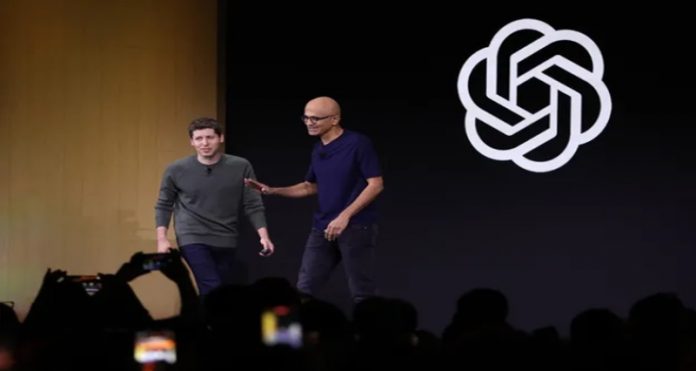
Microsoft and OpenAI’s AGI Clause: OpenAI May Prematurely Declare AGI To Cut Ties With Microsoft

0

Artificial General Intelligence, or AGI, is a term that’s become as overused as it is misunderstood. While commonly defined as a hypothetical AI system capable of outperforming humans across a wide range of intellectual tasks, what AGI actually means in practice depends heavily on who’s talking—and what they’re trying to sell. In the case of OpenAI and Microsoft, the ambiguity around AGI isn’t just academic—it’s contractual.

At the heart of their multibillion-dollar alliance is a clause that states their partnership ends once OpenAI reaches AGI. On paper, that might sound like a bold but clear benchmark. In reality, neither side has offered a precise definition. That confusion was compounded by a leaked document earlier this year suggesting AGI, at least to OpenAI, might simply mean an AI model that can generate up to $100 billion in profit—a purely commercial yardstick that raises more questions than answers.

However, AGI—whatever it means—is a loaded term in Silicon Valley. It signals ambition, investor confidence, and control. But it has now become a flashpoint between two companies that once boasted one of the closest partnerships in the AI industry. Behind the scenes, tensions are building.

Microsoft, which has pumped about $14 billion into OpenAI and supplies the bulk of its cloud computing power, is increasingly wary that OpenAI may prematurely declare AGI to trigger the partnership’s termination clause. The Wall Street Journal reported that Microsoft executives were skeptical about agreeing to the clause in the first place, but accepted it out of desperation—at the time, the company was scrambling to catch up in the AI arms race.

That clause is now a legal tripwire. If OpenAI moves to declare AGI, Microsoft could challenge the declaration in court, accusing the company of acting in bad faith. But pursuing legal action would plunge the dispute into what one executive reportedly described as “a legal thicket,” with the risk of locking the issue in litigation for years.

According to The Information, OpenAI’s executives are currently eyeing a public AGI declaration based on the release of an advanced coding agent—one that surpasses the abilities of a top-tier human programmer. If that happens, Microsoft could lose access to OpenAI’s best models and intellectual property, including any future iterations of GPT. The fallout would be massive.

There are already signs that both parties are preparing for separation. Microsoft has quietly started building its own in-house large language models, aiming to reduce its dependence on OpenAI. The company is reportedly willing to trail OpenAI’s top models by just a few months, as confirmed by Microsoft AI CEO Mustafa Suleyman, who said its off-frontier models will lag OpenAI’s by “three to six months.” Meanwhile, Microsoft is expanding its AI stack by integrating third-party models into Copilot.

The rivalry has spilled into infrastructure as well. Microsoft recently pulled out of two massive data center deals, a move insiders believe was linked to OpenAI’s shifting cloud needs. Although Microsoft was once OpenAI’s exclusive cloud partner, that changed after Project Stargate was launched, a $500 billion initiative backed by the US government to build AI infrastructure, including OpenAI’s own data centers. That project effectively ended Microsoft’s exclusivity—and strained relations further.

OpenAI, for its part, has complained that Microsoft’s infrastructure isn’t fast or scalable enough. Sam Altman, OpenAI’s CEO, has stated that the company is “no longer compute-constrained,” underlining that it may no longer depend on Microsoft’s Azure platform for its most ambitious work.

On the business front, OpenAI has grown increasingly vocal about Microsoft’s demands. A separate report claims that Microsoft is asking for a disproportionately large share of OpenAI’s Public Benefit Corporation (PBC), well beyond what it has offered in return. OpenAI executives are reportedly exploring legal options to challenge what they see as anti-competitive pressure from Microsoft, especially in light of a potential $3 billion acquisition (codenamed Windsurf) that could shift critical IP into Microsoft’s control.

Amid this tension, Satya Nadella has distanced himself from AGI as a concept. The Microsoft CEO dismissed it earlier this year as “nonsensical benchmark hacking”—a clear shot at efforts to shoehorn commercial success into a technical milestone. Meanwhile, Altman has admitted that existing hardware and infrastructure “weren’t built for an AI world,” perhaps implying that true AGI is still out of reach.

Yet for all the confusion, one thing is clear: the AGI clause, once a theoretical safeguard, has become a live wire. If OpenAI declares AGI soon—based on whatever criteria it chooses—it could sever its relationship with Microsoft entirely, ending what was once hailed as one of the most strategically powerful partnerships in tech. And for Microsoft, that might mean walking away from a $14 billion investment, with little more than a trail of court filings and a bruised ego to show for it.


Avalanche Talks About Subnets While Lightchain AI Talks Through Code That Interacts Intelligently

0

Avalanche continues to push the boundaries with its subnet technology, offering customizable blockchain networks designed for specific industries and applications.

On the other hand, Lightchain AI is gaining traction by introducing intelligent code functionality within its ecosystem. After successfully completing all 15 presale phases, Lightchain AI has launched a Bonus Round at a fixed price of $0.007, raising an impressive $21.2 million from dedicated supporters.

Equipped with a powerful AI-native Virtual Machine, transparent governance, and developer-focused incentives, Lightchain AI enables scalable, on-chain AI computations. While Avalanche prioritizes network flexibility, Lightchain AI is leading the way in advancing smart blockchain interactions to power decentralized innovation.

Avalanche Emphasizes Network Architecture Without Native Intelligence

Avalanche prioritizes a powerful network architecture—its innovative tri-chain model (X?Chain, C?Chain, P?Chain) offers high throughput, rapid finality, and customizable subnet deployment for diverse applications.

Its unique consensus mechanism blends classical and Nakamoto-style design, delivering thousands of transactions per second with millisecond confirmation times—optimized for DeFi and tokenized assets.

Yet Avalanche lacks built-in “intelligence” layers. There’s no native AI agent support or integrated modular logic—developers must build custom solutions or rely on separate L1s like Kite?AI via the infraBUIDL(AI) program. While powerful foundational tools exist, Avalanche doesn’t itself include embedded AI capabilities, leaving true intelligent workflows to external innovation rather than core protocol design.

Lightchain AI Enables Code That Thinks, Responds, and Evolves

Lightchain AI empowers code to think, respond, and evolve by embedding dynamic logic directly into its blockchain infrastructure. Unlike static L1 systems, it offers real-time adaptability—smart contracts can adjust based on evolving data inputs and user behavior.

This intelligent foundation includes robust SDKs, APIs, comprehensive documentation, and a growing developer grant program funded during its Bonus Round—fostering an ecosystem where builders can design adaptive applications.

With a mainnet launch planned for July 2025 and funds being deployed toward developer integration, the platform is shaping up to support responsive workflows across sectors like healthcare, logistics, and finance. By prioritizing thoughtful computation over rigid logic, Lightchain AI is enabling truly responsive and evolving on-chain systems.

Grab Lightchain AI for Massive Gains

Lightchain AI presents a groundbreaking opportunity for both developers and investors, leveraging its robust architecture to tackle real-world challenges across various industries. Its focus on adaptive and intelligent workflows sets it apart, ensuring scalability and efficiency in decentralized applications.

With the upcoming mainnet launch in July 2025, stakeholders can expect a surge in demand as the platform integrates with sectors like healthcare, finance, and logistics. By investing now, you position yourself early in a consistently evolving ecosystem primed to redefine on-chain solutions.

Don’t miss this revolutionary innovation.

https://lightchain.ai

https://lightchain.ai/lightchain-whitepaper.pdf

https://x.com/LightchainAI

https://t.me/LightchainProtocol

APTOS Highlights Speed Gains While Lightchain AI Highlights Ecosystem Adoption Among AI/DeFi Teams

0

APTOS highlights impressive speed gains as it works to position itself in the competitive Layer 1 blockchain landscape. Meanwhile, Lightchain AI is drawing attention for a different reason—robust ecosystem adoption among AI and DeFi teams. With all 15 presale stages successfully completed and a Bonus Round now live at a fixed price of $0.007, Lightchain AI has raised $21.2 million from committed buyers.

This momentum is supported by a functional AI-native Virtual Machine, transparent governance, and developer incentives tailored to foster innovation. While APTOS focuses on performance metrics, Lightchain AI is building real-world utility through growing community engagement and strategic partnerships.

APTOS Showcases Enhanced Transaction Speeds and Performance

Aptos, a Layer 1 blockchain developed by former Meta engineers, is redefining performance standards in the Web3 ecosystem. Utilizing the Move programming language and the Block-STM parallel execution engine, Aptos achieves sub-second transaction finality, ensuring rapid and efficient processing.

The network has demonstrated real-world capabilities by sustaining over 20,000 transactions per second (TPS) with sub-second latency, and its Shardines engine has achieved over 1 million TPS in controlled environments.

Aptos’s architecture, featuring the AptosBFT consensus mechanism, ensures robust security and scalability. This design supports a wide range of decentralized applications, including DeFi platforms, NFT marketplaces, and gaming applications. With its emphasis on high throughput and low latency, Aptos is poised to play a significant role in the advancement of decentralized technologies.

Lightchain AI Drives Ecosystem Adoption Within AI and DeFi Communities

Lightchain AI is rapidly gaining traction within the AI and DeFi communities by delivering tangible tools and fostering a collaborative ecosystem. The project has secured over $21.2 million during its presale, reflecting strong investor confidence ahead of its July 2025 mainnet launch.

A $150,000 developer grant program has been established to support the creation of decentralized applications and infrastructure tools, attracting builders from both AI and blockchain sectors. Strategic DeFi protocols are preparing to deploy yield strategies and decentralized compute markets on Lightchain, highlighting its appeal to the DeFi community.

Additionally, the introduction of the Meme Launchpad aims to stimulate user engagement and innovation within the ecosystem. These initiatives underscore Lightchain AI’s commitment to bridging AI and blockchain technologies, fostering adoption across diverse sectors.

Join the Lightchain AI Revolution

Lightchain AI is charging full speed towards its mainnet launch, and you won’t want to miss the momentum. With over $21.2 million raised across 15 presale stages, it’s now in the Bonus Round with fixed pricing—drawing in builders and investors eager to be part of something big.

Its powerful ecosystem includes decentralized validator nodes, a Developer Portal packed with APIs and SDKs, and upcoming public GitHub repositories for full transparency. Plus, developer grants and the Meme Launchpad are fueling innovation like never before.

With cutting-edge features like sharding and gas optimization, Lightchain AI ensures superior scalability and performance. Backed by strong technology and an engaged community, it’s paving the way for sustainable growth in decentralized AI applications. Now’s the time—be part of the future with Lightchain AI!

https://lightchain.ai

https://lightchain.ai/lightchain-whitepaper.pdf

https://x.com/LightchainAI

https://t.me/LightchainProtocol


Shiba Inu vs Cardano vs Neo Pepe Coin ($NEOP) – One Set to 100x by December?

0

Shiba Inu Whales & Momentum Returns

Shiba Inu (SHIB) is showing renewed strength after a rollercoaster week. According to CoinDesk, a group of SHIB whales scooped up 10.4 trillion tokens—worth over $110 million—in a single day, marking the largest accumulation in five months. This demand ignited a 17% price rebound off a 16-month low (~$0.00001005), forming a technically bullish descending triangle breakout setup.

Despite that, analysts remain cautious. Changelly forecasts suggest a range between $0.0000116–$0.0000127 through June, with upside capped by tightly packed EMA resistance around $0.00001185–$0.00001244. Meanwhile, U.Today highlights structural resilience, labeling SHIB among “66.3 trillion reasons” not to dismiss it entirely.

Cardano’s Choppy Consolidation & Leios Catalyst

Cardano (ADA) continues to hover around $0.58–$0.61, with recent dips toward $0.55–$0.56 forming a short-term support zone. CoinDesk noted a 3.77% drop on June 21 amid heightened volume, tied to profit-taking ahead of anticipated Leios upgrade aimed at bolstering network scalability.

Technicians mark pivotal levels at $0.60–$0.62. Breaking above that could tip resistance toward $0.66–$0.68. Conversely, dipping below Fibonacci support at $0.50–$0.52 could trigger deeper declines toward $0.42–$0.45.

Longer-term forecasts remain optimistic. Coinpedia anticipates ADA surpassing $2.05 by year-end 2025, potentially reaching $10+ by 2030, supported by governance enhancements & possible ADA ETF. Influencers like Cardano strategist Anthony “Maha” continue to drive discussions around these key developments.

Curveball Incoming – Rise of $NEOP

In parallel, Neo Pepe Coin is quietly capturing investor attention. Let’s pivot—without warning—into a developing story.

Nothing Like Meme Revival

Neo Pepe is swiftly gaining recognition as best pepe coin, positioned notably among top pepe coin contenders. Currently in its presale, it’s nearing Stage 4—almost, but not quite there. At around $0.07 per token, enthusiasts eagerly await the jump to $0.08 at the next phase.

For speculative investors, you might want to get a little neo pepe. The phrase is quickly circulating within influential crypto circles.

Presale Traction & Tokenomics

  • Hard cap – Clearly defined supply metrics offering transparent participation.
  • Utility layers – Incorporating modest Web3 gameplay & community-driven governance.
  • Certified Security – Robust 71.96 score from comprehensive Certik Audit enhancing trustworthiness.

Why It Matters

With meme coins resurging, attention is turning toward what might become the best crypto presale of this cycle. Neo Pepe’s steady rise resonates powerfully as it approaches the next pricing tier. Combining real utility, community governance & transparency through thorough audits, Neo Pepe transcends typical meme coin narratives.

Tracking Neo Pepe

Presale is accessible via decentralized exchanges such as Uniswap, enabling investors to secure tokens before Stage 4 price adjustments. Full project details, including roadmap, whitepaper & audit reports, can be found on the official site.


Crypto Gems 2.0 Offers Insightful Neo Pepe Breakdown

For crypto investors seeking a sharp yet balanced evaluation of Neo Pepe’s presale, Crypto Gems 2.0 provides a refreshingly thoughtful perspective. Their latest video highlights compelling aspects of Neo Pepe’s innovative token strategy, robust liquidity model, and meaningful governance system, clearly outlining why informed enthusiasts are increasingly considering this project an enticing addition to their crypto watchlist.decentralization, rigorous governance, and compelling community engagement.

Make Your Call

Shiba Inu is gaining momentum through whale interest & infrastructure improvements. Cardano is cautiously poised around critical price points awaiting upgrades & ETF speculation. Meanwhile, Neo Pepe Coin, an unexpected yet compelling newcomer, is emerging as a significant player in this meme coin season, offering notable opportunities for strategic investors.

Take Red Pill & Enter Memetrix

Step beyond centralized control & embrace financial freedom by joining the Neo Pepe movement. Stake your claim in decentralized rebellion against traditional financial oppression. Connect with like-minded visionaries redefining rules of crypto through Neo Pepe Coin.

Neo Pepe isn’t merely a token—it’s your ticket into a new era of crypto decentralization & empowerment. Act now before Memetrix advances to the next stage, & shape the decentralized financial future you’ve always envisioned. Unplug from ordinary; become part of Neo Pepe revolution today.

Get Started with $NEOP

SHIB & ADA at Breaking Point – Neo Pepe Coin’s ($NEOP) Wild Market Gains Continue Unimpeded

0

Shiba Inu Whales Make Their Move

In the past week, Shiba Inu (SHIB) has captivated market attention as whales swooped in, scooping up an astonishing 10.4?trillion tokens—approximately $110?million worth—in a single day, marking the largest accumulation in five months. This surge coincided with a 17% bounce from a 16?month low of roughly $0.00001005. Analysts note the token is forming a descending triangle, and a break above resistance near $0.00001175–$0.00001185 could trigger further upside.

Technical indicators reveal SHIB trading around $0.00001165, wedged between decreasing EMA bands and tightening Bollinger-Keltner ranges. Momentum indicators such as MACD and RSI suggest neutral ground, indicating a potential breakout if volume increases.

Influencer Shytoshi Kusama reinforced market optimism, famously stating that “it’s not yet over until Shiba Inu wins,” fueling holder sentiment.

Cardano at Crossroads – Leios Upgrade & Market Pressure

Cardano (ADA) is currently at a critical juncture, having dropped roughly 4% to around $0.582 amid elevated trading volume. ADA tests strong support near $0.562–$0.576, bolstered by expectations around its Leios upgrade. This significant upgrade, led by Input Output Global (IOG), aims to enhance throughput and optimize resource management, especially during network congestion.

However, short-term bearish indicators, including increased trading volume, bearish engulfing patterns, and declining RSI, suggest potential downward pressure toward $0.50–$0.51. Analysts from Coinpedia anticipate ADA could achieve a bullish trajectory toward $1.10–$1.20 in the medium term if it successfully surpasses the $0.74 resistance level.

Prominent crypto analyst “Altcoin Daily” stirred excitement around Cardano, highlighting bullish possibilities supported by recent trading volumes spiking nearly $988 million.

Neo Pepe Coin ($NEOP) – Presale Innovation Takes Crypto’s Center Stage

Amid ongoing altcoin volatility, Neo Pepe Coin emerges as a notable contender in the meme coin scene, swiftly gathering traction as one of the best pepe coin options. Having already secured over $2 million in its presale phase, Neo Pepe is rapidly approaching Stage 4, where the token price is set to rise from approximately $0.07 to $0.08.

The presale structure, incorporating point systems and multipliers, significantly rewards early and larger contributors, positioning $NEOP as one of the top pepe coin choices available. With the progression to Stage 4 imminent, participants have a timely incentive to engage with what many are calling the best crypto presale currently in the market.

Crypto enthusiasts following market developments might want to get a little Neo Pepe now, considering its well-timed presale benefits and compelling narrative.

Here are four key factors driving Neo Pepe’s appeal:

  1. Unique DAO governance promoting community-driven decisions.
  2. Innovative presale rewards system enhancing investor benefits.
  3. Strategic endorsements from leading crypto influencers like Dylan LeClair.
  4. Growing adoption and visibility across major exchanges, both centralized and decentralized.

Why Neo Pepe Stands Out

Neo Pepe is uniquely designed around community governance through a robust DAO framework, incentivizing holder participation and strategic decision-making. The token’s innovative presale mechanism has earned substantial recognition, bolstered further by endorsements from influential figures like Dylan LeClair.

Notably, Neo Pepe is gaining attention on major centralized exchanges (CEXs) and decentralized exchanges (DEXs), highlighting its increasing market relevance beyond traditional meme coin audiences.

Don’t miss Token Empire’s newest video breaking down the Neo Pepe Presale, thoughtfully highlighting how its distinctive presale mechanics, robust governance, and innovative liquidity solutions are catching the attention of crypto’s sharpest minds.

Coin Revolution Continues

While Shiba Inu and Cardano navigate their immediate market challenges and opportunities, Neo Pepe Coin presents itself as a strategically innovative project within the meme coin space. With its presale rapidly progressing toward a critical price increase, Neo Pepe embodies a unique opportunity amidst ongoing market fluctuations, establishing itself as a forward-thinking crypto venture worthy of attention.

Choose Your Path in The Memetrix

Break free from traditional financial confines—join the decentralized movement with Neo Pepe. Memetrix is calling, and Neo Pepe Coin is your entryway to a decentralized future driven by innovation and community strength. Engage now, redefine your reality, and secure your position before the imminent Stage 4 price rise. The choice is yours—will you answer the call & dive deeper into Memetrix?

Get Started with $NEOP