DD
MM
YYYY

PAGES

DD
MM
YYYY

spot_img

PAGES

Home Blog Page 1052

Implications of U.S. Treasury Pressure on Bank of Japan (BOJ) to Hike Rates

0

The U.S. Treasury called for the Bank of Japan (BOJ) to hike interest rates to address the yen’s weakness. However, there have been discussions and analyses suggesting that U.S. authorities, including the Treasury, have expressed concerns about the yen’s depreciation, particularly due to its status as a safe-haven currency. The yen has weakened significantly, reaching levels like 155 against the dollar in 2024, driven by Japan’s low interest rates and yield differentials with the U.S.

The BOJ has maintained ultra-low rates, with the policy rate at 0.25% as of late 2024, and signaled gradual rate hikes, potentially to 1% by mid-2025, according to some analysts. This cautious approach contrasts with market expectations and U.S. economic dynamics, where higher yields have pressured the yen. The Treasury’s focus has been more on monitoring currency movements and encouraging transparency in foreign exchange interventions, as seen in their October 2024 report, which kept Japan on a currency monitoring list due to its trade surplus and interventions to support the yen.

While no direct U.S. demand for a BOJ rate hike is documented, pressure for Japan to adjust monetary policy stems from broader market dynamics and bilateral economic dialogues. Japan’s interventions, costing over $60 billion in 2024, aim to stabilize the yen, but experts argue sustained rate hikes are needed to address structural weakness. A stronger yen, potentially achieved through BOJ rate hikes, could stabilize global currency markets by reducing speculative pressure on the yen as a safe-haven currency.

The yen’s weakness (e.g., hitting 155 against the dollar in 2024) has fueled volatility, impacting carry trades where investors borrow in yen to invest in higher-yielding assets. A rate hike could narrow the yield gap with U.S. Treasuries, reducing capital outflows from Japan and supporting the yen, which could ease imported inflation pressures in Japan (e.g., energy and food costs). A stronger yen could lower import costs, easing inflation (Japan’s core CPI was 2.7% in 2024). Higher rates might also signal confidence in economic recovery, encouraging domestic investment.

Japan’s economy, reliant on exports, could face headwinds from a stronger yen, making goods less competitive. Higher rates could also strain borrowers, given Japan’s high public debt (over 250% of GDP) and slow growth (1.1% GDP growth projected for 2025). U.S. pressure, even if indirect, could strain bilateral ties if Japan perceives it as interference in its monetary policy sovereignty. The Treasury’s currency monitoring list, which includes Japan, signals scrutiny but avoids labeling Japan a currency manipulator.

Coordinated interventions (Japan spent $60 billion defending the yen in 2024) and dialogue through forums like the G7 could align interests, but divergent economic priorities—U.S. combating inflation vs. Japan’s deflationary concerns—complicate matters. A BOJ rate hike could strengthen other Asian currencies tied to the yen, impacting regional trade dynamics. However, it might also attract capital back to Japan, potentially reducing liquidity in emerging markets.

If the yen strengthens too rapidly, it could disrupt global risk sentiment, as investors unwind carry trades, affecting equity and bond markets. The Federal Reserve has maintained higher rates (around 4.5-5% in 2024) to combat inflation, strengthening the dollar. A weak yen exacerbates U.S. trade deficits with Japan ($70 billion in 2024) and fuels global currency volatility, prompting Treasury concerns.

The BOJ prioritizes economic stimulus and gradual normalization from negative rates (ended in March 2024). Japan fears rapid rate hikes could choke growth and reignite deflation, a decades-long challenge. This creates tension with U.S. expectations for tighter policy. The yen’s safe-haven status drives demand during global uncertainty (e.g., geopolitical tensions or market sell-offs). However, its weakness due to low rates undermines this role, creating a divide between market expectations and Japan’s policy stance.

Investors expect a stronger yen during risk-off periods, but Japan’s interventions and low rates signal reluctance to let the yen appreciate sharply, frustrating markets. A stronger yen could pull capital from emerging markets, widening the economic divide. Emerging economies reliant on dollar-based trade may face tighter conditions if U.S. rates stay high and the yen strengthens. Japan’s trade surplus with the U.S. (and globally) fuels tensions, as the U.S. pushes for currency adjustments while Japan resists rapid policy shifts to protect exporters.

The U.S. urging Japan to hike rates reflects a broader divide in economic priorities: the U.S. seeks global currency stability and trade balance, while Japan balances growth and inflation risks. A BOJ rate hike could stabilize the yen but risks Japan’s recovery and global market dynamics. The divide persists due to misaligned monetary policies and the yen’s unique safe-haven role.


IonQ to Acquire Oxford Ionics in $1.08bn Bet on Fault-Tolerant Quantum Future

0

IonQ is doubling down on its ambition to lead the global race for fault-tolerant quantum computing with the acquisition of Oxford Ionics, a British quantum hardware startup spun out of Oxford University.

The deal, valued at approximately $1.08 billion, combines mostly stock with a modest $10 million in cash and is expected to close later this year, subject to regulatory approvals.

Founded in 2019 by physicists Dr. Chris Ballance and Dr. Tom Harty, Oxford Ionics has made a name for itself by developing high-fidelity trapped-ion quantum processors on standard semiconductor chips. This chip-based approach avoids the bulk and complexity of traditional quantum systems reliant on intricate laser setups, offering a path to scalability that has eluded many competitors. The company holds several world records in single- and two-qubit gate fidelity and has proven its ability to marry quantum hardware with established silicon manufacturing techniques.

IonQ, which already uses a trapped-ion architecture, sees the merger as a technological match with deep strategic value. Its CEO, Peter Chapman, called the combination “a leap forward in scalable quantum computing,” citing the complementary strengths of IonQ’s modular networked systems and Oxford Ionics’ chip-integrated design. For IonQ, the acquisition is not only about absorbing cutting-edge IP but also about accelerating its roadmap toward fully error-corrected, commercially deployable quantum machines.

The integration of Oxford Ionics’ team, including its two founders and roughly 30 experts, will form the nucleus of IonQ’s expanded R&D operations in Europe. A new research facility near Oxford is already in the works, underscoring IonQ’s commitment to deepening its presence on the continent and positioning itself within the UK’s growing national quantum infrastructure.

Oxford Ionics has already been working with the UK’s National Quantum Computing Centre, and the acquisition is expected to deepen those collaborations while giving IonQ access to government-supported quantum programs.

IonQ’s roadmap sets an aggressive pace. The company aims to produce a quantum system with 256 algorithmic qubits and 99.99% gate fidelity by 2026. A year later, it plans to exceed 10,000 physical qubits with 99.99999% fidelity, a critical threshold for implementing robust error correction. By the end of the decade, IonQ envisions deploying systems with up to two million physical qubits, enabling as many as 80,000 logical, or fully error-corrected, qubits. Oxford Ionics’ chip-based technology is expected to be a cornerstone in meeting these targets.

In commercial terms, IonQ is already beginning to see returns on its years of investment. Its client list includes Airbus, AstraZeneca, Hyundai, and the Oak Ridge National Laboratory, and its cloud-accessible quantum systems are available on platforms like Amazon Web Services and Microsoft Azure. Recent collaborations, including a high-profile partnership with Nvidia and AstraZeneca, have demonstrated early real-world value—accelerating drug simulation workloads by nearly 20 times.

The acquisition comes amid mounting pressure on quantum companies to scale their technologies beyond proof-of-concept machines. While IonQ’s stock price jumped by as much as 11% following the announcement, reflecting investor optimism, it remains slightly down for the year. However, analysts say the Oxford Ionics acquisition could give IonQ a critical edge over rivals like IBM, Google, Microsoft, and Rigetti, each of which is pursuing different hardware strategies such as superconducting qubits or neutral atom-based systems.

This marks IonQ’s sixth acquisition since late 2022, part of a broader push to consolidate quantum talent and technologies ahead of what many expect will be a breakout decade for the field. The company is projecting between $75 million and $95 million in revenue for 2025, a sign that enterprise and government demand for quantum capabilities is starting to mature.

Governments around the world—from the United States and the United Kingdom to China and the European Union—are investing heavily in quantum computing, viewing it as a strategic national asset. Industry forecasts suggest that quantum computing could generate over $850 billion in value globally by 2040, placing companies like IonQ at the center of a potentially transformative technology shift.

However, IonQ’s acquisition of Oxford Ionics is not merely a growth move. It’s a declaration of intent—to lead in a field where success depends on more than theoretical breakthroughs. It demands execution, scale, and a clear path from lab to product. With this deal, IonQ is staking its future on just that.

A Look into U.S. SEC “DeFi and the American Spirit” Roundtables

0

U.S. Securities and Exchange Commission’s (SEC) Crypto Task Force is hosting a roundtable titled “DeFi and the American Spirit” on June 9, 2025, at SEC headquarters in Washington, D.C., from 1 p.m. to 5 p.m. ET. The event, part of the SEC’s “Spring Sprint Toward Crypto Clarity” series, is open to the public in person (registration required) and will be webcast live on SEC.gov without registration. It aims to explore regulatory challenges and opportunities in decentralized finance (DeFi), focusing on fostering innovation while ensuring investor protection.

Commissioner Hester M. Peirce, who leads the Crypto Task Force, emphasized that DeFi “exemplifies the promise of crypto, as it allows people to interact without intermediaries,” and she aims to create a regulatory environment where DeFi can thrive. The roundtable will include opening remarks, a main discussion on DeFi, a town hall Q&A session, and concluding remarks. Panelists include notable figures such as Rebecca Rettig (Jito Labs), Erik Voorhees (Venice AI), Jill Gunter (Espresso Systems), and Peter Van Valkenburgh (Coin Center), moderated by Troy Paredes of Paredes Strategies.

The event is the final in a series of five roundtables launched by Former Acting SEC Chairman Mark T. Uyeda on January 21, 2025, to address crypto asset regulation. Previous discussions covered topics like defining security status, crypto trading, custody, and tokenization. The Task Force seeks to establish clear regulatory frameworks, provide registration pathways, and craft sensible disclosure rules while moving away from enforcement-heavy approaches.

The SEC’s “DeFi and the American Spirit” roundtable highlights significant implications for the future of decentralized finance (DeFi) in the U.S., exposing a clear divide between innovation-driven crypto advocates and regulatory authorities seeking to balance investor protection with market growth. The roundtable signals the SEC’s intent to move toward a clearer regulatory framework for DeFi, potentially reducing reliance on enforcement actions like SEC’s past cases against Uniswap or Compound. A structured approach could involve tailored registration pathways or disclosure rules, as emphasized by Commissioner Hester Peirce’s push for DeFi to thrive without intermediaries.

However, any new regulations could impose compliance burdens, potentially stifling smaller DeFi projects that lack resources to navigate complex legal requirements. The SEC aims to protect investors from risks like fraud, smart contract vulnerabilities, or rug pulls, which have caused significant losses in DeFi such as the $3.7 billion in DeFi hacks in 2022 alone, per Chainalysis. Clear rules could enhance trust and mainstream adoption.

Conversely, heavy-handed regulation risks pushing DeFi innovation offshore, as seen with projects relocating to jurisdictions like Singapore or the UAE due to U.S. regulatory uncertainty. The roundtable’s “American Spirit” theme underscores DeFi’s potential to democratize finance through permissionless systems, aligning with values of individual freedom and innovation. Panelists like Erik Voorhees, a vocal libertarian, may argue DeFi empowers users by bypassing traditional gatekeepers like banks.

However, regulators may highlight that DeFi’s pseudonymous nature enables illicit activities (e.g., money laundering), creating tension with anti-money laundering (AML) and know-your-customer (KYC) requirements. Positive regulatory outcomes could boost DeFi’s market, which had a total value locked (TVL) of $85 billion as of early 2025 (per DeFiLlama). Clarity might attract institutional capital, further legitimizing DeFi. Overregulation or enforcement missteps could suppress growth, driving projects to decentralized or non-U.S. jurisdictions, fragmenting the global DeFi ecosystem.

Figures like Voorhees and Rettig champion DeFi’s decentralized ethos, arguing it reduces reliance on centralized institutions, fosters competition, and empowers individuals. They view overregulation as antithetical to DeFi’s core principles. The SEC, led by figures like Former Acting Chairman Uyeda, prioritizes investor safeguards and market integrity, often requiring centralized oversight (e.g., registering DeFi protocols as securities). This clashes with DeFi’s permissionless, trustless model.

DeFi developers argue that existing securities laws don’t fit decentralized protocols, where no single entity controls operations (e.g., DAOs). Compliance costs could exclude smaller players, consolidating DeFi among well-funded entities. The agency sees many DeFi tokens as unregistered securities under the Howey Test, creating legal risks for non-compliant platforms. The roundtable may explore compromises, but the SEC’s enforcement history (e.g., $2 million Uniswap Labs settlement in 2024) suggests a hardline stance.

The SEC’s focus on compliance could position the U.S. as a safer but less competitive DeFi hub, potentially lagging behind jurisdictions with lighter regulations (e.g., Switzerland, Malta). Other countries are attracting DeFi projects with crypto-friendly policies, creating a risk that the U.S. loses market share. For example, Binance and other platforms have shifted operations to jurisdictions with clearer rules. DeFi’s appeal lies in accessibility for retail investors, offering high-yield opportunities (e.g., staking, liquidity pools).

However, they face risks from volatility and scams, which regulators aim to address. Large investors seek regulatory clarity to enter DeFi safely, but their involvement could shift DeFi toward centralized models, alienating grassroots users who value decentralization. The roundtable represents a critical opportunity to bridge these divides, with panelists like Jill Gunter and Peter Van Valkenburgh likely advocating for balanced policies that preserve DeFi’s innovative spirit while addressing regulatory concerns.

Success hinges on whether the SEC can craft rules that avoid stifling DeFi’s growth or pushing it offshore. Failure to find common ground could deepen the divide, fragmenting DeFi’s development and limiting its potential to reshape finance in the U.S.

Crypto Adoption Hits New Highs as Companies Continue to Make Risky Bets

0

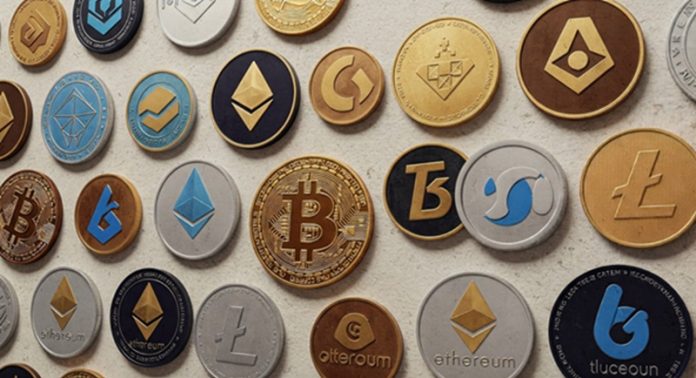
Cryptocurrency adoption has reached unprecedented levels this year, with global ownership surpassing over 560 million people, driven by institutional interest, regulatory clarity, and innovative use cases.

Recent reports reveal that dozens of non-crypto companies are diving headfirst into Bitcoin investments, helping fuel a surge in the price of BTC and other digital assets.

According to The Wall Street Journal, nearly 60 non-crypto firms have adopted Bitcoin as a treasury reserve asset, forming so-called “Bitcoin treasuries” to boost stock value.

Among the most notable entrants are GameStop, Trump Media Inc., and Metaplanet, each signaling a broader wave of institutional enthusiasm. Michael Saylor, co-founder of Strategy (formerly MicroStrategy), continues to lead the charge. His company recently raised another $700 million to purchase more BTC, doubling down on a vision that has captured headlines and investor imagination alike.

Strategy, under Saylor’s leadership, has become the world’s largest corporate holder of Bitcoin (BTC) with a total of 580,955 Bitcoin (BTC), worth over $61.3 billion. The decision to invest a large portion of the company’s assets in Bitcoin (BTC) has shown very positive results, given the significant rise in the price of Bitcoin (BTC).

In just the first half of 2025, dozens of companies announced plans to mirror Saylor’s blueprint, a shift that may result in a substantial share of all crypto assets being held on corporate balance sheets.

As institutional demand escalates, Saylor has warned of an impending “supply shock” of fewer coins available on the market due to hoarding by long-term holders, institutions, and ETF products.

Speaking to CNBC, the crypto enthusiast reiterated his bullish stance, projecting a staggering 30% annual growth for Bitcoin over the next 20 years. If realized, this would propel the digital currency to an astronomical $13 million per coin by 2045. He attributes this growth to accelerating corporate adoption, a limited BTC supply, and the rise of Bitcoin exchange-traded funds (ETFs) absorbing available coins.

Despite the bullish crypto market that has sparked widespread institutional adoption, not everyone is convinced. Bitcoin advocate Max Keiser has voiced skepticism about the long-term commitment of some new corporate entrants. Unlike Saylor who has weathered multiple market downturns, he says many of these companies lack a proven record of holding through volatility.

In a post on X, he wrote,

“The Strategy clones have not been tested in a bear market. Saylor never sold and just kept buying, even when his BTC position was underwater. It’s foolish to think the new Bitcoin Treasury Strategy clones will have the same discipline”.

Indeed, the risks remain substantial. Bitcoin’s extreme price swings far surpass those of traditional investments, exposing companies to potential losses that exceed initial capital. Yet, for some businesses, the upside potential is worth the gamble. Crypto’s historically low correlation with equities offers portfolio diversification, and during periods of fiat inflation or low interest rates, digital assets may act as a hedge.

Analysts suggest this trend is far from over. If current momentum holds, more than half of all cryptocurrencies could end up on corporate balance sheets shortly. While this marks a pivotal evolution in institutional adoption, it also underscores the need for careful risk management.

As Bitcoin continues its transition from speculative asset to corporate staple, stakeholders from investors to executives must stay alert. The rewards may be significant, but the journey remains fraught with volatility, uncertainty, and the ever-changing dynamics of a maturing market.

Empowering Electrical Contractors: The Role of Electricians Software

0

The electrical contracting industry is evolving fast. With rising demand, increasing competition, and growing customer expectations, modern electrical businesses need more than just technical skills to stay ahead. Efficient operations, digital communication, and streamlined service delivery are now as essential as a well-wired panel. That’s where Workiz electricians software steps in—offering a smart, comprehensive solution to help electrical professionals manage and scale their business effectively.

From job scheduling to customer communication, billing, and beyond, electrician-specific software tools enable contractors to reduce time spent on admin tasks, avoid costly errors, and enhance client satisfaction.

The Modern Electrical Business Landscape

Electrical contractors, especially those running small to mid-sized businesses, are expected to wear multiple hats. They’re responsible for quoting, scheduling, managing technicians, invoicing, and following up with clients—often while still doing on-site work themselves. In many businesses, these tasks are managed using spreadsheets, notebooks, or outdated software systems that simply can’t keep up with today’s pace.

As a result, contractors face several operational challenges:

  • Missed or double-booked appointments
  • Delayed invoicing and cash flow bottlenecks
  • Poor technician routing and communication gaps
  • No centralized customer history or service tracking
  • Inefficient task handoffs between field and office staff

Workiz electricians software is designed to eliminate these issues, helping contractors reclaim their time, strengthen customer relationships, and make informed business decisions through real-time data.

Key Features That Transform Operations

Let’s take a closer look at how platforms are reimagining how electrical businesses function.

  1. Intelligent Scheduling and Dispatching

Workiz enables real-time technician scheduling using a visual calendar and drag-and-drop interface. Technicians can be dispatched based on availability, skill set, and proximity to job sites—reducing travel time and improving resource utilization.

This helps ensure:

  • Fewer missed appointments
  • Less fuel and mileage expense
  • Higher daily job volume
  1. Mobile Access for Technicians

In the field, electricians need quick access to job details, customer notes, and wiring diagrams. This software provides a dedicated mobile app where technicians can:

  • View assigned jobs
  • Update job statuses
  • Upload before/after photos
  • Collect e-signatures
  • Add notes for follow-up

All data syncs back to the office instantly, ensuring continuity and communication across teams.

  1. Streamlined Invoicing and On-the-Spot Payments

You can generate and send invoices in seconds—on-site or back at the office. Clients can pay online or via mobile right away, significantly speeding up cash flow.

The software supports:

  • Customizable invoice templates
  • Discounts and tax calculations
  • Credit card payments
  • QuickBooks integration
  1. Built-in Customer Relationship Management (CRM)

Every service interaction is logged, giving you a complete customer profile:

  • Past jobs
  • Payment history
  • Equipment installed
  • Notes or special instructions

This leads to more personalized service, better retention, and increased upsell opportunities (like suggesting a panel upgrade or seasonal maintenance plan).

  1. Automated Follow-Ups and Reminders

Customers appreciate timely updates. You can automate:

  • Appointment confirmations
  • ETA text messages
  • Review requests
  • Recurring service reminders (e.g., annual inspections)

It not only improves the customer experience—it saves hours of admin work each week.

Reducing Human Error and Overhead

Manual data entry is prone to mistakes—incorrect addresses, missed tasks, or underbilling. By using an integrated system, you reduce these risks and cut down administrative costs associated with correcting errors.

In many businesses, office staff spend 2–3 hours per day updating schedules and chasing payments. That time can now be invested into marketing, team management, or customer service—areas that truly grow the business. And that means to improve domains like Easy Cool Air & Electrical services segment, one must invest.

Data-Driven Decision-Making

With built-in analytics and performance dashboards, contractors can answer key questions:

  • Who are our top-performing technicians?
  • What service types generate the most profit?
  • What is our average time-to-payment?
  • Which areas of the city produce the most leads?

These insights inform strategic planning, hiring decisions, marketing investments, and customer retention strategies—turning electricians into empowered business owners.

Supporting Sustainability Goals

Smart software isn’t just good for the business—it’s better for the planet. By using route optimization,  you reduce unnecessary fuel consumption. Additionally, digital invoices, quotes, and work orders cut down on paper waste.

This aligns with global environmental goals, including those promoted by the U.S. Environmental Protection Agency (EPA), which emphasize digital transformation and smarter resource use in small businesses.

Future-Ready Field Service: What’s Coming Next?

The electrical service industry is adopting new tech faster than ever. Software platforms are already integrating:

  • AI-powered scheduling to predict service needs
  • Voice-command features for hands-free access
  • IoT monitoring for smart panels and breakers
  • Self-service customer portals for scheduling, payments, and service requests

By digitizing now, electricians future-proof their operations and stay ahead of the curve.

Common Misconceptions and Objections

Despite the advantages, some contractors hesitate to go digital. Let’s address a few myths:

“It’s too expensive.” – Most software like Workiz is subscription-based with flexible pricing. The time and money saved typically outweigh the cost in just a few months.

“We’re too small for this.” – Even solo contractors benefit from scheduling tools, invoicing automation, and customer reminders.

“I’m not tech-savvy.” – These platforms are designed to be intuitive and offer full support during onboarding. Many users report being up and running in less than a day.

Why Tekedia Readers Should Care

Tekedia’s audience of tech-forward professionals and entrepreneurs understands that digital transformation is critical—not just in large enterprises but across every sector. Trades and field services are no exception. By equipping electricians with tools like Workiz, we empower small businesses to thrive, adapt, and grow within a connected economy.

This isn’t about adopting technology for the sake of it—it’s about using it to create better customer experiences, reduce waste, boost efficiency, and gain control over your business operations.

Running an electrical business today takes more than skill with wires and breakers. It takes the ability to manage time, people, communication, and cash flow—all at once. Software gives you the digital foundation to do just that.

Whether you’re aiming to increase job volume, improve scheduling, collect payments faster, or just reduce stress, investing in purpose-built software is one of the smartest moves a contractor can make.

For more insights on how technology empowers small businesses and field operations, explore this relevant article: Five Sustainable Business Practices for Modern Entrepreneurs.